Author Archives: lettercollumkitchenproject

About lettercollumkitchenproject

Unknown's avatar
A cook that gardens. Sun addict. Not a good addiction in West Cork hence the travel addiction. Add in a splotch of kitchen snooping while away, a big walled organic garden while home and a kitchen full of a bit of everything. Runs an organic bakery/delicatessen/food shop with her husband using food from the garden and the years of accumulated kitchen snooping. Check out the shop and garden at www.lettercollum.ie

Blackcurrant Collusion

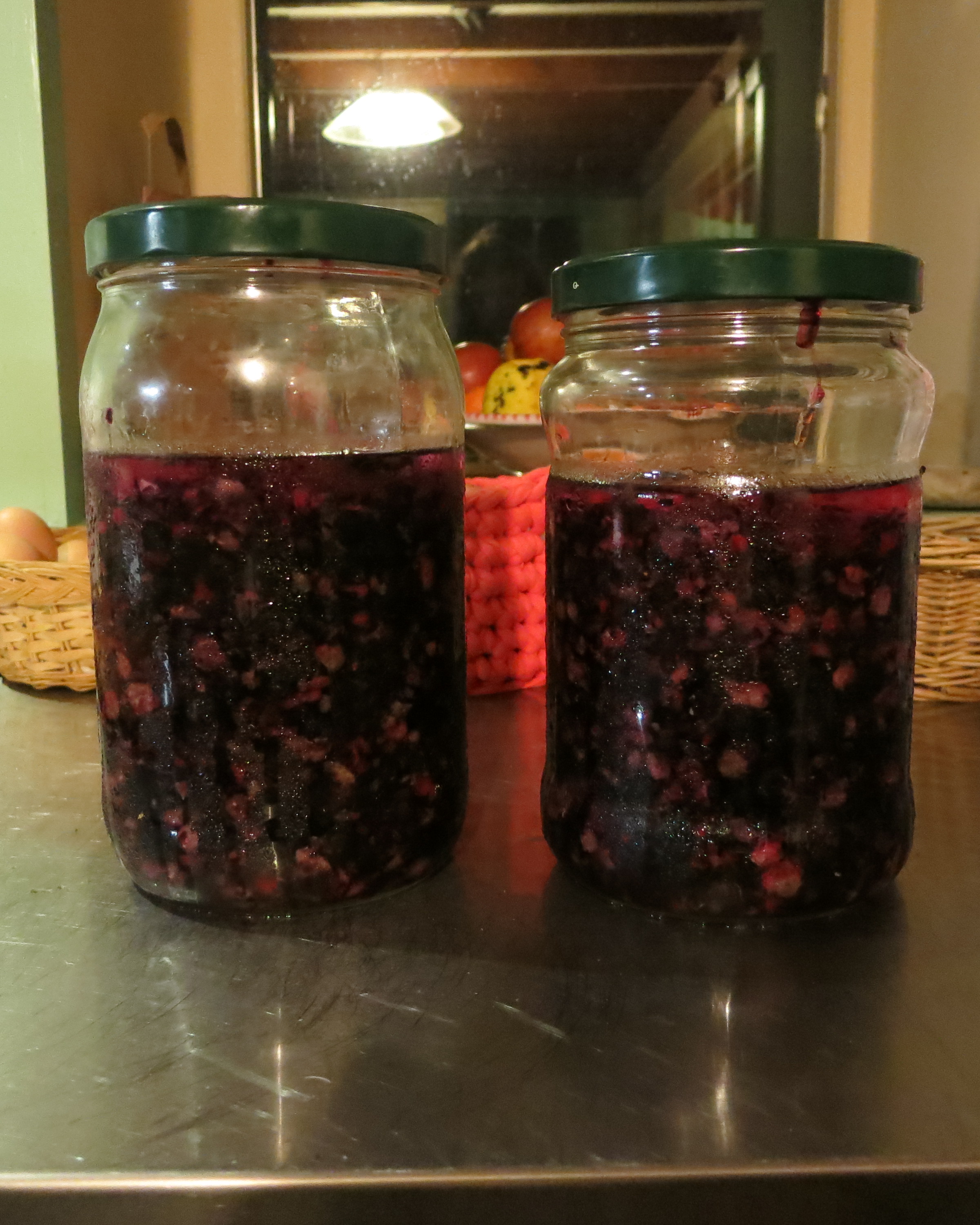
I was poking about in the freezer yesterday in search of peaches to make chutney and somehow burst a bag of blackcurrants. Suddenly there were hundreds of frozen blackcurrants on the move so I hastily closed the lid and carried on on my chutney mission. Late last night I remembered the blackcurrants and realised that they were going to be rolling about the freezer for ever if i didn’t do something. Luckily we had a bottle of poitin lurking in the cupboard. It’s been there for the past year as it tastes (to my mind) quite disgusting so today I headed out to the freezer armed with a large bowl and a torch and scooped the blackcurrants up.

I left them to defrost for while, then gave them a good bash and put them into a couple of large screw top jars. I divided the poitin between the two and now they are sitting on the kitchen counter.

IMG_0167

The idea is to give the jars a shake every now and then and then just before Xmas strain them off and add sugar syrup.  I’m thinking of bottling it up for gifts and using some in the aperitif department to make Kir.

I’m not quite sure what the result will be but it’s definitely got potential!


Ottolenghi Spuds

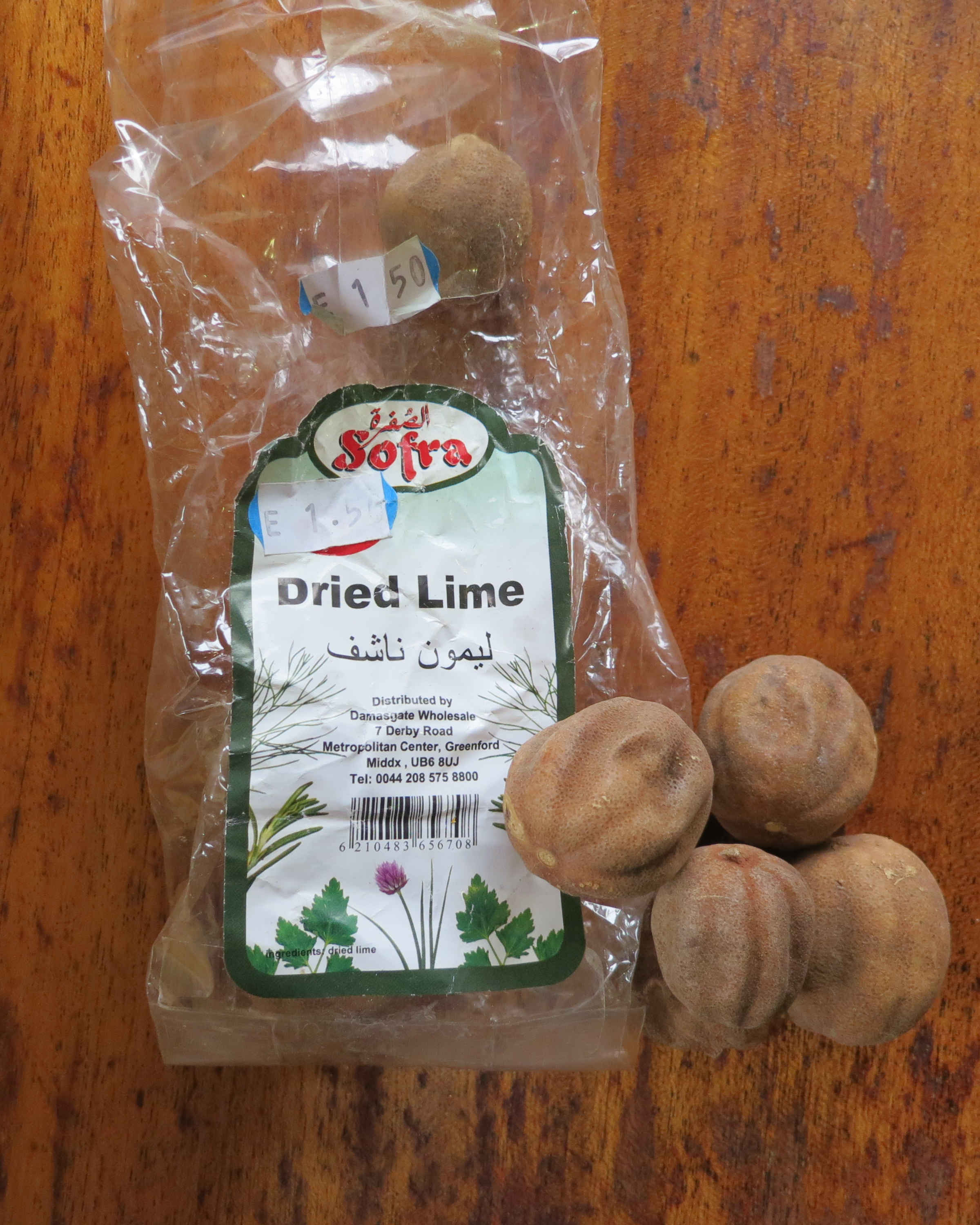
I’m always curious and when I saw Ottolenghi’s recipe for spuds in last weeks Guardian I noticed there was an Iranian lime in it.

IMG_0064

I had bought some dried limes in the Turkish supermarket some time back as I had seen a few recipes that called for limes but of course once I had some it seemed to go quiet on the dried lime front. This was the ideal opportunity for me to try them out. The recipe is quite simple ; spuds, butternut, onions etc., in a lightly spiced sauce. I didn’t have any butternut squash but I had a big Queensland Blue pumpkin which was an ideal substitute and of course I erred from the original recipe in a couple of other places too – scaling down the amounts and adding the fresh herbs toward the end rather than boiling them up.

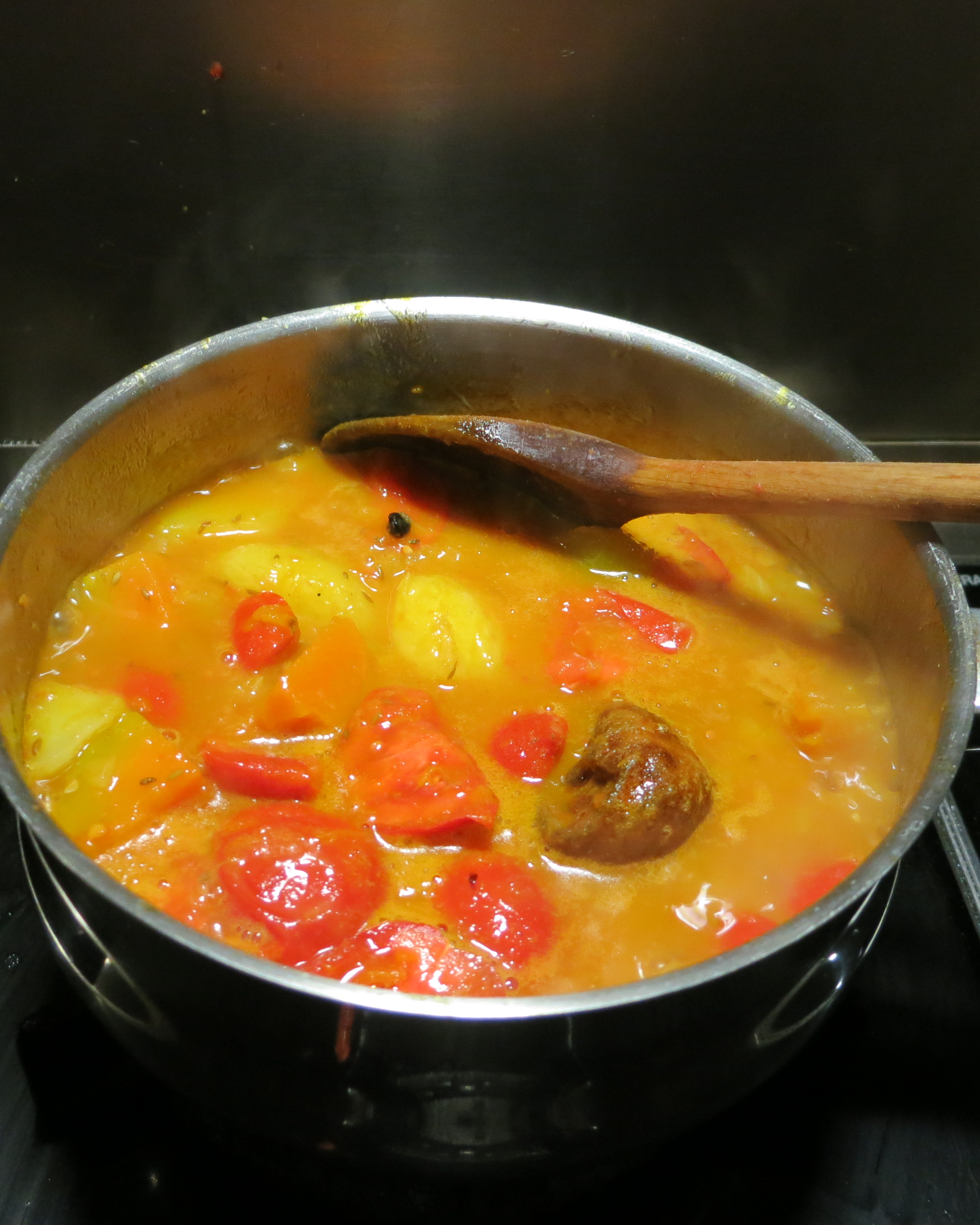
The recipe began with cooking onions, cummin seeds and turmeric in clarified butter. I made some clarified butter – these instructions weren’t included in the original recipe – by gently cooking some butter in the pan until it frothed up and the milk solids went golden and sank to the bottom. I didn’t bother to strain it as I wasn’t bothered about the bitty bits, I just like the flavour, and continued as instructed. I didn’t have any tomato paste either so I grated fresh tomato in on top of the onions. This is always a handy trick when something like that is called for. I added in chunks of potato, pumpkin and the Iranian lime which I stabbed a few times as instructed and added a little salt and enough water tocover everything. Initially the lime bobbed about on the top like a life-buoy but with a little encouragement from my wooden spoon it did eventually submerge.

IMG_0048

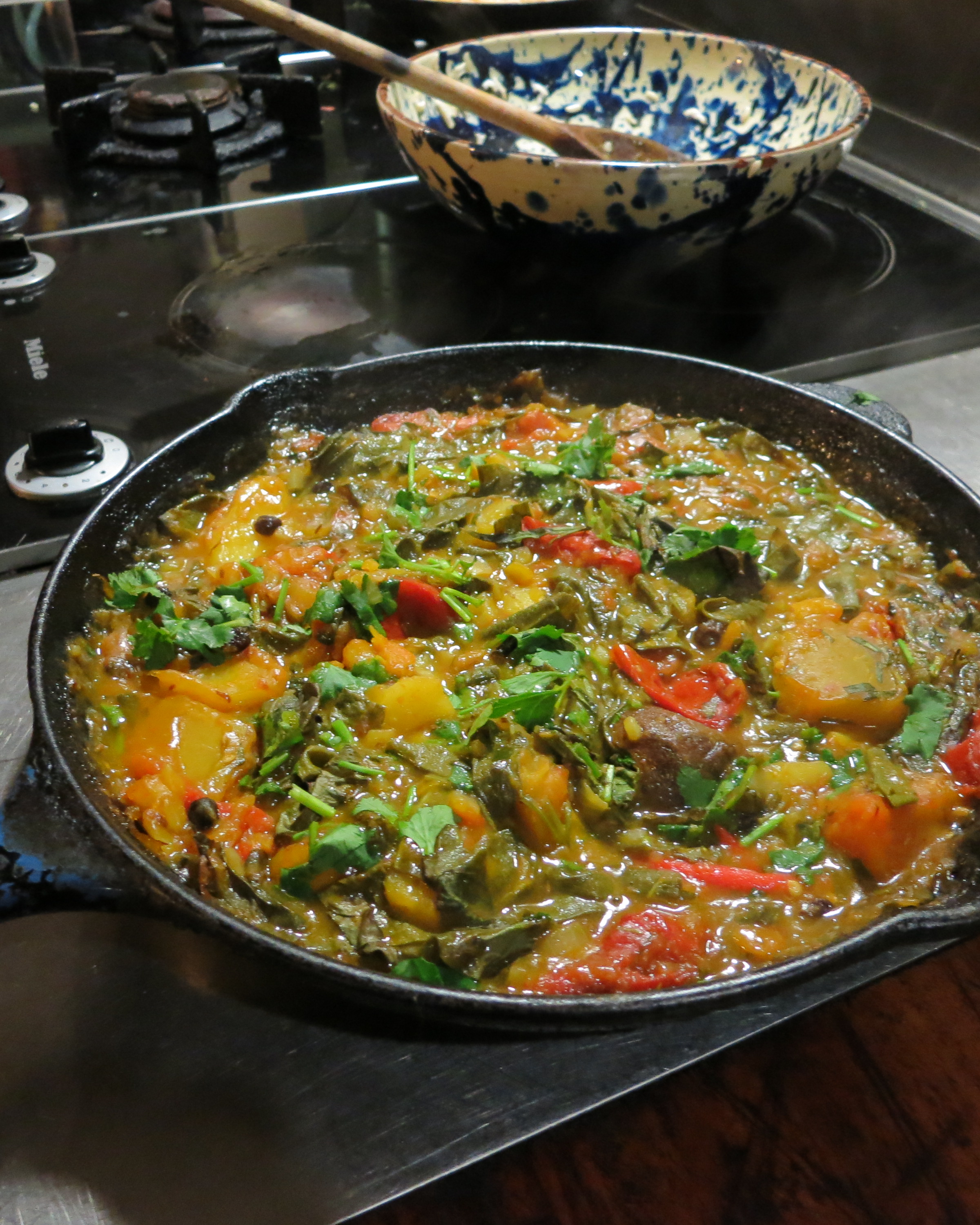
The oven was on and getting hot whilst the potatoes and pumpkin cooked until barely tender. Next in were a few quartered tomatoes, a whole chilli, a spoonful of currants (instead of barberries which I have never found in West Cork)  a bunch of spinach and a big handful of coriander and tarragon. I gave everything a big stir then dumped it into an ovenproof dish and popped it into the oven for about fifteen minutes.

IMG_0053

We ate this with rice and a dollop of yoghurt as advised and it was delicious. The lime gave a delightful tartness to the dish and chilli had a spectacular effect when my unsuspecting diner chomped it before realising. If you make this dish and don’t feel like spiking your audience maybe take it out before serving!!

IMG_0060

50g butter – clarified

half tsp turmeric

1 tsp cummin seeds

1 tomato or use 1 tbs tomato puree

4 small waxy potatoes

about 300g firm pumpkin

1 Iranian lime

1 whole chilli, split down one side

salt

3 tomatoes, quartered

a small bunch of spinach

a handful fresh coriander

a handful fresh tarragon

1 dsp currants

salt

Method as above


Making Membrillo

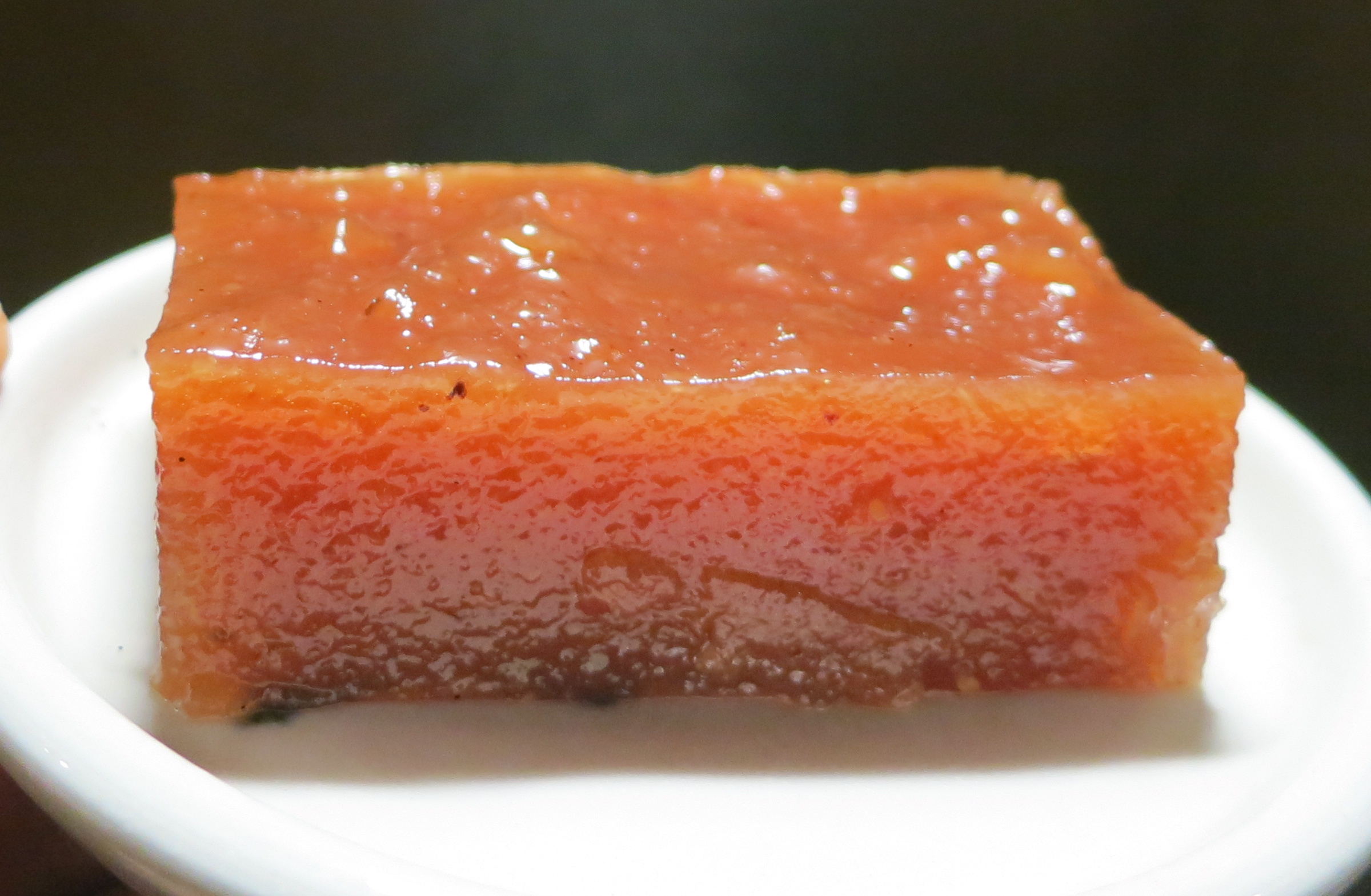
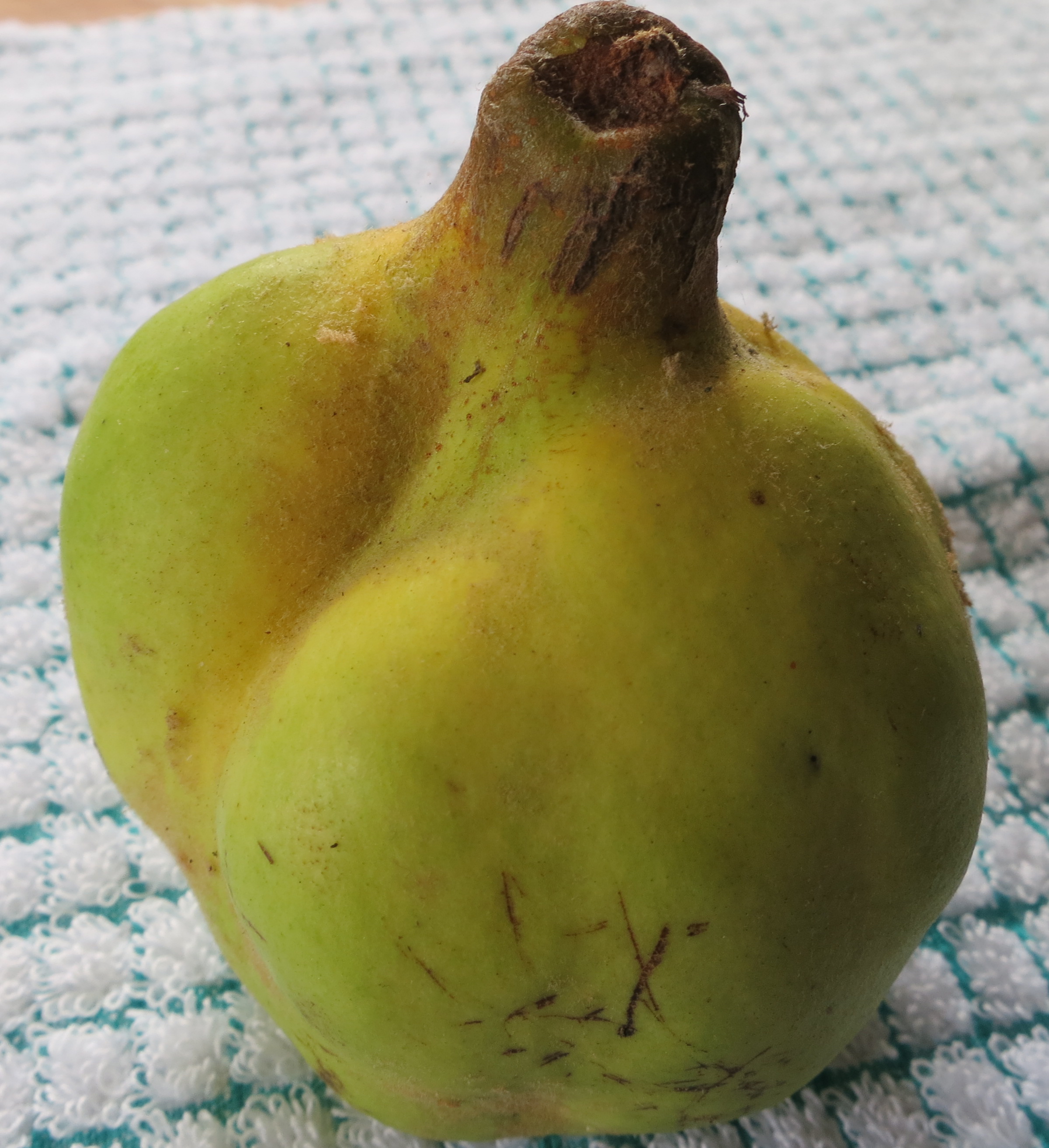
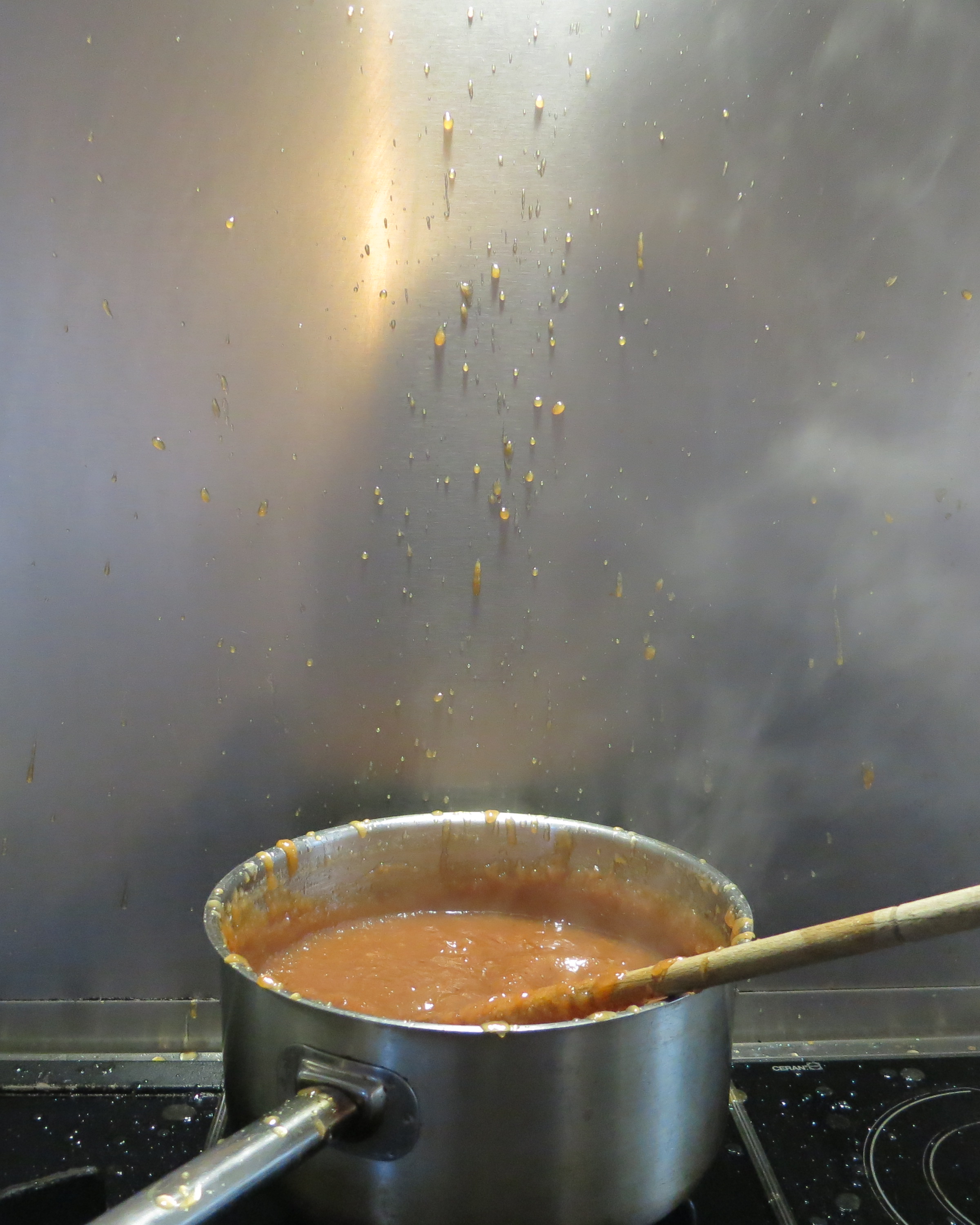
I only have a few photos of the membrillo that I made. One of the quince at the beginning, a big splatty pot and then a slab of membrillo at the end. As usual i got carried away with the cooking and forgot to take photos along the way.

IMG_0032

We have a quince tree in our garden and this year we had our third harvest of about fifteen knobbly pears. Quince look like rotund freestyle pears and are very hard. They are not for eating raw and are difficult to peel but it’s well worth the effort in order to make delicious membrillo

IMG_0020

.

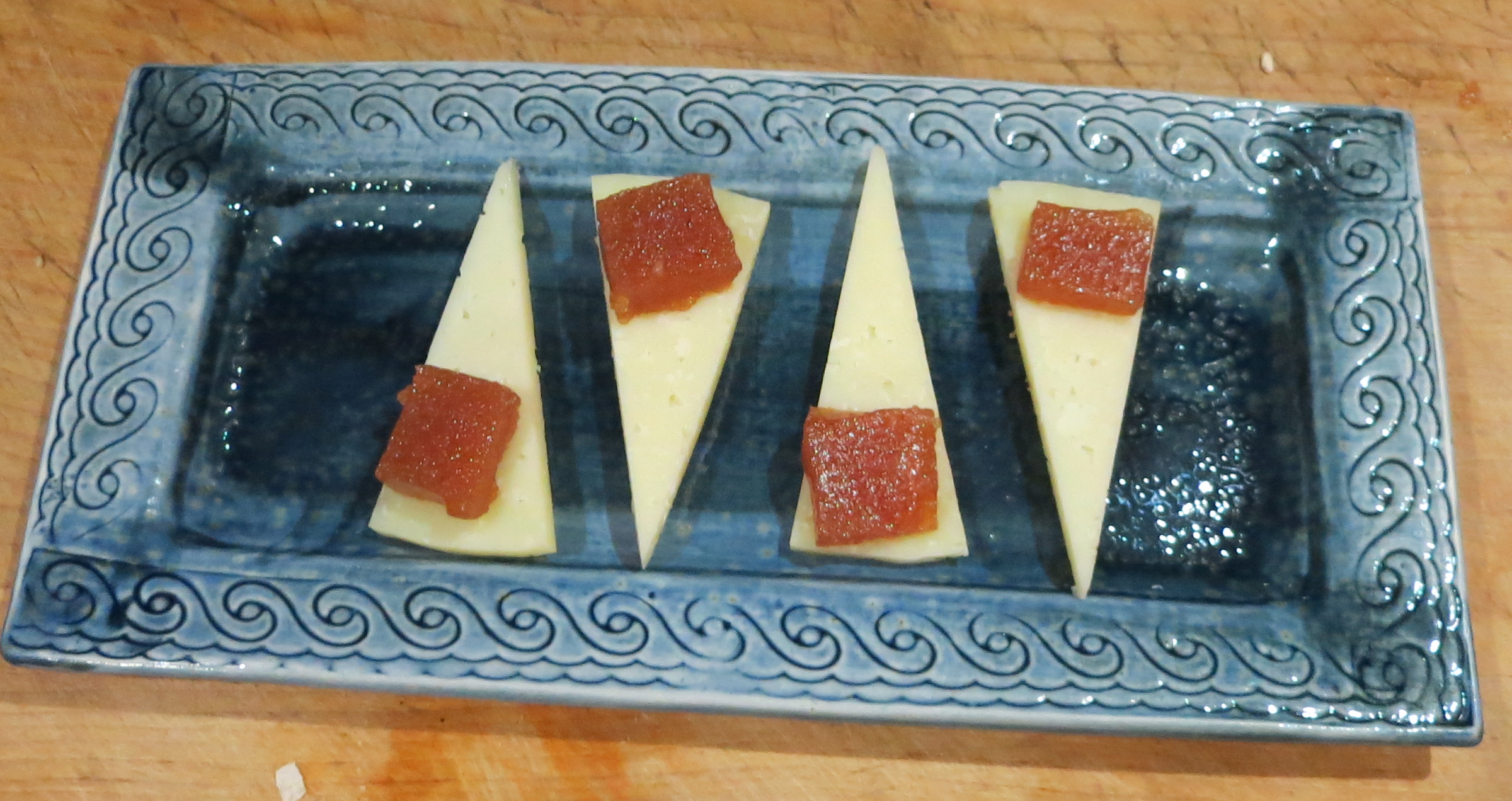
Membrillo is a set quince jelly that is eaten in Spain with cheese. The first time that I ate membrillo we were guests in a friends’ mother s house in the north of Spain. It was a small village near the Portuguese border and the mother welcomed us into her little house and made us a feast. The dessert was fresh white cheese and membrillo. The cheese didn’t look very appealing to me but it would have been rude to refuse. It was delicious,. Somehow the musky sweetness of the membrillo opened up the delights of this otherwise quite bland cheese.  I’ve been a fan ever since although these days I usually enjoy membrillo with Manchego, which is a hard Spanish sheep cheese.

IMG_0041

It’s very easy to make membrillo but as I only make it once a year I can never remember quite how I made it the year before.  Here’s this years version

Peel and chop the quince  – however many you have.

Put the chopped quince into a saucepan and just cover with water.

Split a vanilla pod and scrape the seeds onto the fruit and then chuck the pod in too.

Cook for about forty minutes, or until the quince are tender.

Strain, remove the vanilla pod and weight the fruit,

Blend the fruit to a puree in a processor

Put the puree into a clean saucepan with the equal weight of sugar .

Gently bring to the boil, then turn to simmer for about forty minutes.

Stir every few minutes and beware of moulten plops of membrillo.

Pour the jelly onto a tray lined with parchment paper and leave to set

My kitchen was totally trashed when I had finished, there were blobs of membrillo far and wide but it was well worth a little scrub.

IMG_0029


Arroz Negre aka Black Rice

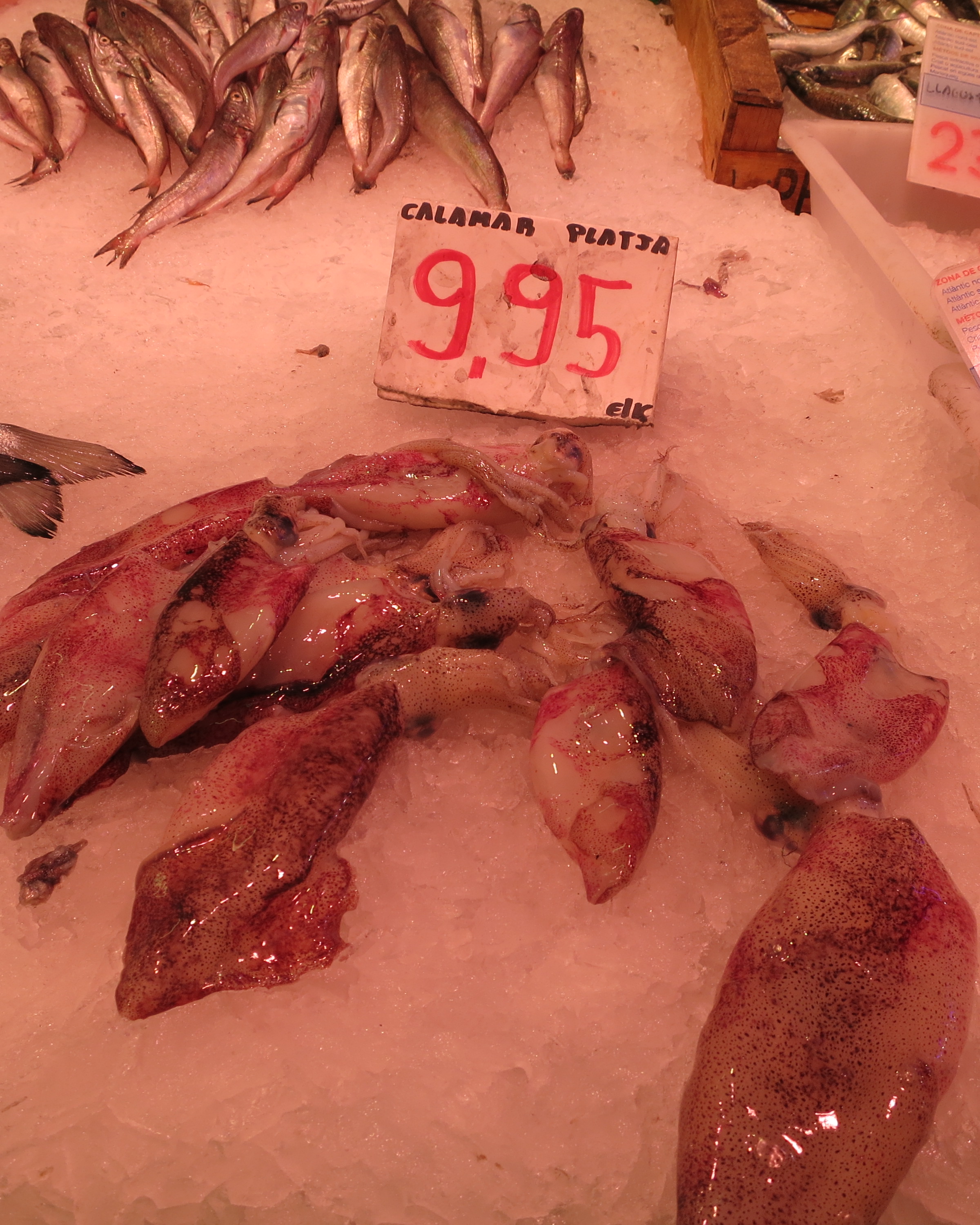
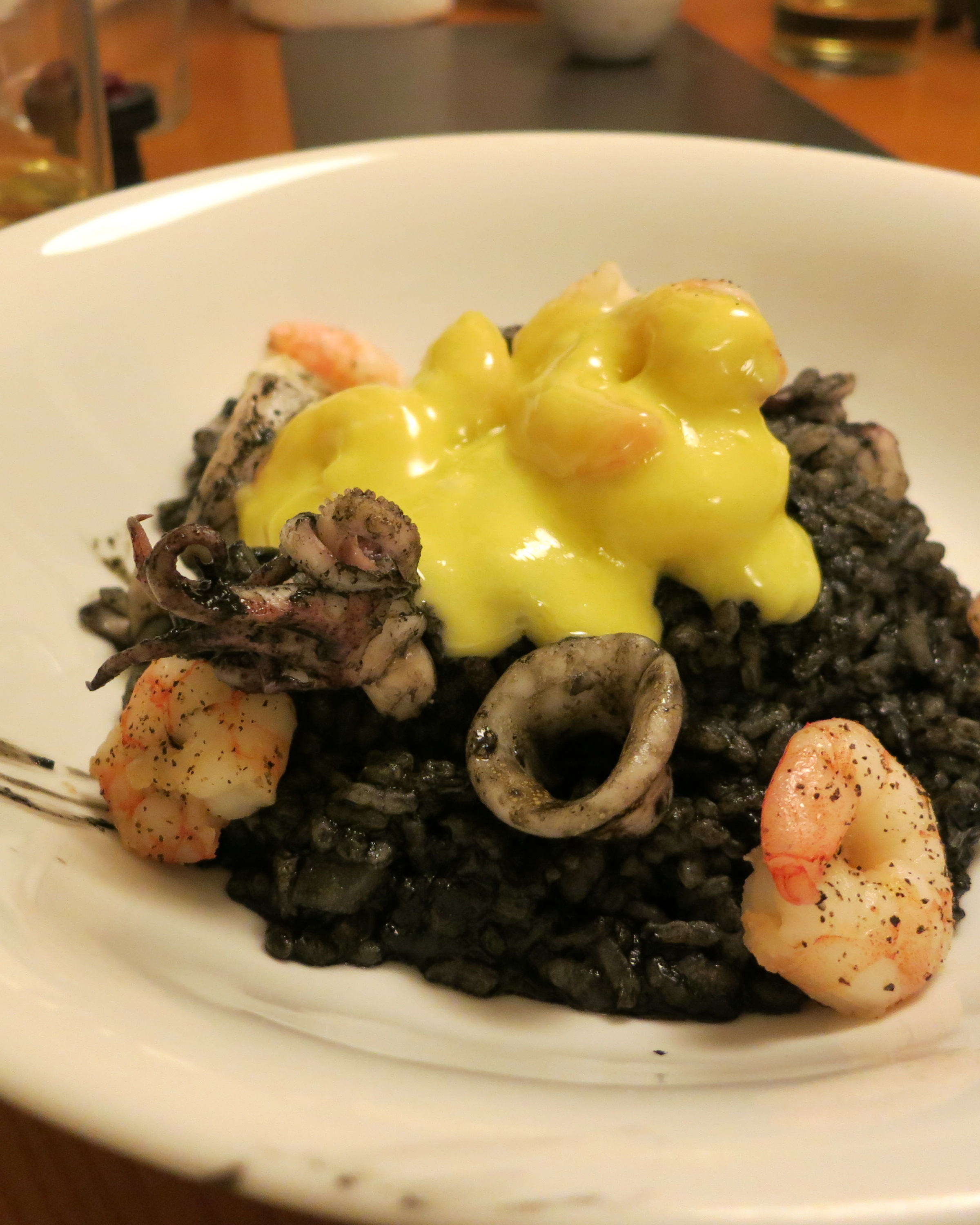
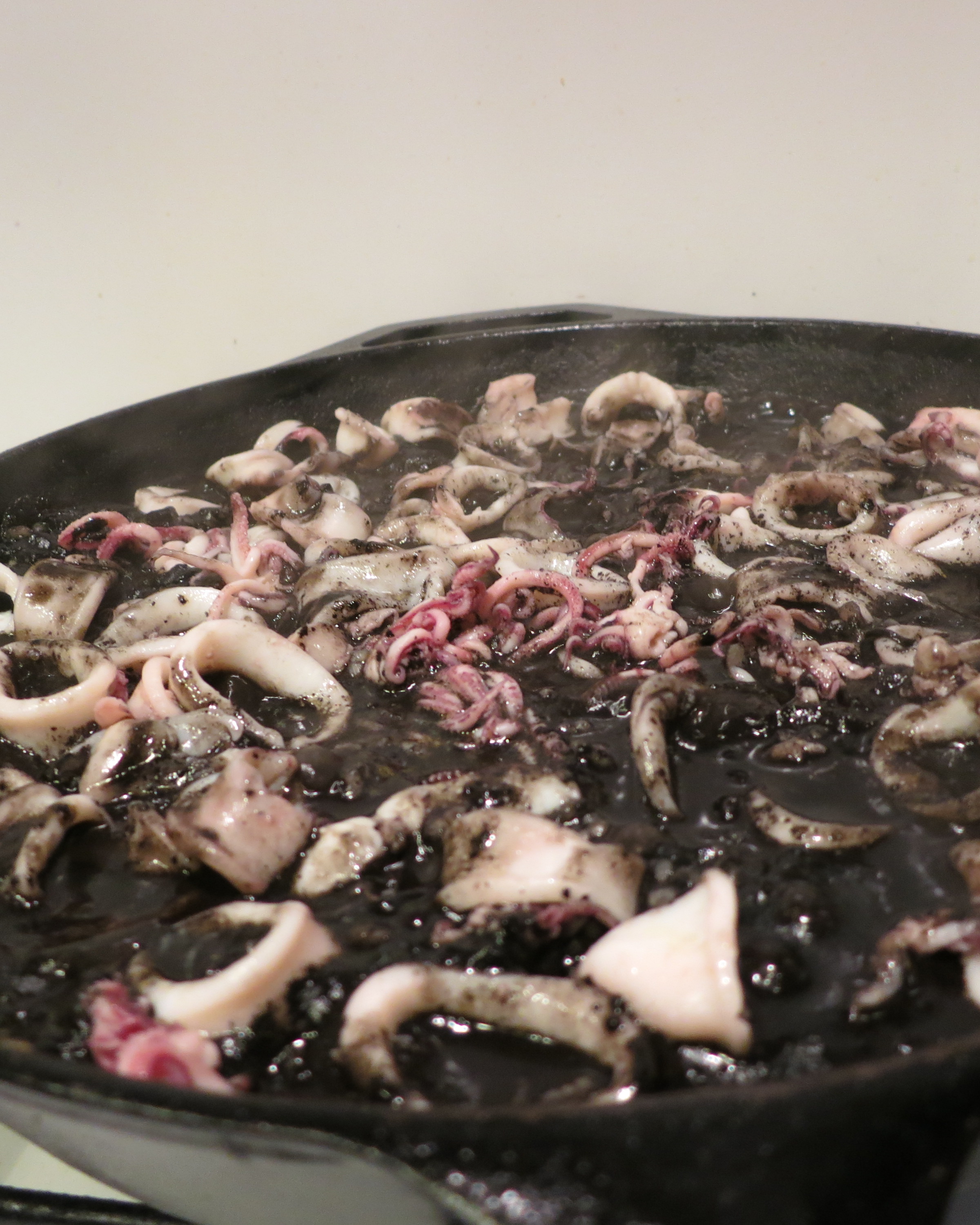
Last night we ate a Catalan speciality – Arroz Negre, meaning black rice. This spectacular dish, a relation of paella, is made using squid ink and although I have made this before, last nights version was the first time that i had made it with fresh ink.

IMG_3229

We bought some beautiful little calamari in the market and also asked for some ‘tinta’ which is the ink. Instead of handing over little sanitised sachets of the ink the fish monger rummaged around under the counter and came up with a little sac of fresh ink from a sepia, a close relative of calamari.  A sepia is a cuttle fish in English but somehow sepia sounds more attractive. It didn’t look like a lot of ink and i was a little worried that there might not be enough but believe you me there was plenty. By the time I had finished there was  ink everywhere. Running down the walls, dripping off the sink and the cooker and all over me. I couldn’t believe that I had made such an incredible mess. I have no photos to prove it as touching my camera was out of the question.

In a culinary way the ink gives a delicious rich ‘seafood’ flavour and it’s a very funky colour. Black. Incredibly black. It is powerful stuff. The squid uses it for protection, spraying it a bit like a smoke screen to overcome it’s foe or indeed sometimes stepped up into chemical warfare mode where compounds are released that stun or desensitise the agressors.

IMG_3264

We ate this with alioli and a few prawns on top but to be quite honest I would skip the prawns in future if they weren’t super doopa fatties as frozen prawns just don’t hit the spot. When we had finished eating our lips were black and we looked like a bunch of Goths.

IMG_3276

It’s delicious and very simple to make so if you fancy a ‘Goth’ dinner search out some squid and ink and try this out.

Arroz Negre

1 onion, peeled and chopped

olive oil

3 cloves garlic. peeled and chopped

1 very big ripe tomato, grated

about 700g squid – preferably not too big

300g bomba or calaspara rice

1 glass white wine

1 sac of squid/sepia ink or 2 small sachets squid ink

900mls seafood/fish/whatever stock

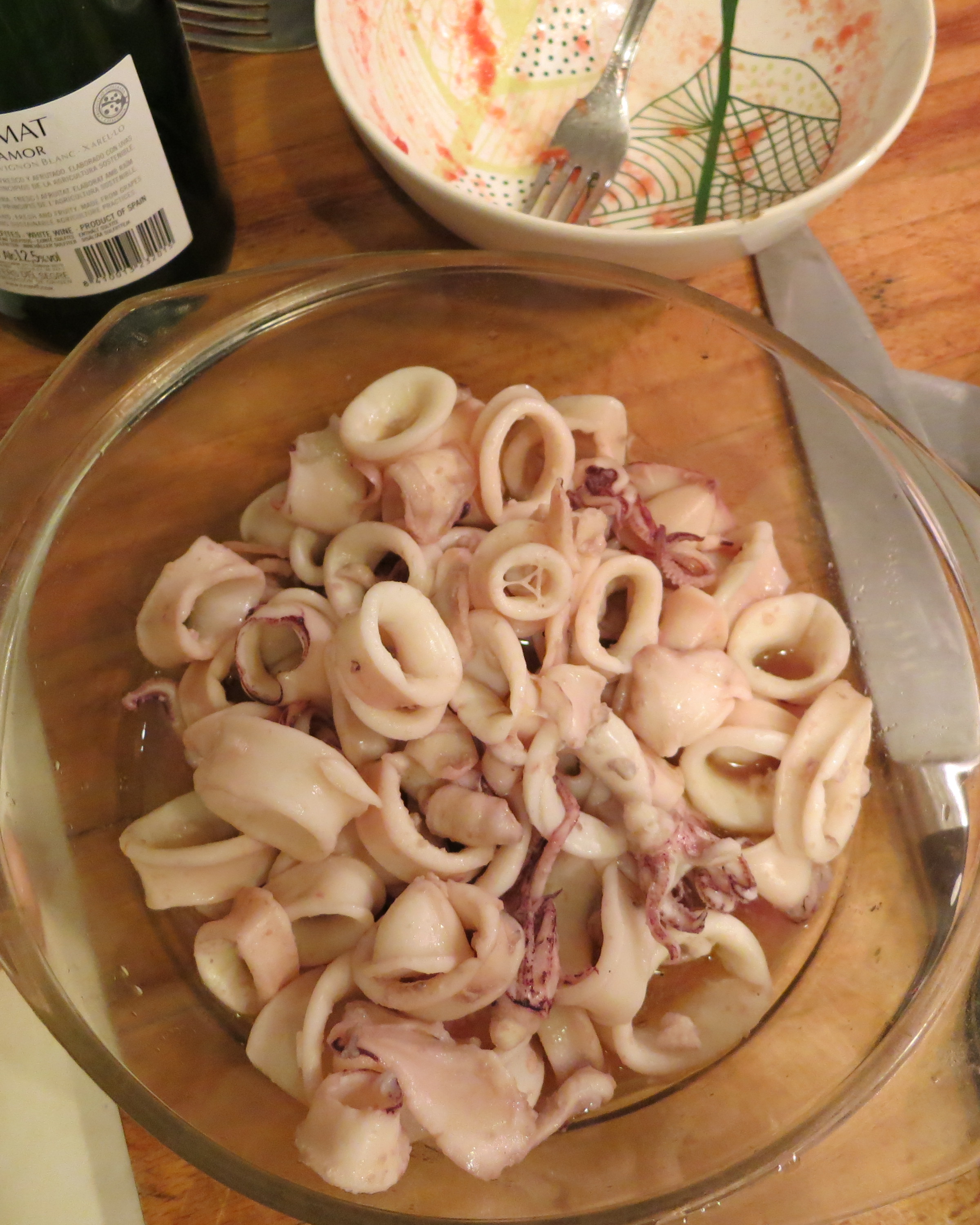
Clean the squid and cut into rings. Heat a large frying pan and pour in enough oil to spread over the bottom. Add the squid and fry quickly until translucent and just cooked. Tip into a bowl and leave aside.

IMG_3266

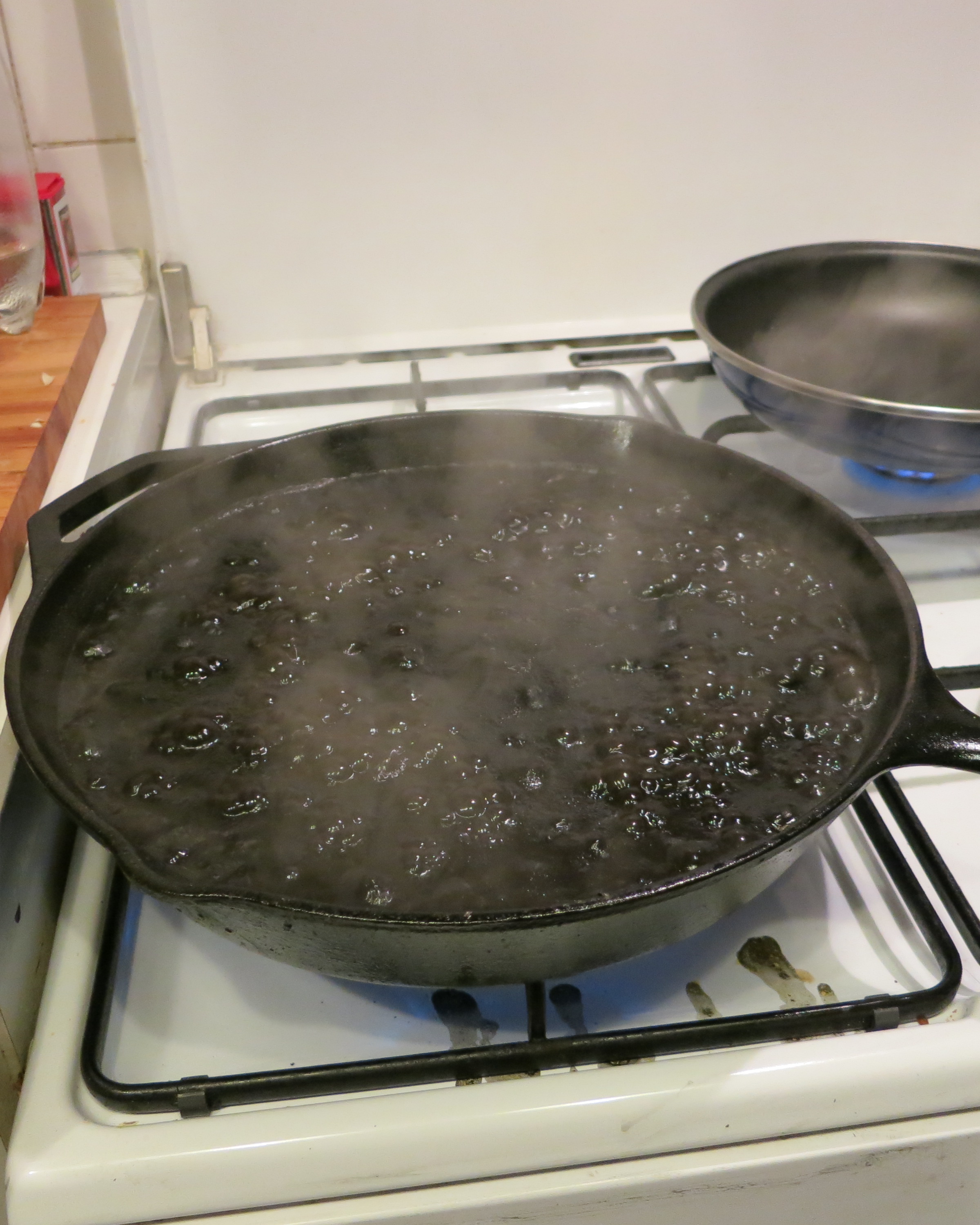
Put the pan back on the heat, add a little more olive oil and the onion. Cook on a medium high heat until the onion melts down then stir in the garlic. Cook for a couple of minutes then add the grated tomato. Let this all bubble up then stir in the rice and cook for a couple of minutes. Stir in the wine and when that boils  add the stock and the ink. Season with a little salt but take it easy as the stock will reduce during the cooking.

When everything is bubbling away turn the heat down to medium/medium high. There should still be plenty of action but not enough to burn. After fifteen minutes strew the cooled calamari back on top and push down a little with the back of a wooden spoon. Cook for three more minutes then turn the heat off and leave it to relax for five minutes before serving with a little aioli to spoon over

IMG_3269


Fatty Prawns and Borlottis

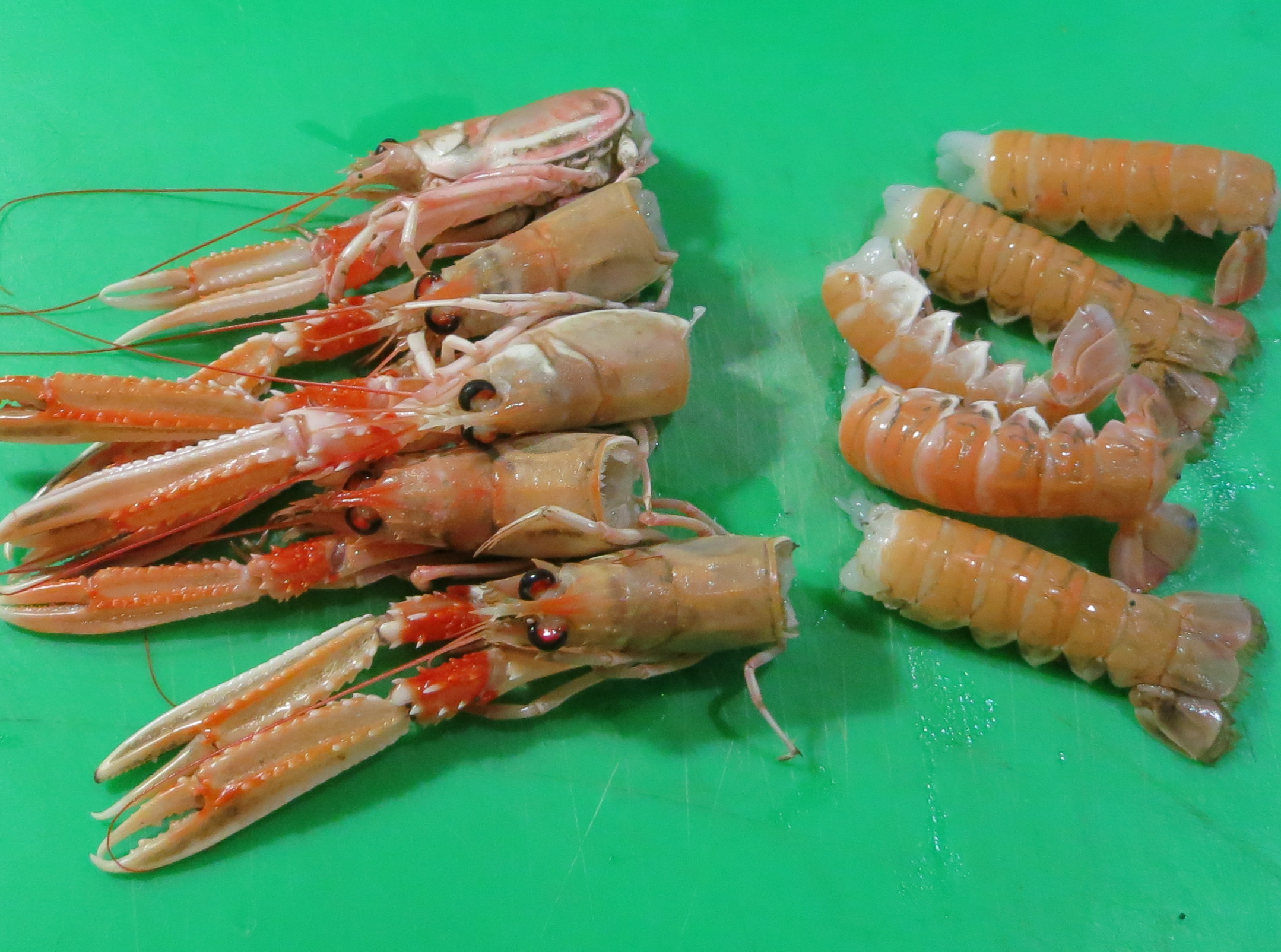
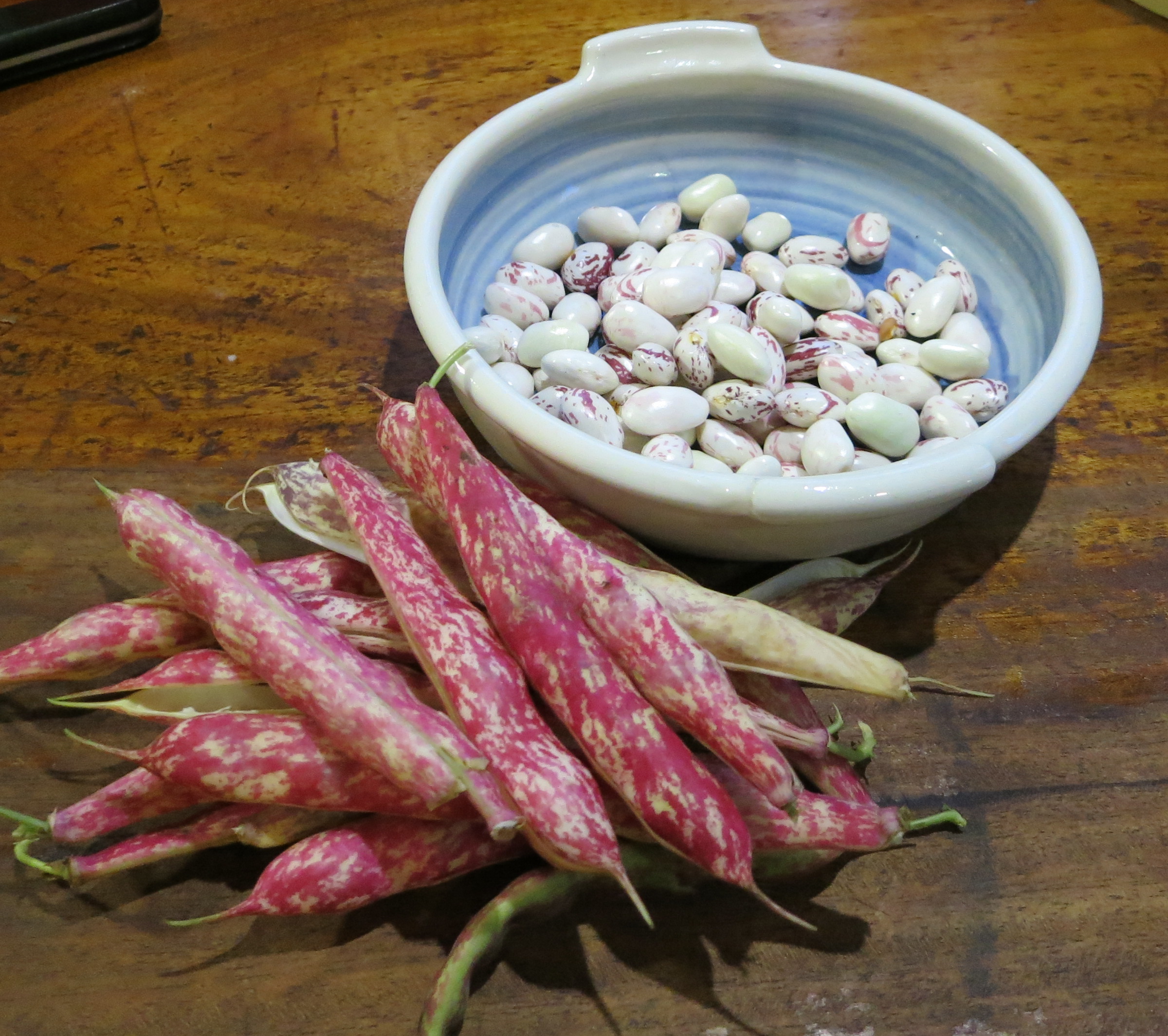
I went to the market today  and bought five fatty prawns. This was even though I am home alone. Home alone with a bowlful of fresh borlotti beans that is. Prawns and borlotti beans are a mean combination and one that I hanker over each autumn when the borlotti beans are ready. It’s such a small window of opportunity to have the fresh beans and find fatty prawns at the same time that even though it seemed slightly sad that I cooked this all for myself  I had to go for it.

IMG_3098

I cracked the heads off of the prawns and put them into large pot with a little olive oil and roasted them for a few minutes before bashing them with the end of a rolling pin. When they were well bashed I put enough water to cover, half a diced onion and a stick of celery and bought it to the boil. Once it was bubbling away I turned it to simmer.

IMG_3100

The borlotti beans were podded and popped into a pot with a couple of shallots and cooked for twenty minutes. Once they were tender I tossed them in olive oil and a little salt.

IMG_3103

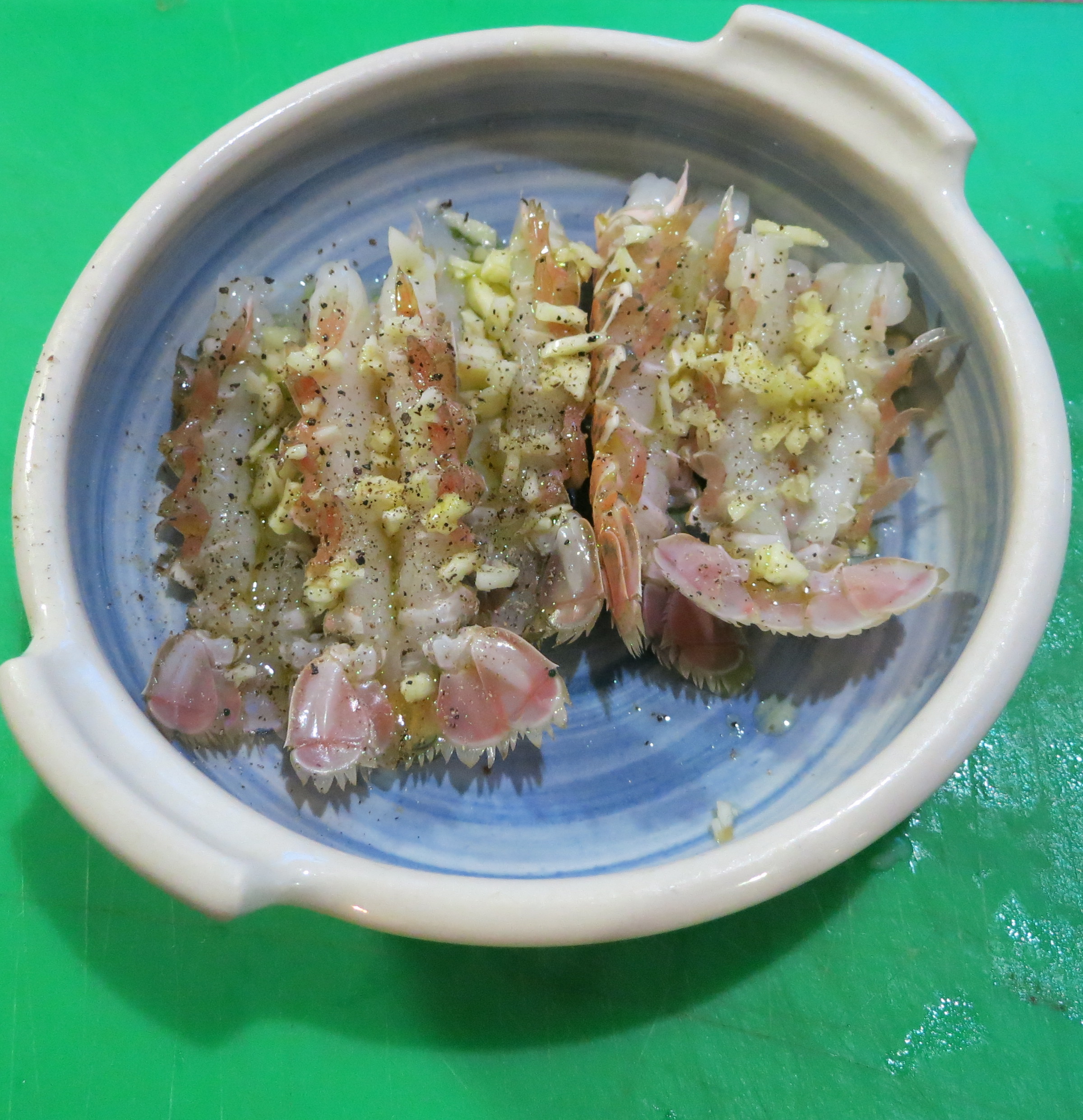
The prawn bodies were butterflied and left to relax in a bowl with a drizzle of olive oil, some chopped garlic and black pepper – this is one of the best ever ways to cook fatty prawns.IMG_3109

I drained the prawn heads. it had reduced down and there was about half a cupful of stock.

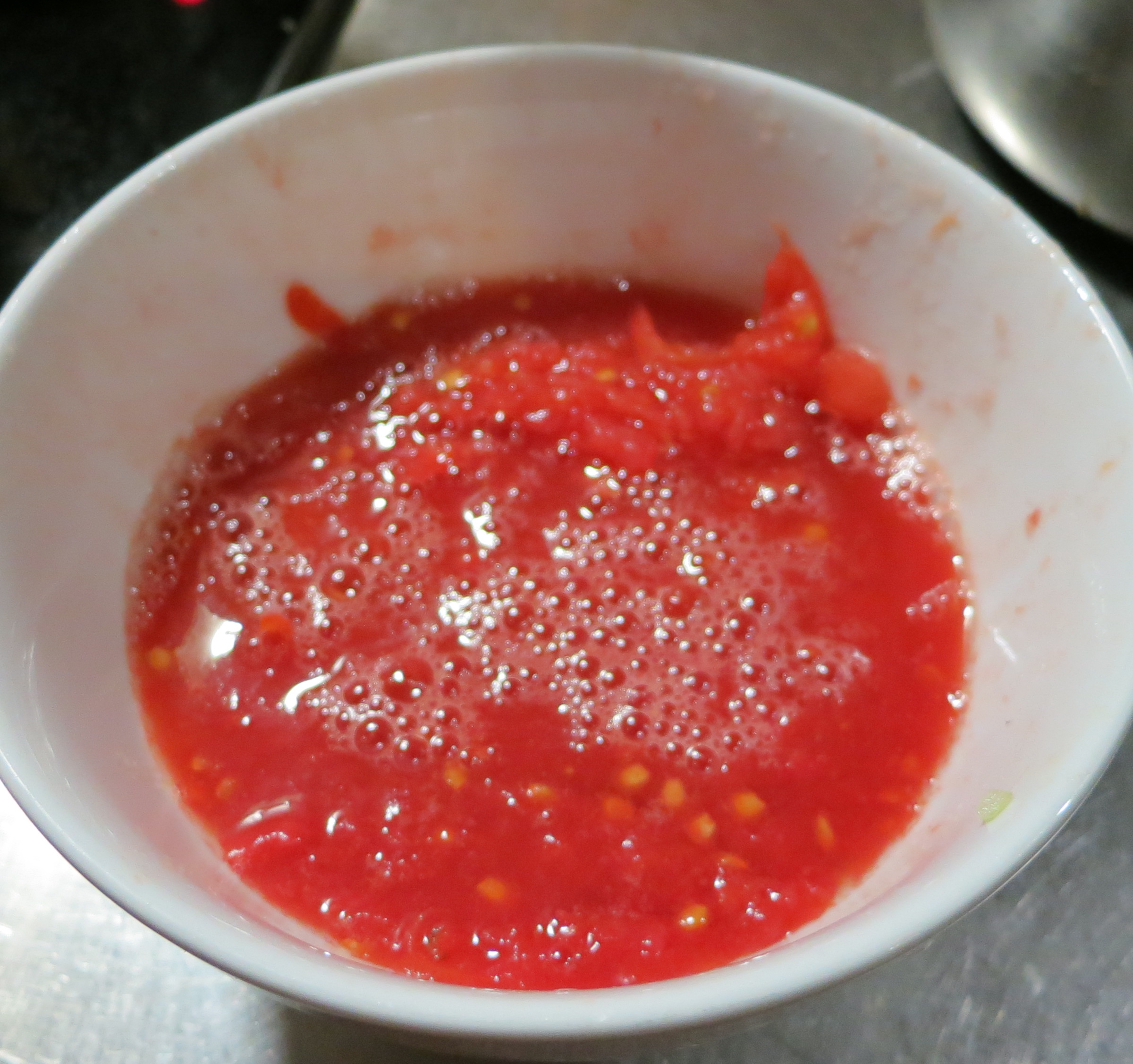
In a small pan a I cooked half a diced onion in a little olive oil then stirred in a clove of chopped garlic then I stirred in a grated a ripe tomato – a clever Spanish trick – and the half cupful of stock.


IMG_3105

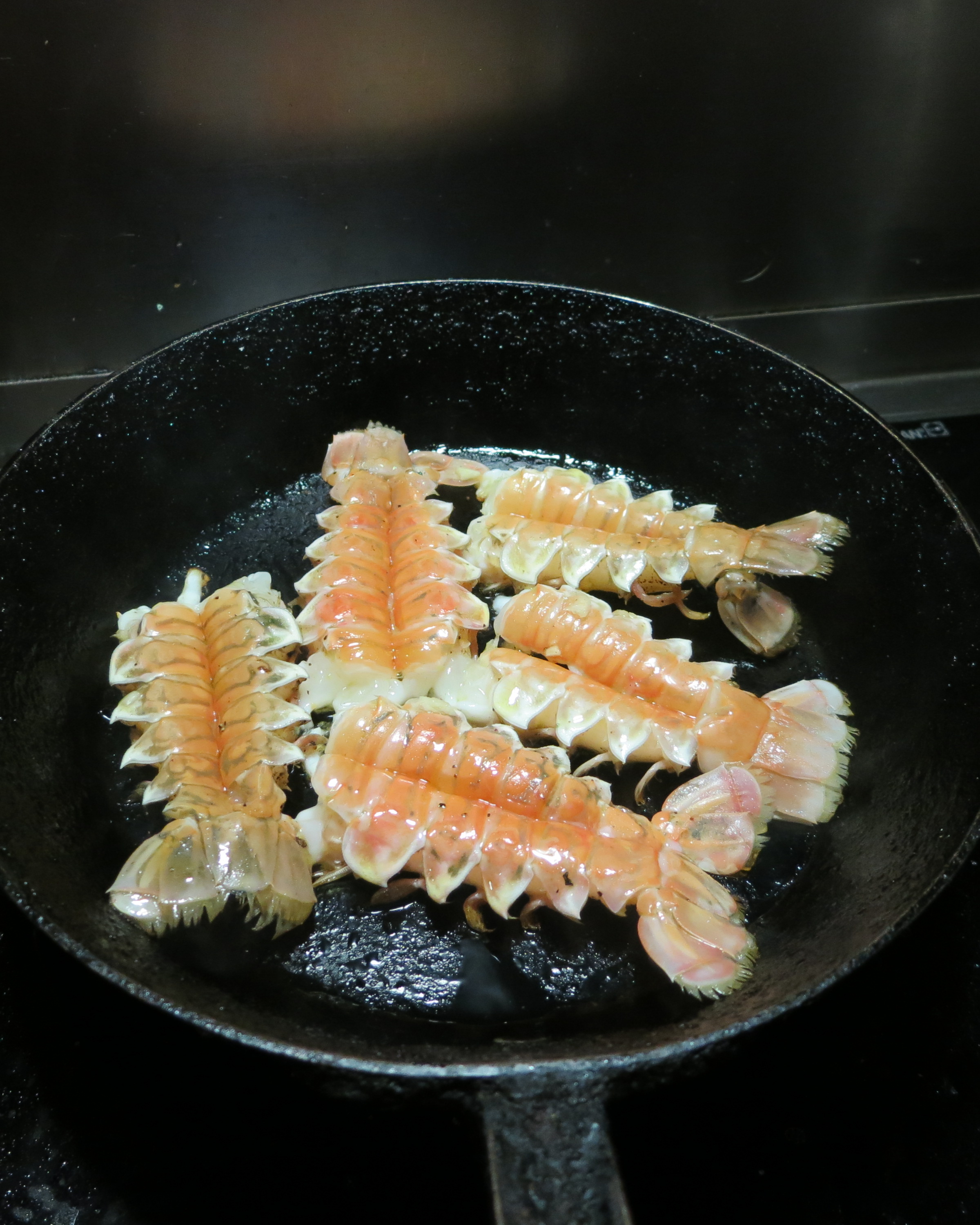
I let this all bubble away whilst I heated a pan and the cooked the prawns

First belly down
IMG_3110

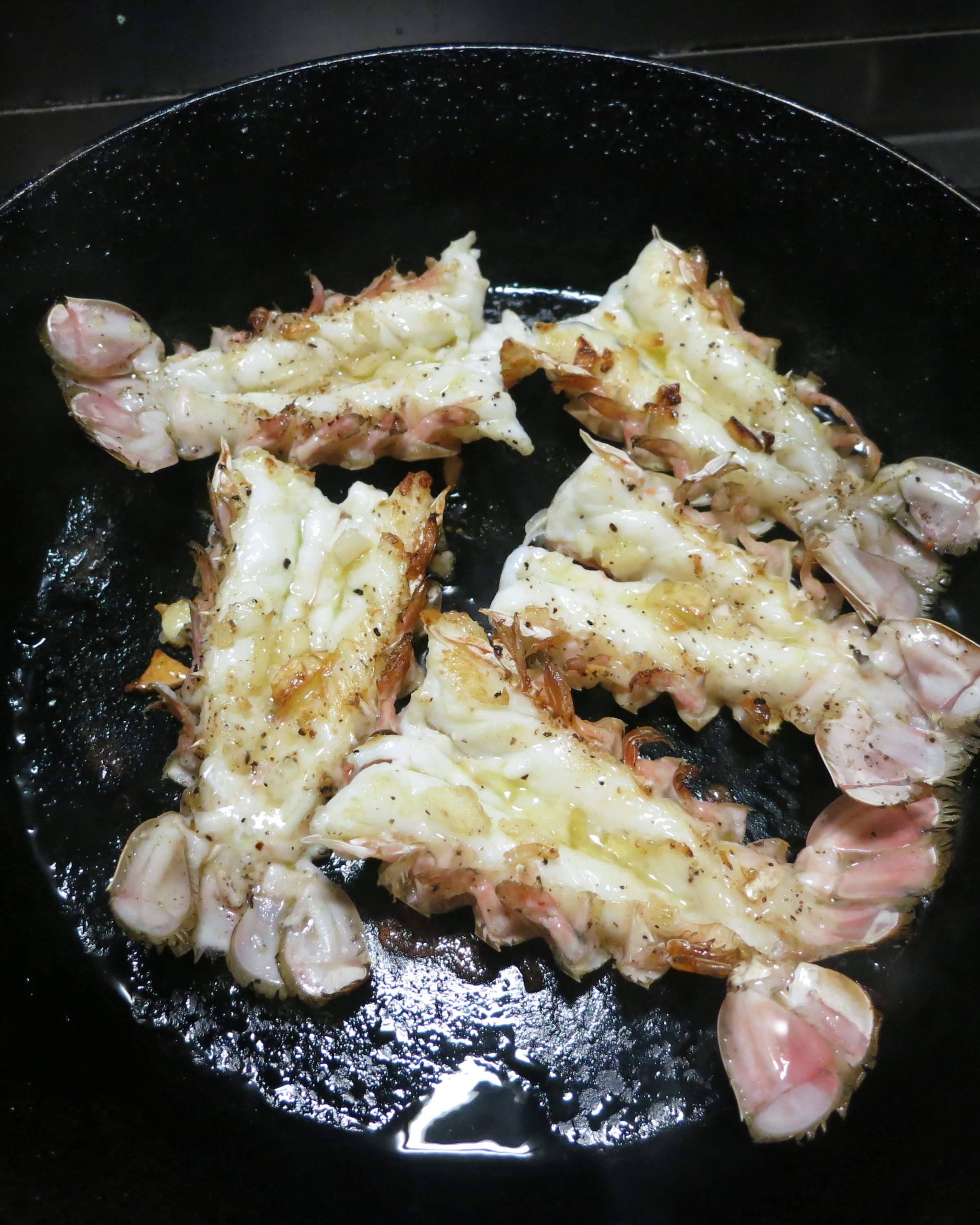
Then belly upIMG_3113

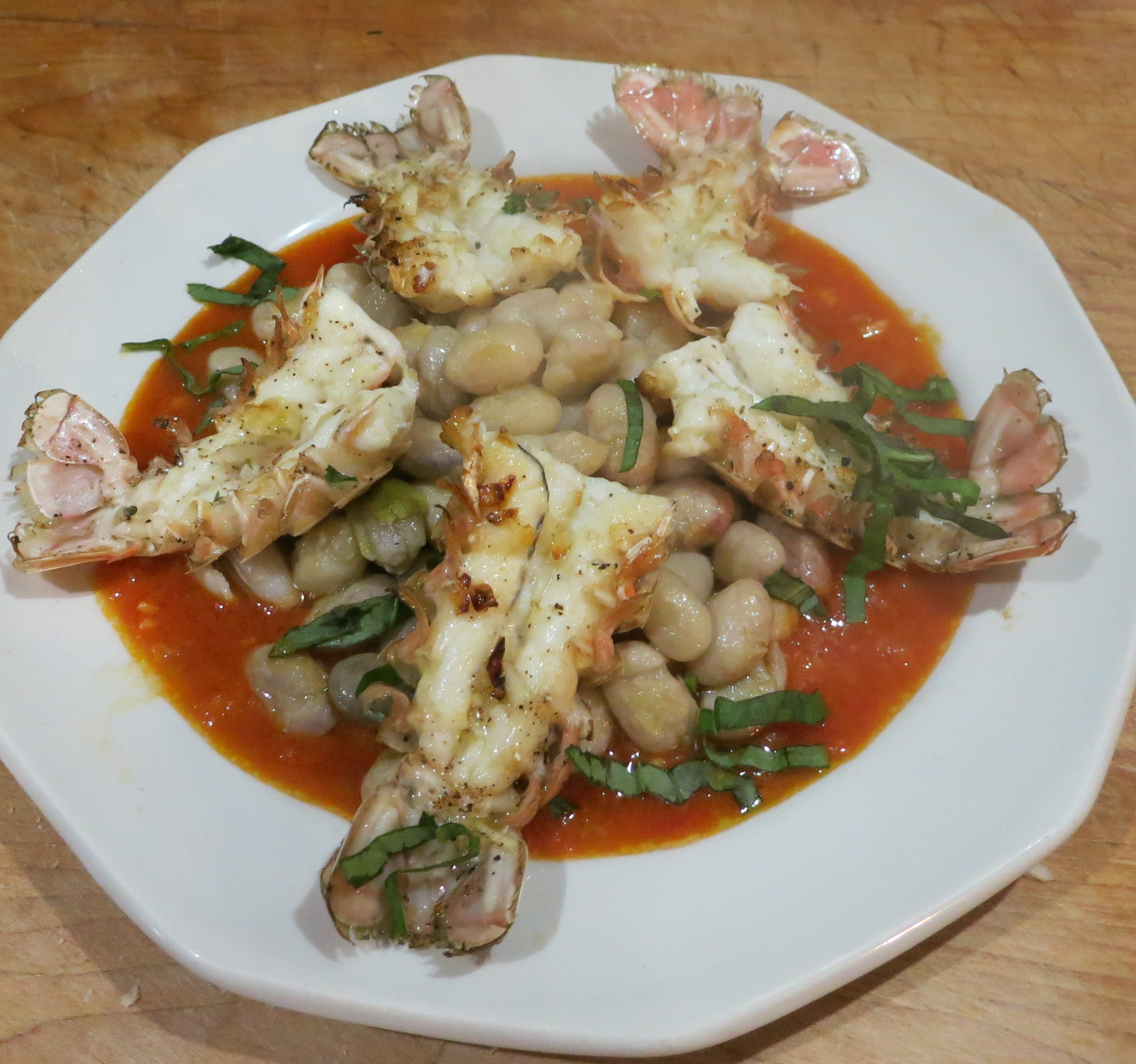
I seasoned the sauce, put a puddle on the plate , then a little heap of borlotti beans and piled the prawns on top.

IMG_3116

Yum! Absolutely yum!  Even if I do say so myself – mind you my kitchen is trashed and I’m feeling very stuffed!


Aubergine Adventures

IMG_3078

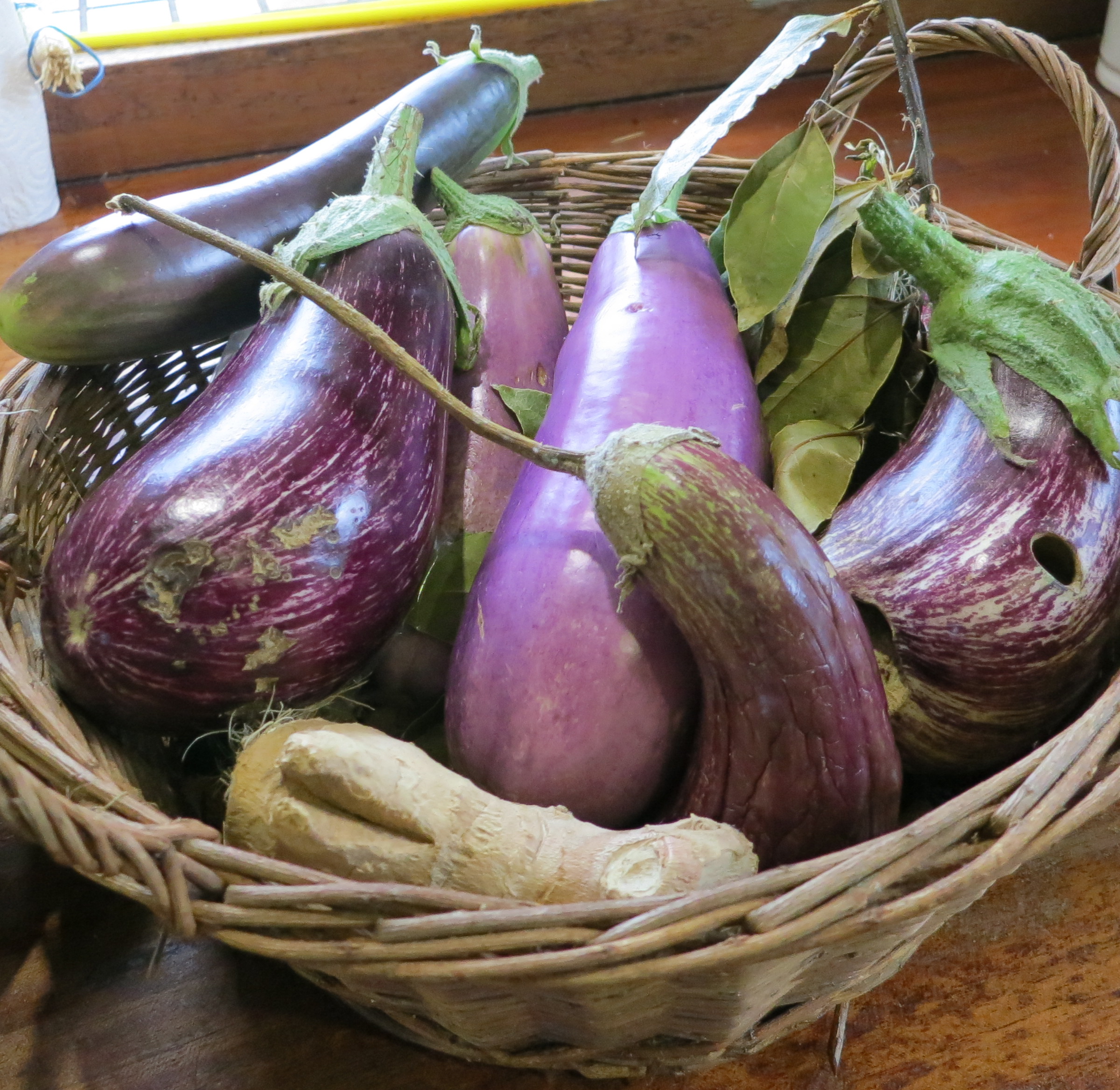
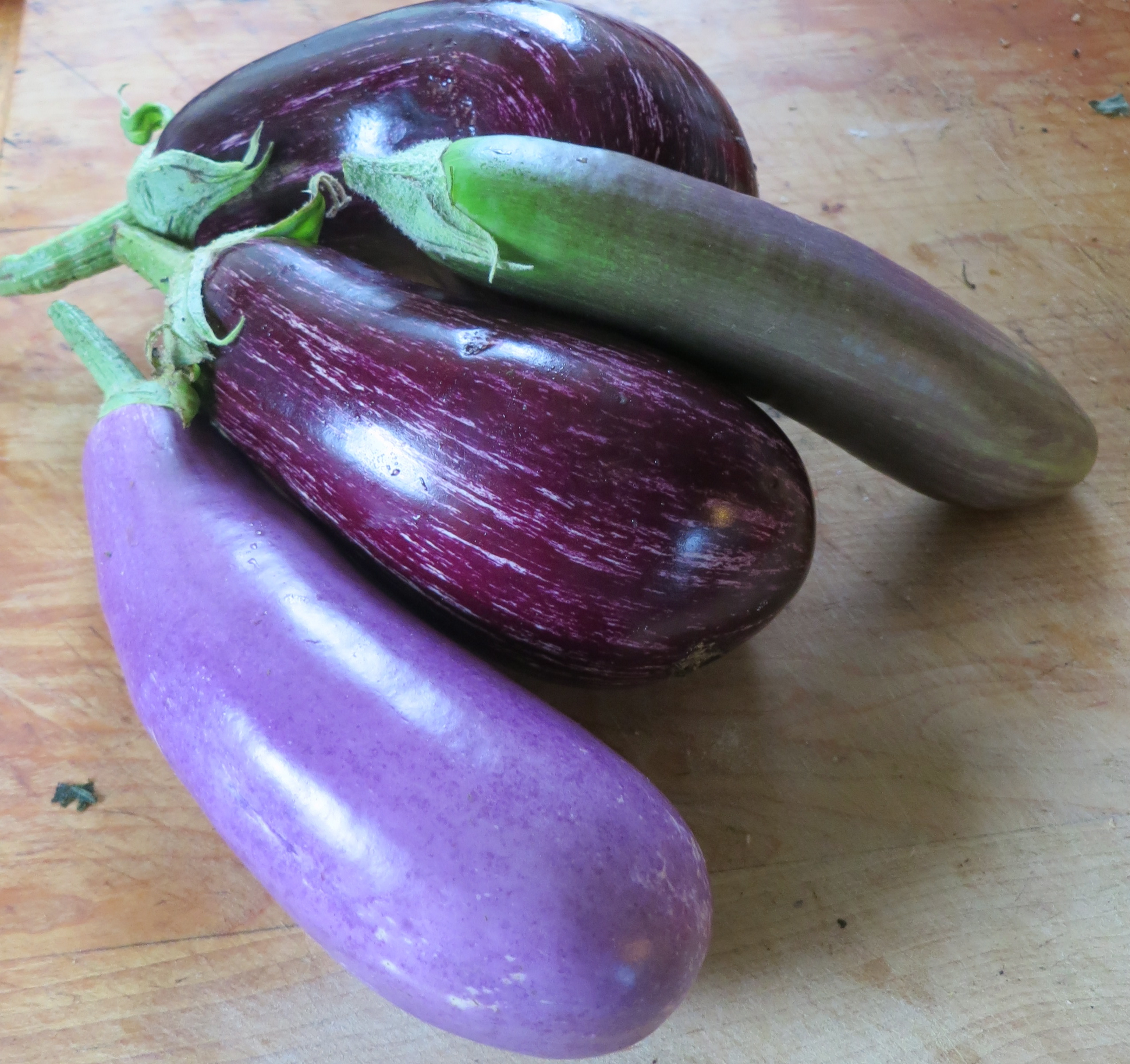
I was walking around the garden trying to decide on a recipe for this month. My first thought was the quinoa, which we have harvested and have stretched out to dry in the tunnel. Then of course there is also an inviting collection of pumpkins, which we’ll be eating for most of the winter. But when I walked into the tunnel and saw our mighty crop of aubergines it became obvious that this was the vegetable of the moment. We grew three different varieties of aubergines this year. Long mauve Thai ones, long skinny dark purple Chinese ones and chunky stripy Spanish ones and they are all ready to eat.

IMG_3063

One of my first culinary adventures was to make a moussaka in a domestic science class at school. It’s a Greek dish that uses minced lamb and aubergines. I hadn’t got a clue what I was doing but was I was curious, it sounded so exotic.

My mum scoured the town for aubergines, which were relatively uncommon at that time, and I carted all the ingredients into school on a bus. The instructions must have said something like ‘fry the aubergine in oil’ which I followed to a T, pouring in more oil as the aubergine drank it up like a sponge. The resulting dish was quite disgusting and nobody wanted to eat it.

I have since learnt to salt the aubergines, not so much to eliminate any bitterness, but to slow down the oil absorption. And for a dish like moussaka I now brush the aubergines with oil and roast them in the oven rather than fry them in the pan..

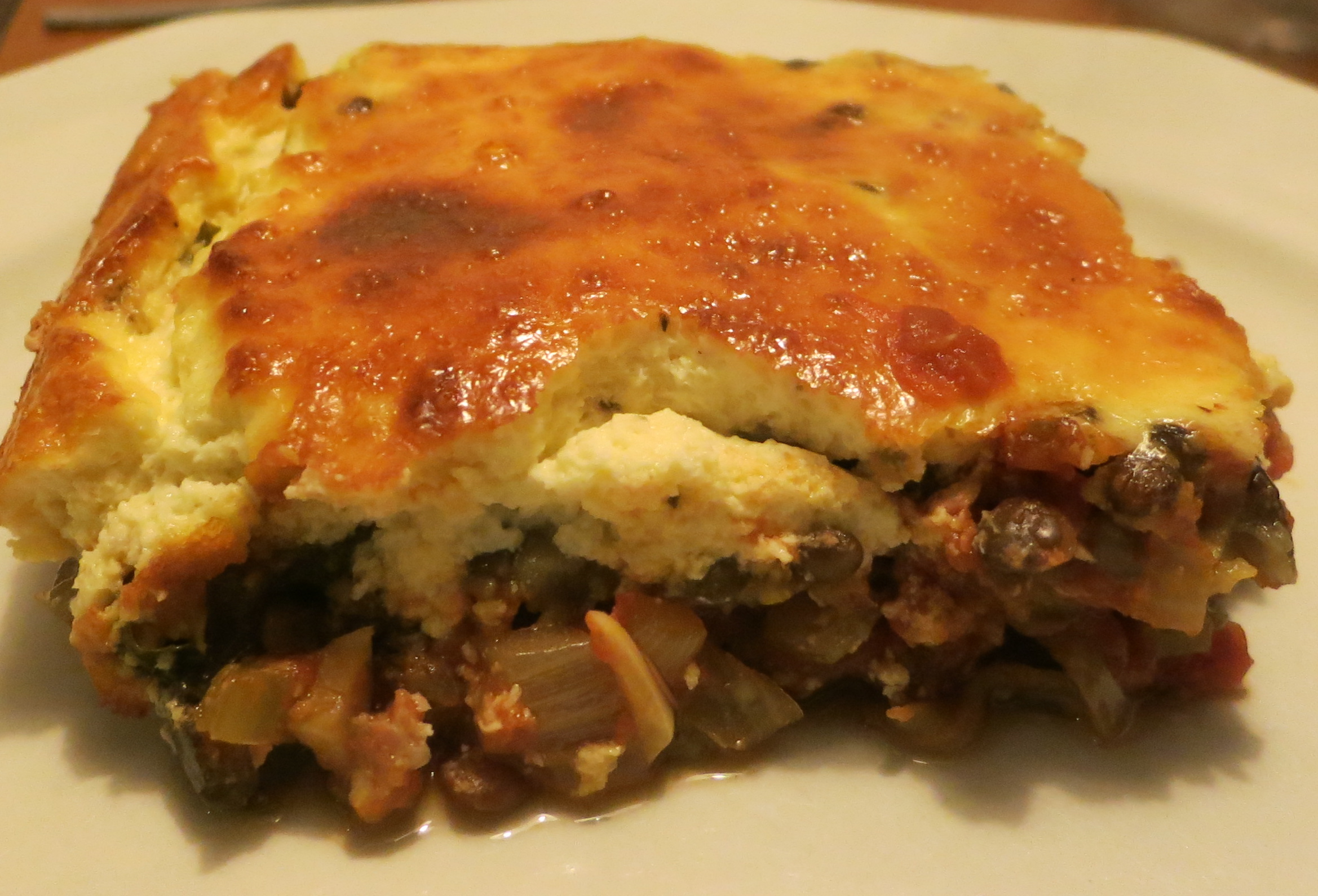
Aubergines cooked this way have a wonderful velvety ‘meatiness’ which paired with Puy lentils makes a great vegetarian dish.

Puy lentils are King in the lentil world. –  also known as the caviar of lentils. They are grown in the sunny volcanic region of Auvergne in France and are protected with a designation of origin status (AOC).

They are more expensive than the other lentils but the beauty of these little blue/green gems is that they hold their shape when cooked.

Saying that, do cook them carefully. They don’t require any soaking and will take about twenty minutes. I start checking just before the twenty minute mark – just pop one in your mouth and if it’s tender they are done..

IMG_3092

Vegetarian Moussaka

125g Puy lentils

1 bay leaf

2-3 cloves garlic, peeled and chopped

1-2 onions

2 sticks celery

2 cans tomatoes

2-3 aubergines

fresh basil or oregano

olive oil

3 eggs

225g ricotta

200ml cream

75g grated parmesan

Put the lentils into a pan and cover them with water, add the bay leaf. and bring to the boil. Turn down to simmer, cover with a lid and cook for 20 mins, until the lentils are tender. Drain off any remaining liquid and discard the bay leaf.

Slice the aubergines lengthwise , not too skinny as they’ll shrink slightly whilst cooking – a little less than a centimetre thick. Sprinkle with a little salt and leave them to sweat for about half an hour

Pre heat the oven to 180c.

Dab the liquid that will have accumulated on the aubergines with kitchen paper or a clean t-towel to dry them off.

Oil a large oven tray. Slice the aubergines lengthwise and lay on the tray. Brush the tops of the aubergines with olive oil.

Bake in the oven for about 15=20 mins. The aubergines should be soft but not crispy.

Peel and chop the onion, chop the celery and sautee together in a little olive oil When they are soft and translucent add the chopped garlic and cook for a couple of minutes longer then add the tomatoes and cook for about 30 mins. Stir in the drained lentils and season with salt and pepper. Add the chopped basil or oregano.

In a bowl mash the ricotta together with the eggs then beat in the cream. Stir in the grated Parmesan and season.

To assemble the moussaka pour 1/3rd of the tomato lentil mix into an oven proof dish. Cover with a layer of aubergines then 1/3rd more of the tomato lentil mix, another layer of aubergines and then the remaining lentil mix. Pour the egg mix over and bake in the oven for approx 25 mins, until the topping has risen and is golden.

Feeds 6 hungry people


Apple Mania

IMG_2870

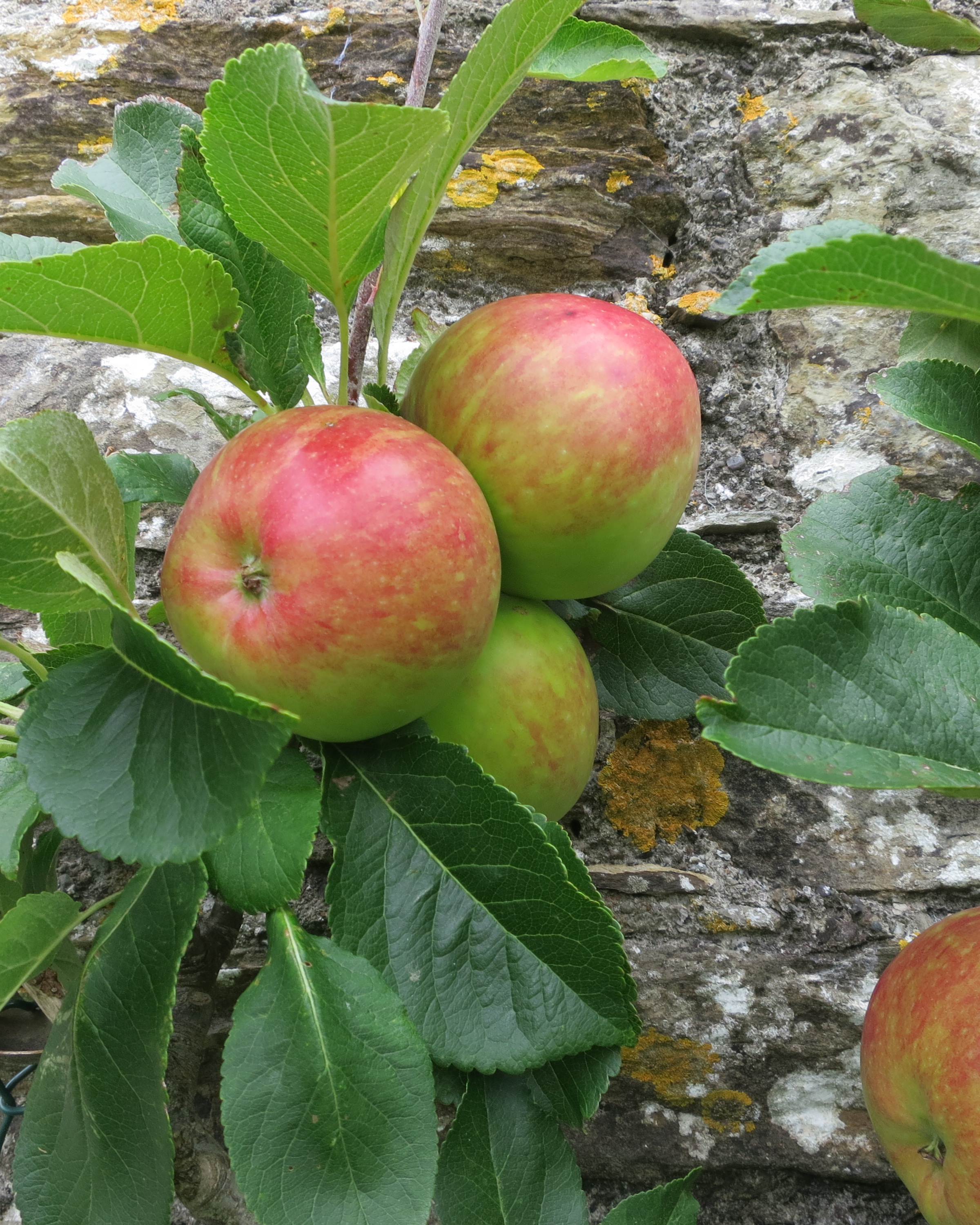
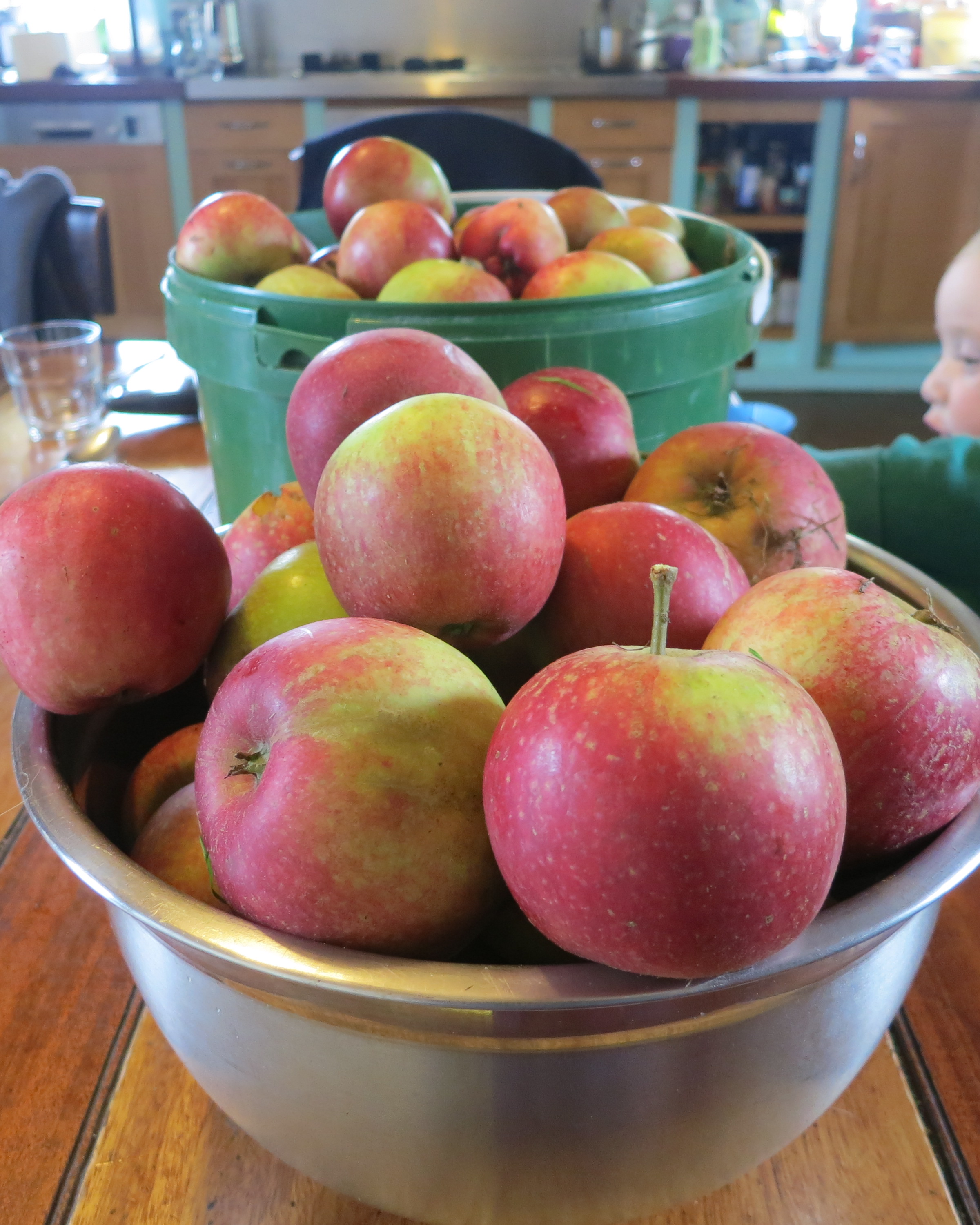
This summer has produced some fantastic fruit. Right now the hedgerows are filling with ripe blackberries and the garden has an incredible amount of apples. The apple trees are espaliered around the wall and some are really ancient – they’ve certainly been here longer than we have – and produce both fragrant eating apples and gnarled knobbly cooking apples. We have also planted lots of crisp juicy eating apples in our time here and these trees are literally drooping with apples.

We have been picking up the windfalls and our kitchen has buckets of apples lined up against one wall. This has started an apple cooking frenzy. We have apple chutney, apple compote, apple muffins and apple tart tatin on the go.

IMG_2878

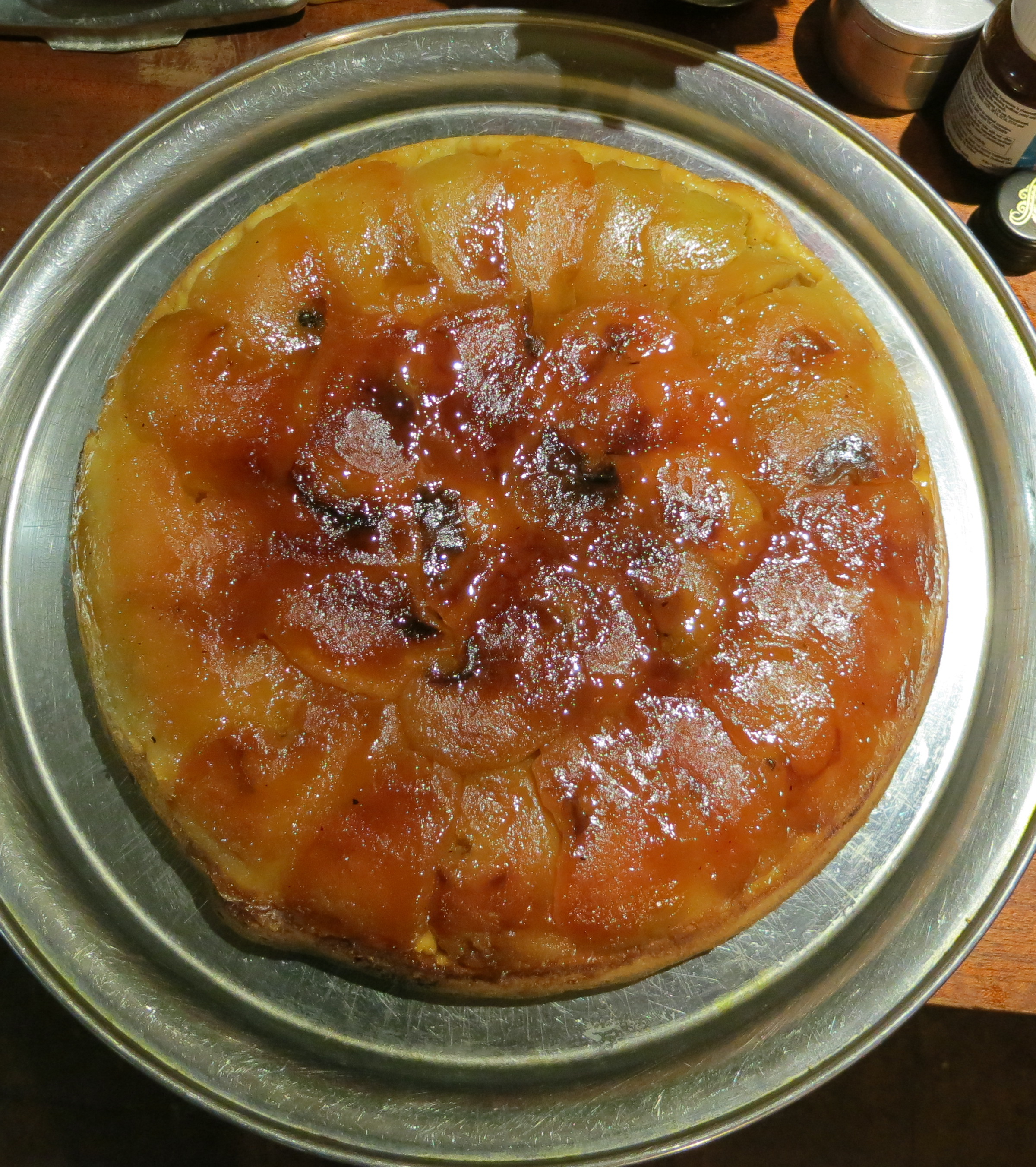
In our house one of autumn’s special treats is an apple tart tatin. They have to be the ‘queen’ of apple tarts and they also use an impressive amount of apples to make each tart, so are ideal in the apple consuming quest. To make a tart tatin the apples are gently caramelised in butter and sugar, then covered with pastry and baked. When the tart cools it’s tipped out onto a platter so the apples sit on top. It tastes divine. I wouldn’t normally be an apple tart person but these are the business. To prevent ourselves from dying of tart over consumption we are sharing these with the shop so if you would like to try a slice pop in and get a piece.

IMG_3025

I was going to write the tart tatin recipe but when I sat down to write it I realised it was a bit tricky. It’s one of these recipes that you really need to see to unlock the secret.

IMG_2979

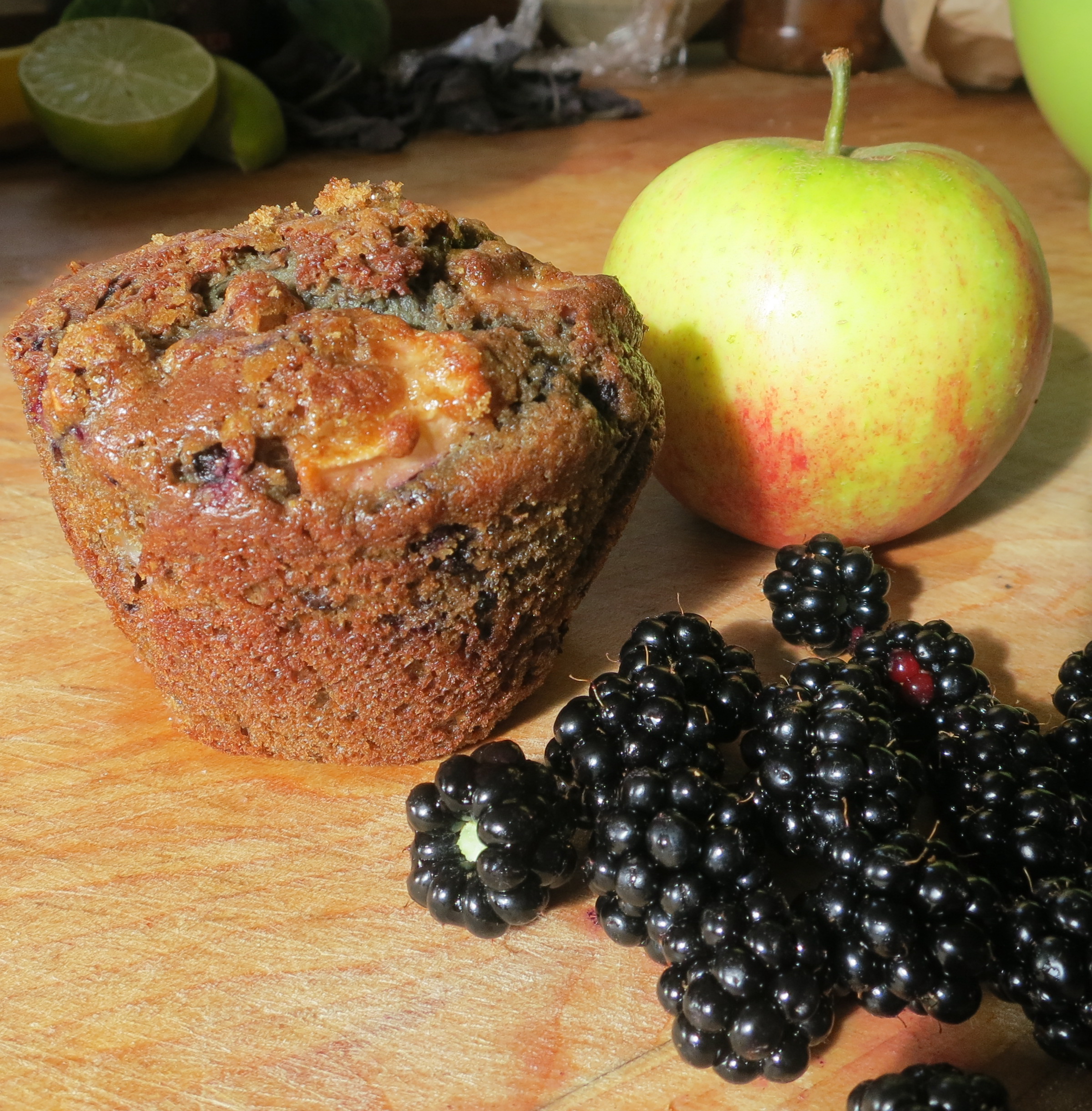
Amidst all this apple mania I have been experimenting with muffin recipes. Muffins are a North American invention and the recipes are so simple that it’s possible to imagine early pioneers with very little in the way of a kitchen knocking these out. No fancy equipment needed, just bowls, a wooden spoon and an oven. Here’s one of my successful culinary creations: apple and blackberry muffins.

Apple and Blackberry Muffins.


100g whole wheat flour

125g white flour

225mls natural yoghurt or sour cream

125g butter

2 eggs

1 dsp ground cinnamon

1tsp baking powder

1 tsp bread soda

125g light muscovado sugar or light brown sugar

2-3 eating apples

1 large cup of blackberries

A little extra sugar for the top of the muffins


Pre heat the oven 180c

Grease a twelve-portion muffin tin with butter or line with muffin cases.

Melt the butter in a small pan then put aside.

Put the flour, cinnamon, baking powder, baking soda, cinnamon and sugar into a large bowl and mix together.

Beat the eggs together with the yoghurt or sour cream.

Peel the apples and chop into small pieces.

Tip the egg/yoghurt mix, chopped apples and blackberries and melted butter into the dry ingredients and mix briefly. Put a large spoonful of the mixture into each muffin case. Sprinkle the top with a little muscovado sugar then bake for 20-25mins.

Check the muffins by inserting a clean sharp knife; if it comes out clean the muffins are ready.


Happy Courgettes

IMG_2777

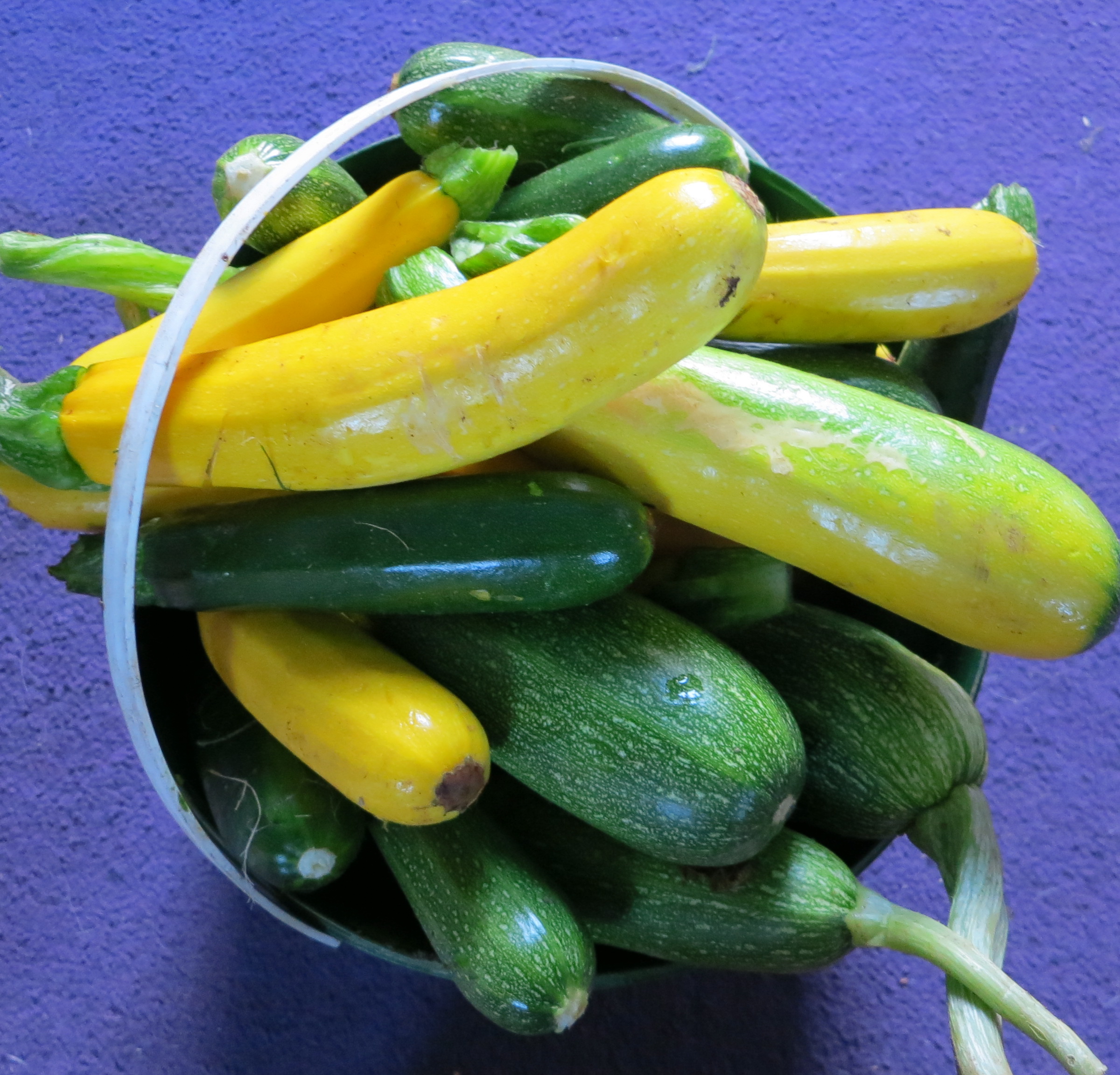
Contrary to my firm belief that courgettes love sunshine I now realise they equally love the rain. We watered our courgettes every day during the heat-wave and although the plants looked super healthy there weren’t very many courgettes. Since the weather has returned to a more ‘normal’  warm rain/sun showers they are thriving. I swear they are growing before our eyes. Each day we pick a bucketful, which means the courgettes are at least doubling in size each twenty four hours.

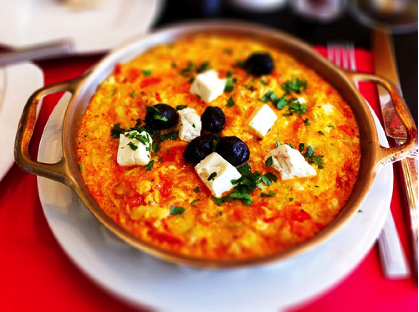
Here’s a recipe that we enjoyed the other night. It is called Firinda Kabak and it is an old Turkish recipe. In English this translates to a courgette and herb bake. We have tweaked the recipe over the years and this version uses polenta instead of flour, It gives it an interesting texture and makes it suitable for coeliacs and people with wheat intolerance. If you prefer to use flour just substitute flour for polenta. Use small courgettes if you can as they will have the best flavour.

Untitled1

COURGETTE AND HERB BAKE aka Firinda Kabak

6 small courgettes

3 eggs

6 spring onions- cleaned and chopped

a generous handful of chopped mint

a generous handful of chopped dill or fennel

a generous handful chopped parsley

75g grated Gruyere, Comte or Emmental cheese

75g feta

100g polenta

50g butter

12 black olives

Pre heat the oven to 180c

Line a 9”/23cm tin or baking dish with parchment paper.

Grate the courgettes coarsely, gather them into your hands and squeeze gently to extract excess water then put them into a bowl.

Add the eggs, spring onions and chopped herbs and both cheeses. Mix well. Then add the polenta and season with salt and pepper.

Pour the mix into the prepared tin.

Scatter the olives on top and dot with little pieces of butter.

Bake for about 45 minutes or until the bake is golden on top.

Cut into wedges or squares and serve hot or cold.


The Latest and Grated Beetroot Tabbouleh

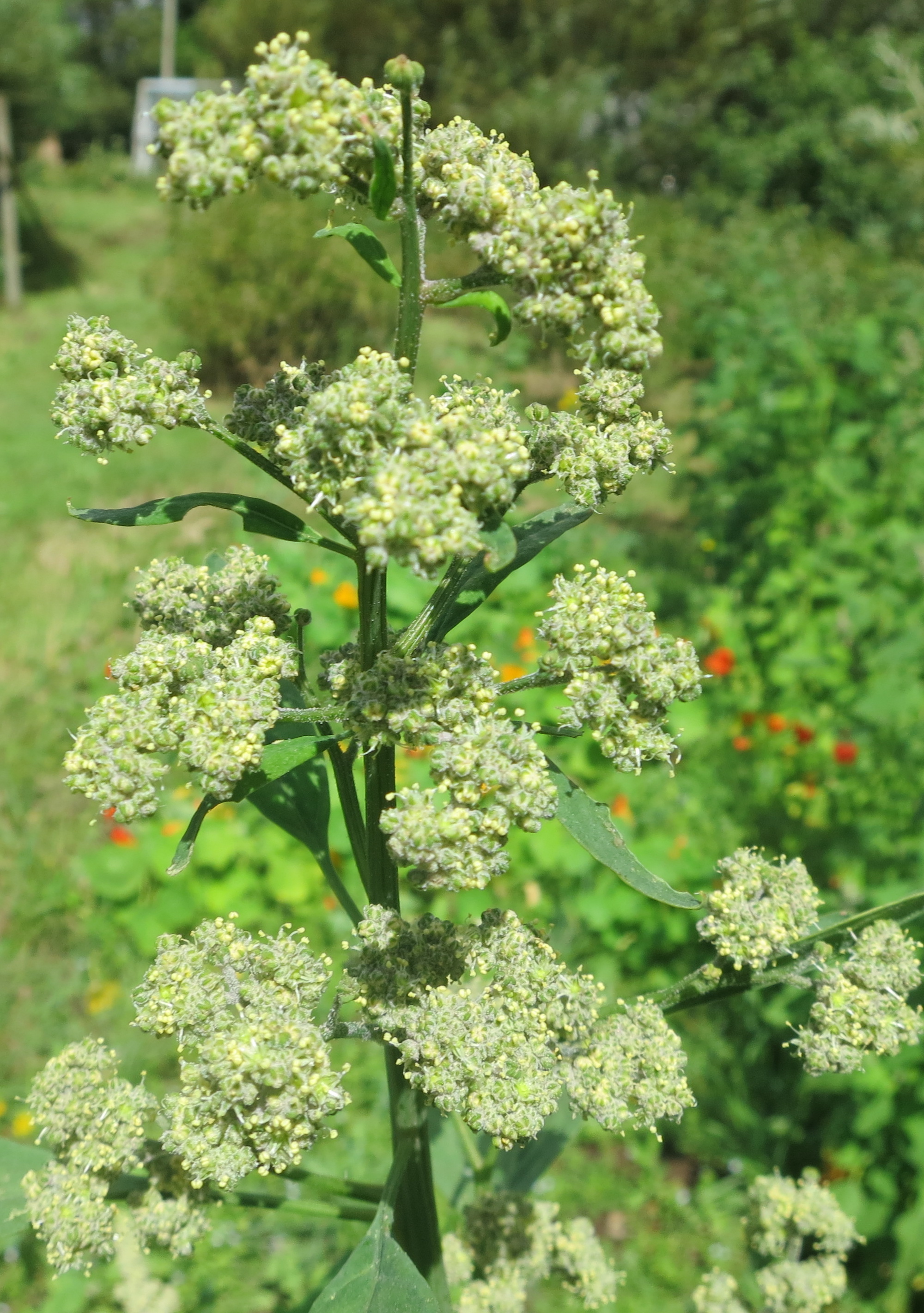
Our quinoa ( keen-wah) is growing fantastically. It’s an experiment, I’ve never grown it before. It has become very popular recently and has a reputation as a superfood, it’s low in fat/high in protein/gluten-free and has lots of calcium. After reading an article that said all us greedy Westerners eating the quinoa was putting the Bolivians under financial duress I though I should make some effort to see whether it was possible to grow it here. It’s doing well after an initial hit and run by the chickens. The surviving plants look very healthy and flowers/seeds are appearing.

IMG_2717

Of course there are always two sides to every story and I recently met a journalist who had just returned from Bolivia and she told me that the Bolivians are delighted that there’s a market for the quinoa, they just need to grow more to address the shortage. Apparently it grows like a weed so cultivating it isn’t a problem. This makes me happy, as I was feeling a little guilty about all the quinoa that we use.

The quinoa seems to be quite content growing here, but then who wouldn’t after the stunning weather that we have had in July. The real work begins with the harvesting and drying of the plant as there is a bitter coating of saponins on the grains that needs to be removed before consumption. I haven’t got that far yet and am only researching the next step but I’ll keep you posted.

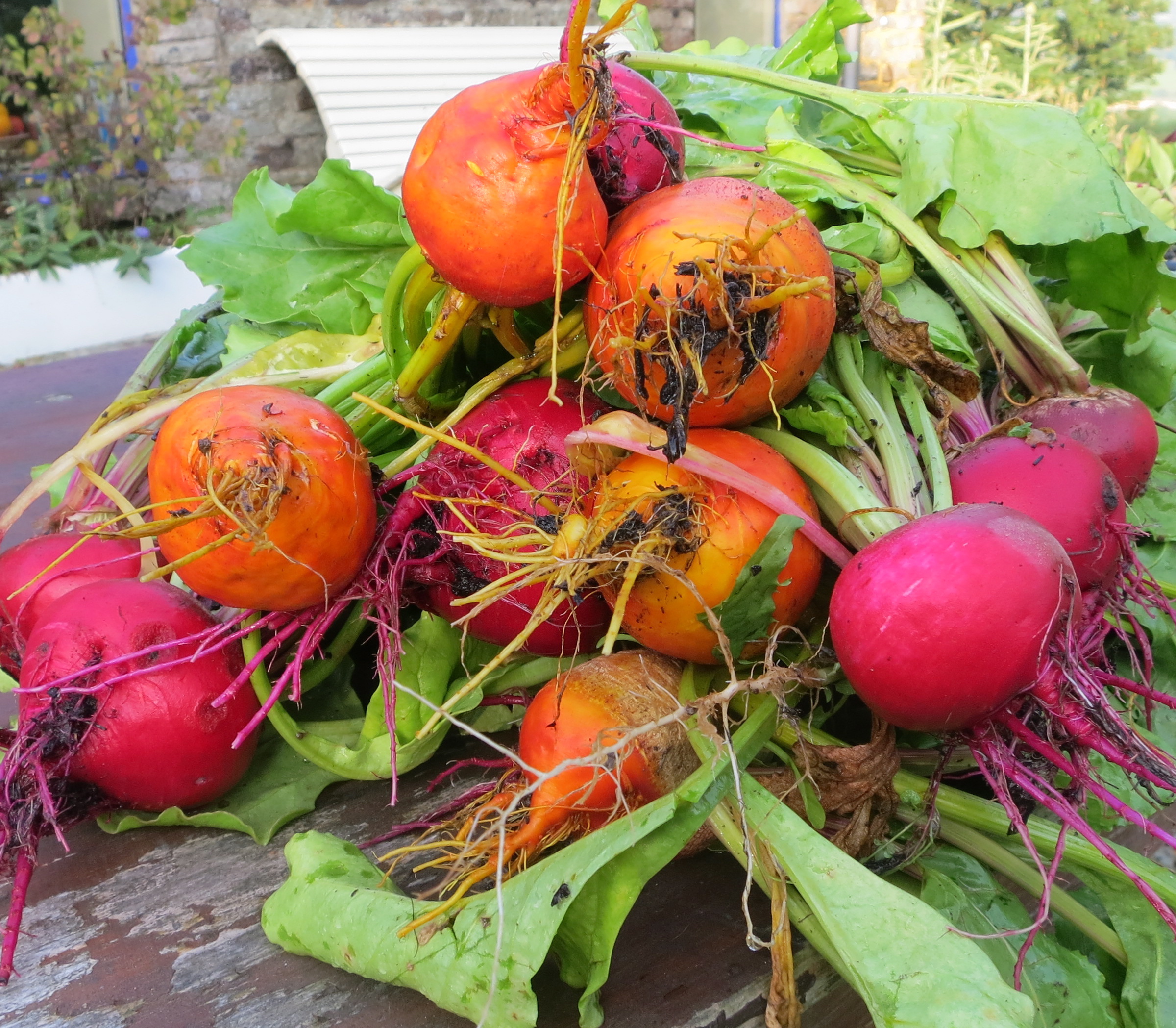
Our latest craze in the shop is Beetroot and Mint Tabbouleh salad. It’s obviously not a true tabbouleh as it’s made with quinoa and not wheat – but it’s a very interesting, and it’s stunning to look at. We have two versions that we make, one where the beetroot is cooked and one where the beetroot is raw. At the moment we’re on the raw beetroot hit. We are have lots of ripe beetroots in our garden, there are three varieties, the standard purple, a golden beet and one that’s called Choggia which is a pink stripy number.

IMG_2679

When they are grated they look beautiful.  Use any young beetroots that you can get your hands on to make this recipe. If you prefer to eat the beetroots cooked, just boil them until tender without peeling them, peel them when cooked and substitute them for the raw ones.

IMG_2725

Beetroot and Mint Tabbouleh

200g Quinoa

300mls water

3-4 beetroots

100g peas – fresh or frozen

1 small cucumber

1 red onion

a large handful of chopped mint

a handful of  chopped parsley

the juice of 1 lemon

1 tsp Dijon vinegar

100mls olive oil

salt and pepper

Put the quinoa and water into a saucepan with a pinch of salt and bring to the boil. Cover with a lid and turn to a low simmer and cook for ten minutes. Take the quinoa off the heat and leave to rest for five minutes then tip the quinoa into a bowl and leave to cool completely.

Put a pot of water to boil and cook the peas for two minutes. Drain and run under cold water then put aside.

Peel the beetroots and grate on the fat side of the grater.

Peel and chop the onion.

Cut the cucumber into quarters lengthwise then chop into an equal sized dice.

Put all the vegetables into a large bowl together with the quinoa and chopped herbs.

Put the Dijon mustard into a small bowl and whisk together with the olive oil and lemon juice then pour this over the salad. Toss everything together and season with salt and pepper to taste.


Cucumber Taste Experience

IMG_2533

The fine weather has been doing it’s magic. The garden is happy and the vegetables are growing.

We are at the delightful stage of eating the ‘first’ of everything. Beautiful big artichokes eaten with a little vinaigrette to dip the leaves in, squeaky bright green French beans and cucumbers were all in last nights dinner.

The cucumbers are amazing. They taste just as they should – like cucumbers. There are no other words to describe cucumber flavour, unlike wines which can be likened to an amazing variety of things, cucumbers are fairly unique and taste of themselves. Unfortunately the cucumbers bought in the shops, cling wrapped or not, are well travelled and don’t deliver this taste impact. If I ever need reminding why we go to all the bother of growing our own vegetables I just have to think of this.

Now is the time to get down to the farmers markets and buy yourself a homegrown cucumber. You will appreciate what I am trying to say when you take the first bite.

We have fifteen cucumber plants growing in our tunnels and soon we will be awash with them. Our general plan is to be self sufficient in cucumbers until, hopefully, October. I have already picked the first bucketful and delivered them to the shop for the salads and all going well we’ll soon be tripping over them.

They’re not the easiest plant to establish. Cucumbers are like Princesses – rather fussy. They don’t like drafts and they don’t like to get their stems wet. They do like to drink a lot so we plant them in their personal mounds and water around them. The plants grow pretty tall, anything up to eight or nine feet high so they are trained up a piece of twine to stop them collapsing in a heap. One cucumber plant will produce about six or seven cucumbers a week so there’s plenty of eating to be done.

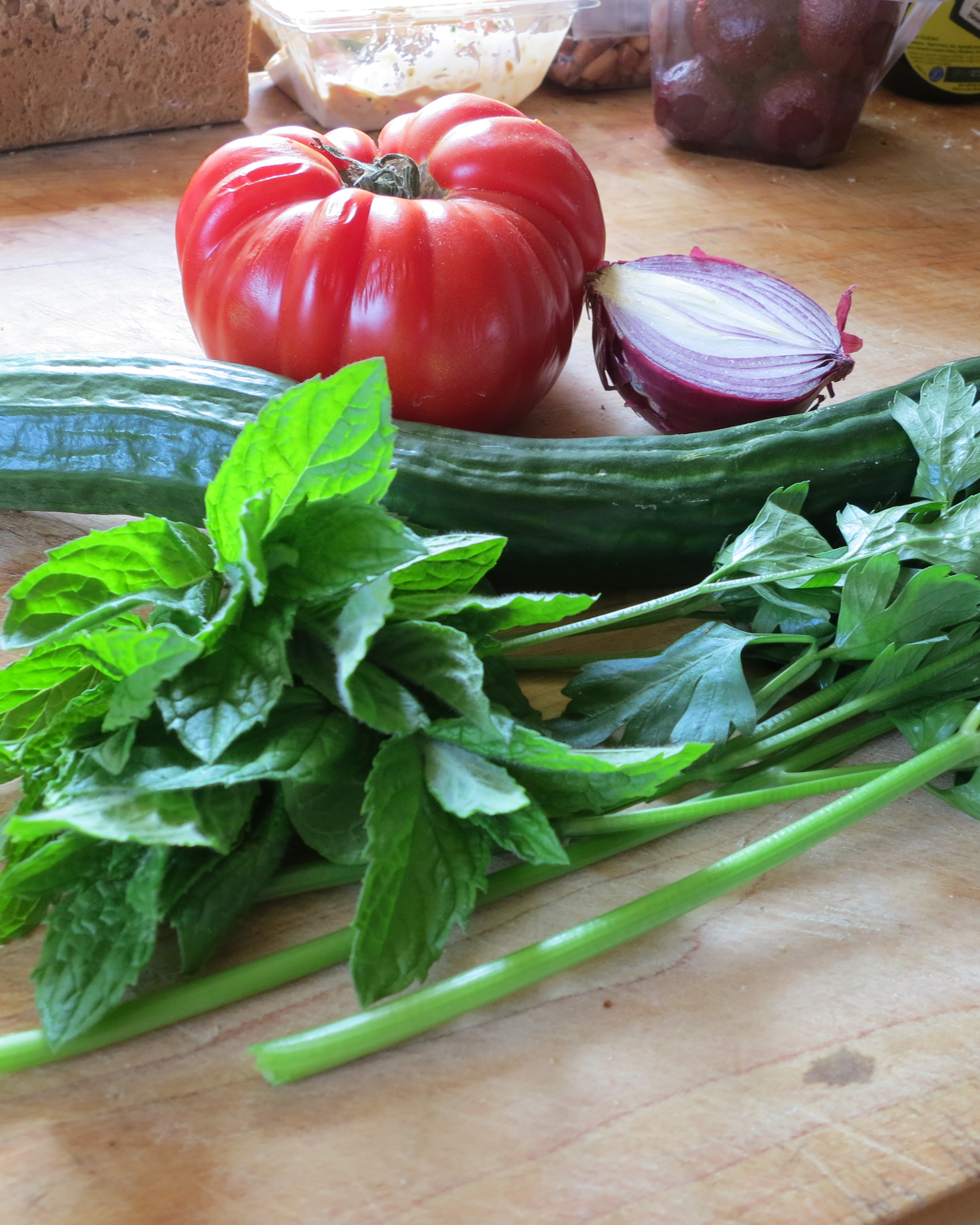
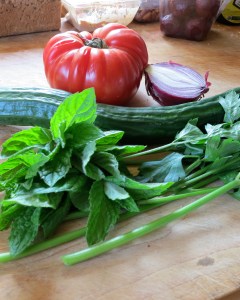
In celebration of the new season cucumbers I’ve sorted out some easy recipes ideas. Cucumbers are the fourth most cultivated vegetable in the world so the choice is global. Here’s a Turkish cucumber and tomato salad, a Lebanese yoghurt and cucumber salad and the classic French crème fraiche and lemon juice combo. I might also mention that cucumber and Marmite sandwiches are the business, I was bought up on those!!
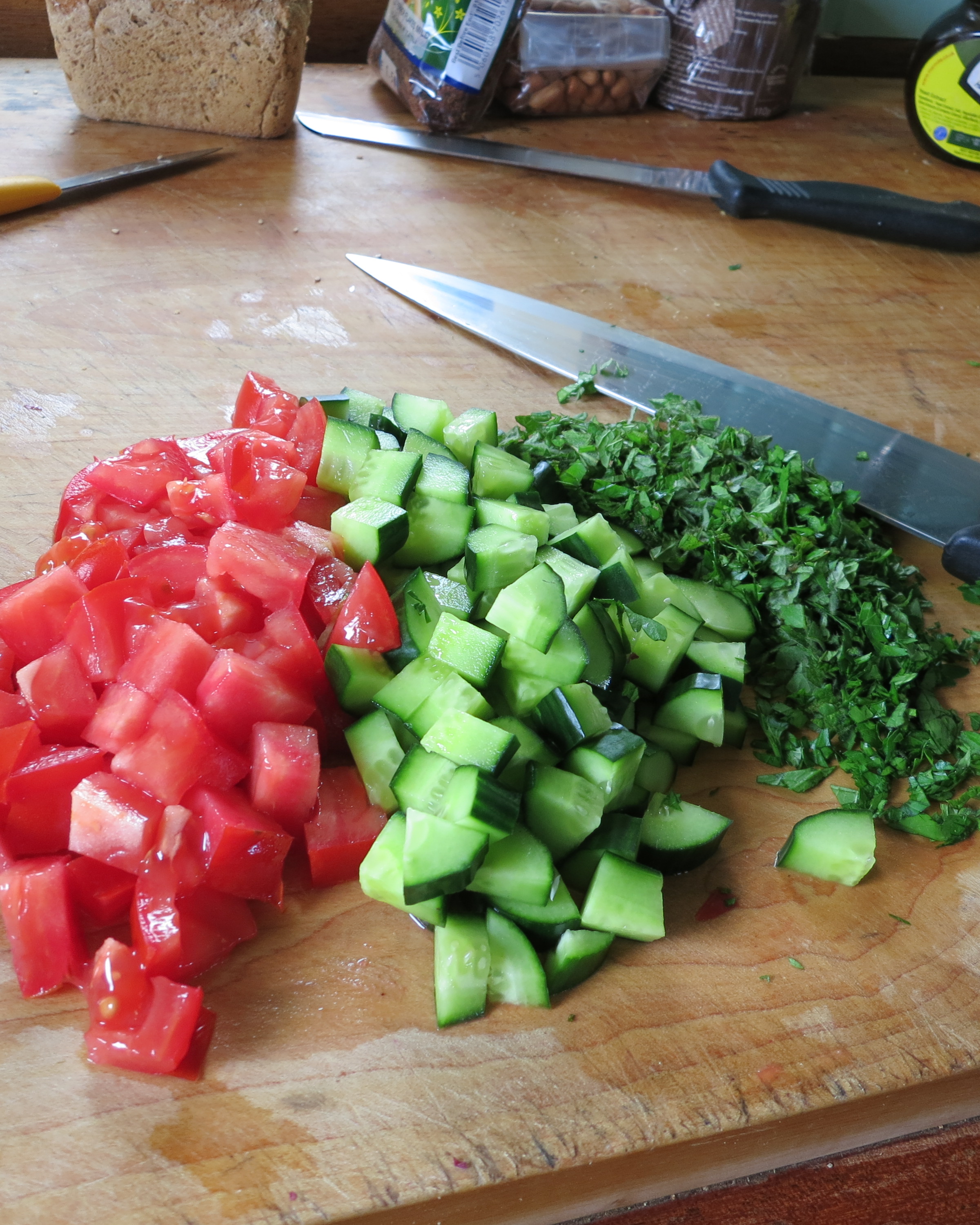
IMG_2557

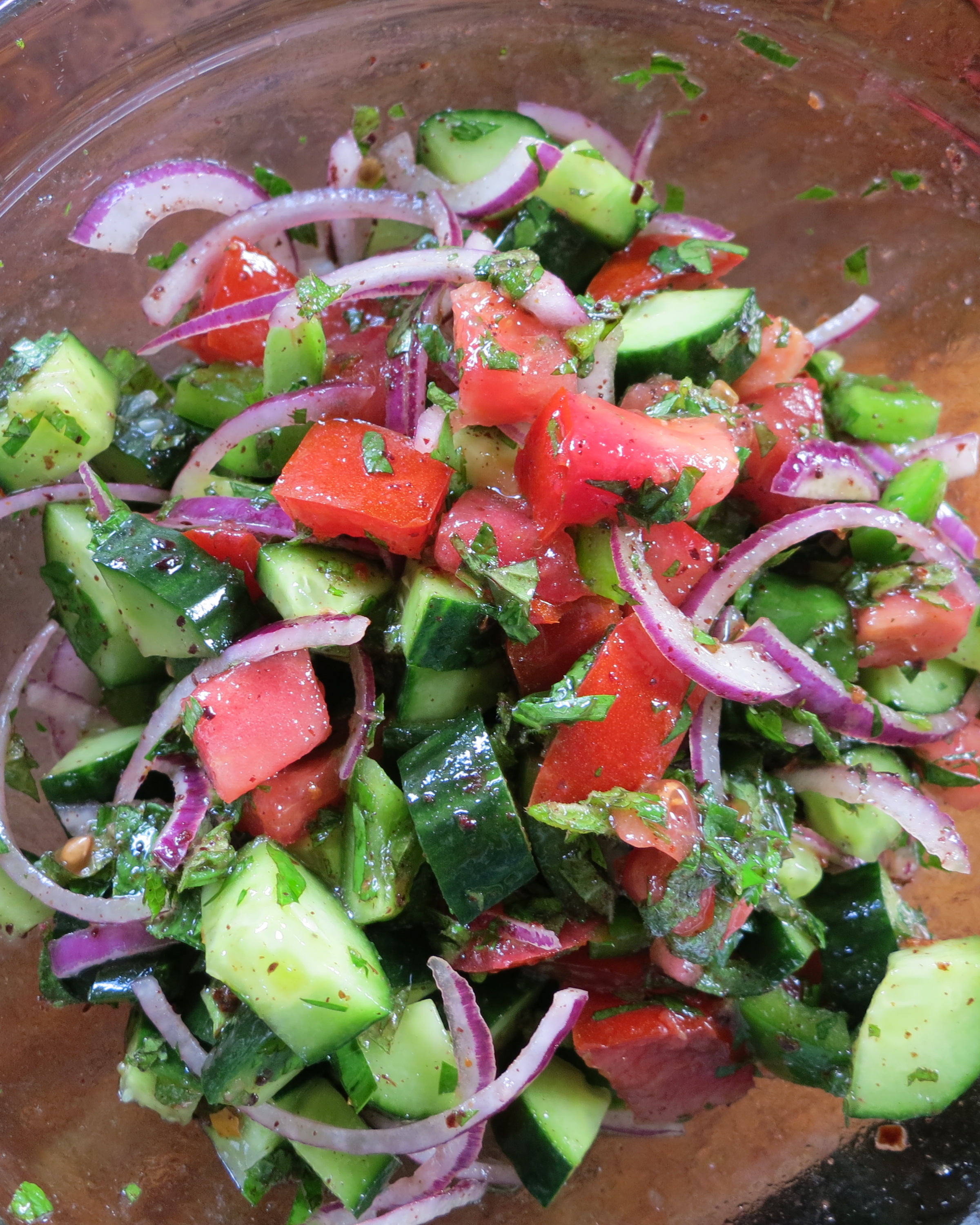
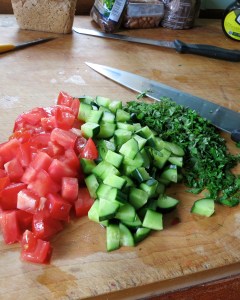
Turkish Cucumber and Tomato Salad

About 500g fatty tomatoes –  beefsteak style are best as they can be diced

1 cucumber

1 small green pepper

half of a smallish red onion

a handful of flat leaf parsley

a handful of mint

1 tsp sumac = optional but very nice if you have some

salt

about 3 tbs extra virgin olive oil

about 3 tbs lemon juice

Peel and slice the red onion, cover with cold water and leave aside for 5 minutes. Drain, rinse with more cold water and put aside. This gives a milder and crisper onion.

Cut the cucumber into quarters lengthwise  then chop into an equal size dice – about 1cm

Cut the tomatoes into thick slices – about 1cm thick then chop into an equal size dice.

Wash the green pepper, cut it in half and remove the seeds. Cut the pepper into slices , then dice.

Chop the parsley and mint.

Put all the vegetables and herbs into a bowl, sprinkle over a little salt, one teaspoon of sumac, olive oil and lemon juice and gently toss everything together.

IMG_2564

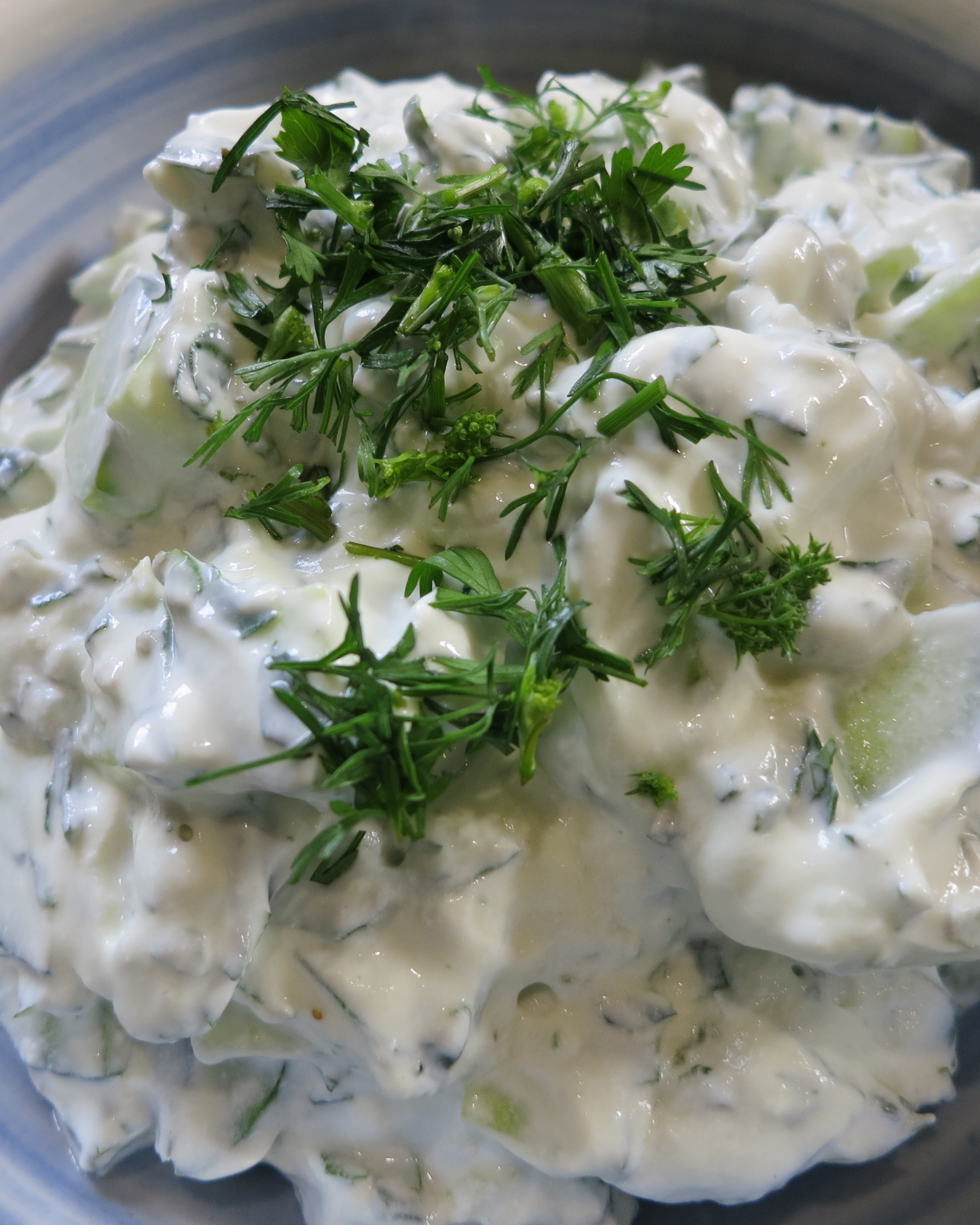
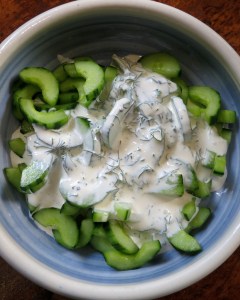
Lebanese Cucumber Salad

Half a cucumber

200mls full fat natural yoghurt

1 garlic clove = peeled and crushed

1 tbs chopped mint

1 tbs chopped parsley.

Cut the cucumber into quarters lengthwise then thinly slice.

Put into a bowl with all the other ingredients and mix well.
IMG_2572

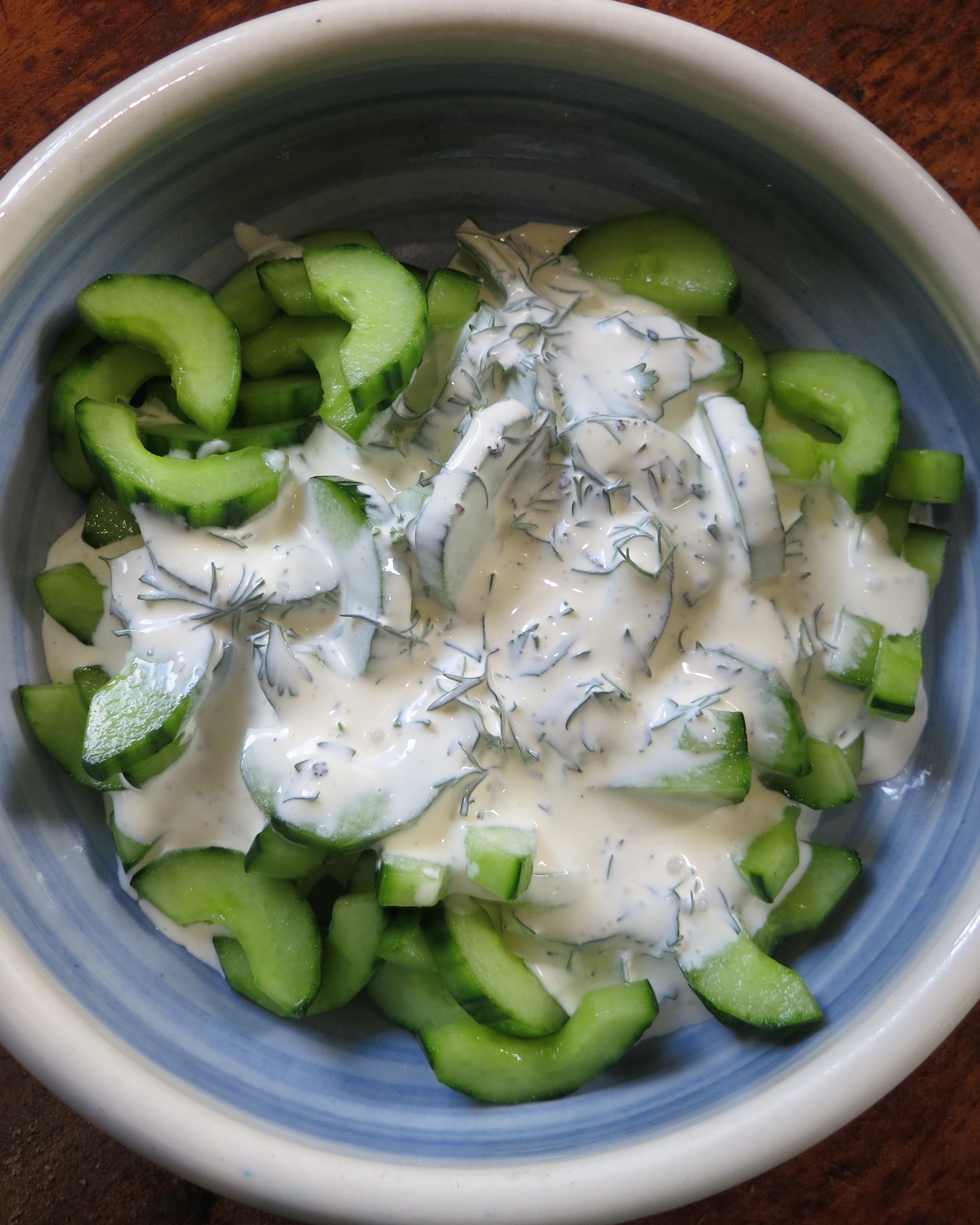
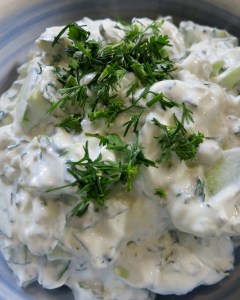
Cucumbers with Crème Fraiche

1 cucumber

200g creme fraiche

1 tbs lemon juice

a handful of chopped dill

salt and black pepper

Cut the cucumber in half lengthwise. Scoop the seeds out of each half using a spoon and discard the seeds.

Slice the cucumber quite thickly, toss with a little salt and put into a colander or sieve. Leave aside for 30 minutes then pat the cumbers dry with some kitchen paper and put into a bowl. Mix the crème fraiche with the lemon juice and chopped dill then pour over the cucumbers. Toss everything together and season with salt (if needed) and a little black pepper
IMG_2565