A Mad Marmalade Mission

IMG_1102

Each winter I make a small stash of special reserve marmalade. It’s quite a procedure but to my mind and my taste buds it’s definitely worth the trouble.

This years organic Seville oranges appeared early, in the middle of December, and rather than miss them I bought my usual three kilos and stashed them. Until yesterday.

IMG_1098

It’s a two day mission to make marmalade so you need a bit of time and space to get it done. First the peel of the orange needs to be pared away from the pith and then finely shredded with a sharp knife.

IMG_1095The oranges are then juiced, pips, pith and any remaining fruit flesh are tied in a muslin bag and then everything is put into a large bowl and seeped over night with some water.

IMG_1096The next day all of this is tipped into a big saucepan and boiled up for an hour or so, until the peel is tender. The muslim bag comes out at this stage. I put it in  a colander and left it to cool while I took the dog for a run on the beach. When I got back it was cool enough to handle and I could give it a good squeeze to extract all the pectin, Pectin is extremely gelatinous and this is vital for the marmalade to set. Once the pectin was back in the pot I added the sugar and boiled it up. And boiled it up! It takes ages. The kitchen was like a steam bath even though I had the extractor on. I was checking to see whether it would set by dropping a spoonful onto a chilled plate and doing the wrinkle test. When it finally it reached setting point. I potted it up and we now have nine jars of very valuable orange nectar for our breakfast toast.

Post Movie Cook-Up

Image

We drove to the city yesterday to watch The LIfe of Pi.

It’s surprising how hungry you can get just sitting watching a movie. Mind you the journey was pretty epic. We went to Mahon Point shopping centre, thinking we wouldn’t have to pay for parking and there were so many people there we couldn’t find a parking space! Luckily all these people were on a crazy shopping mission and the cinema had plenty of space. I really enjoyed reading the book some years ago and the movie does a great job with the story.

It took twenty minutes to leave the car park after the movie so by the time we got home we were even hungrier.

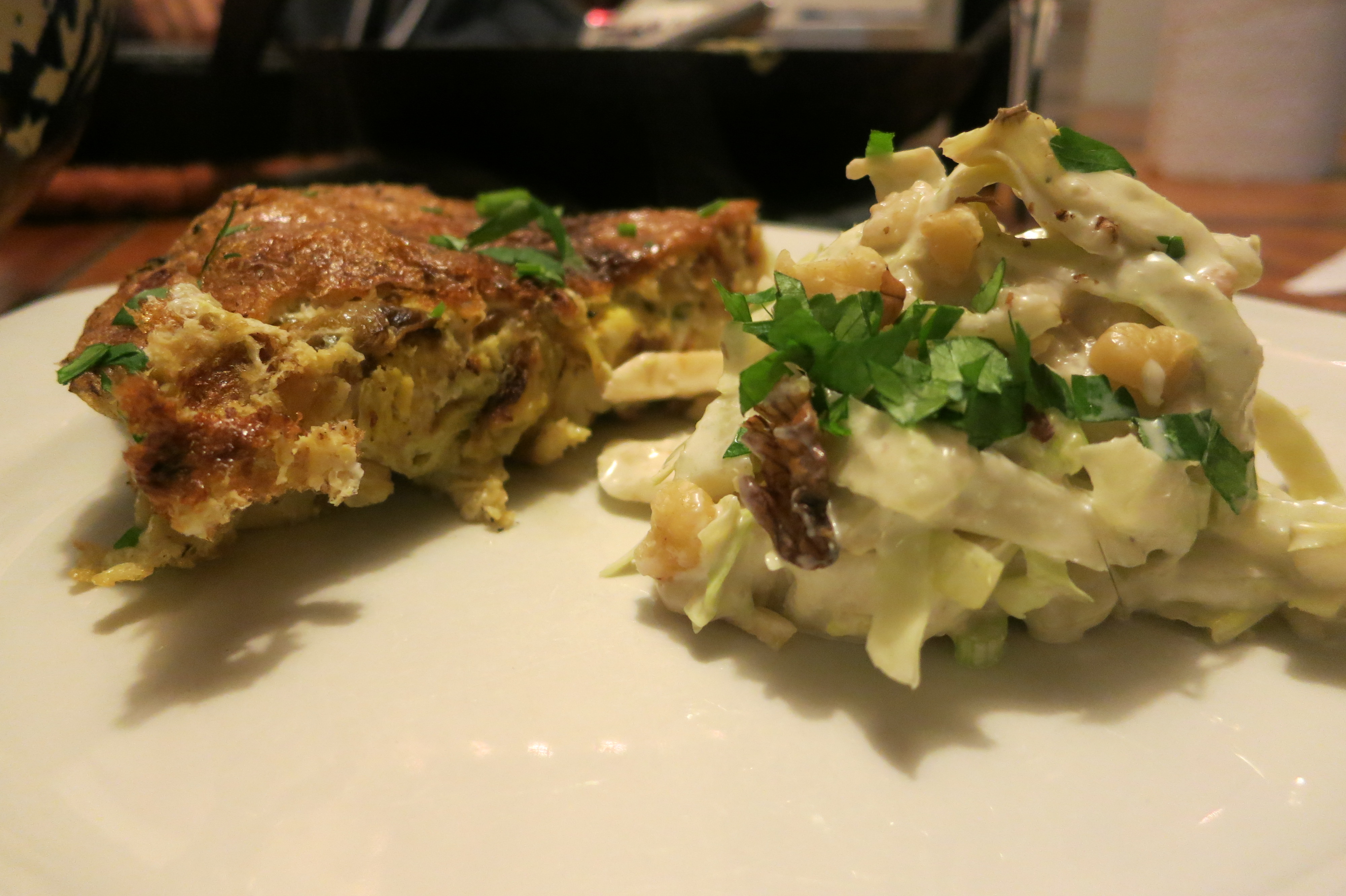
We had a bowl of vegetables left over from our Xmas dinner – roasted spuds and chilli ginger sprouts and these were rapidly transformed together with a fried onion into a tortilla which we ate accompanied by some ‘blonde’ cole slaw.

ImageImage

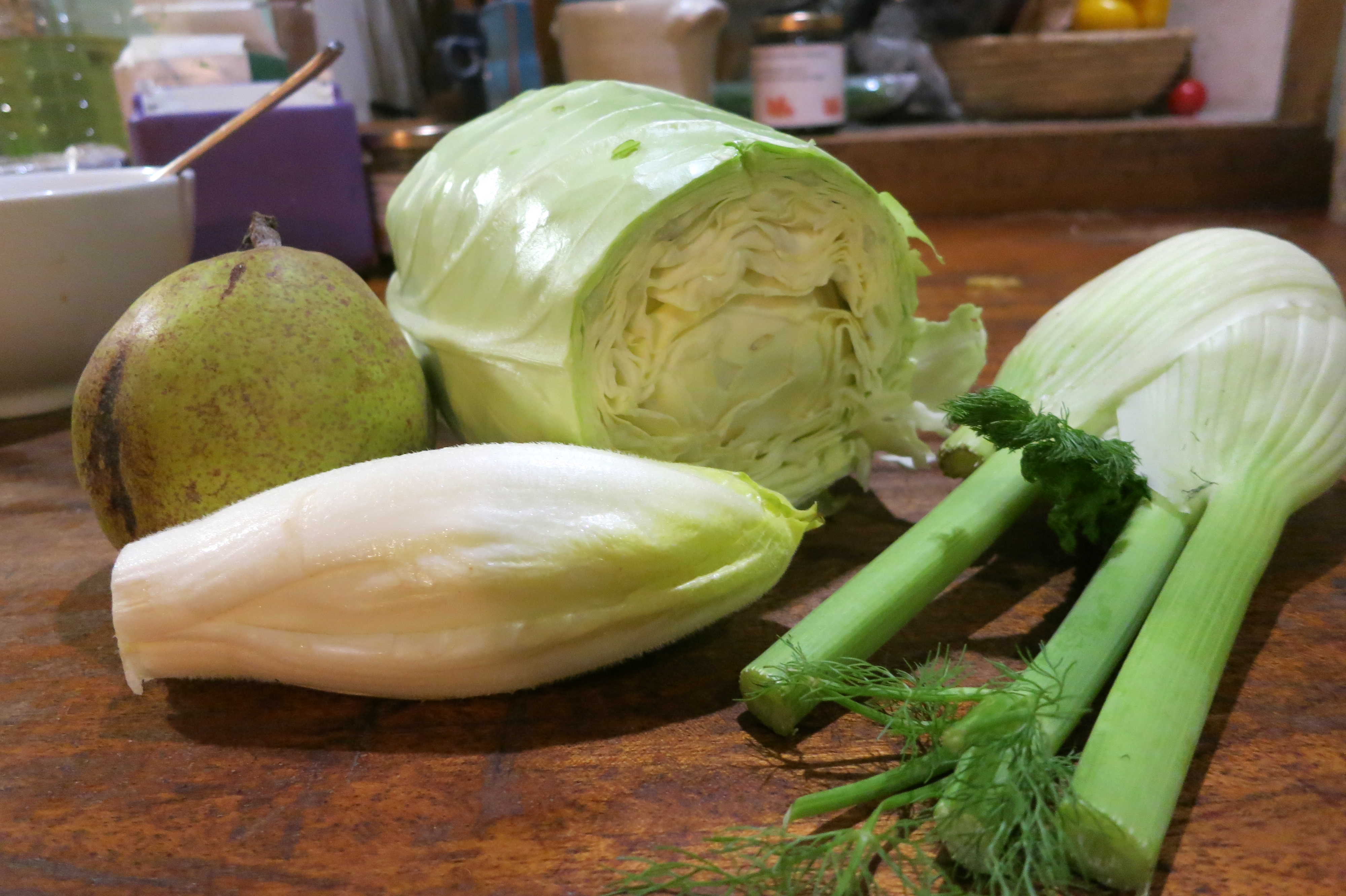
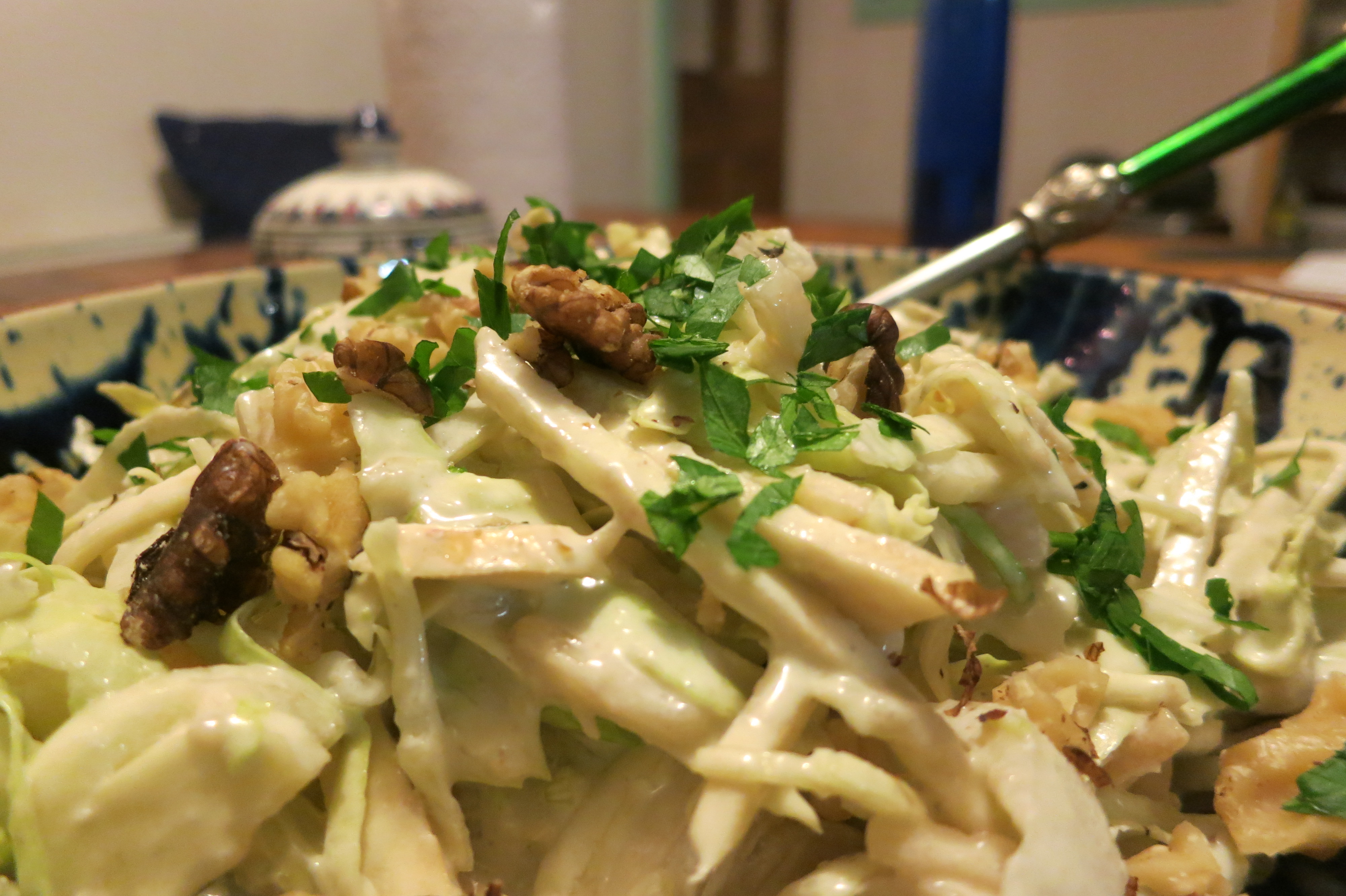
Winter slaws are the business this time of the year and in our vegetable basket we had a pointy cabbage, some chicory and fennel. I sliced these all thinly , added a sliced pear and  a few walnuts and made some dressing by mixing a little left over vinaigrette with a little left over sour cream and a little wedge of gorgonzola cheese.

All very tasty and it helped to shift the backlog of food loitering in our kitchen.

Image


Sunday Evening Pasta Fest

This is one of our favourite lazy dinners and it’s the perfect home for our past the sell by date buffalo mozzarella which we bring home from the shop. It’s a kind of an owning  a food shop perk – eating all the food that’s past the sell by date. Past the sell by date is of course a different thing from being out of date  which could be dodgy. We marinated the mozzarella in olive oil with the very last of this years basil crop. It felt good to be eating our own basil in December.It’s quite amazing that it survived last weeks frosts.

It takes very little time and effort to prepare this dish and doesn’t require any fancy equipment. A large saucepan to cook the linguine and small saucepan for the sauce and you’re away.

The sauce is very simple to make, just olive oil, garlic, a few chilli flakes, anchovies and canned tomatoes. Don’t be put off trying this recipe by the mention of the anchovies as this isn’t a fishy dish.. In this instance the anchovies are acting as a flavour enhancer and once cooked in the sauce add an extra dimension – other than that they disappear completely

Here’s the recipe. It serves 4-5 people

IMG_0976

Linguine with Tomato and Mozzarella and Basil

2-3  fatty cloves of garlic

1-2 red chillies

50ml olive oil – about  2 overflowing tablespoons, plus a little for the mozzarella

5-6 anchovy fillets

2 balls of fresh mozzarella

2 cans tomatoes, chopped

500g linguine

A bunch of basil

Salt and black pepper

Peel and chop the garlic and chop the chilli.

Put a pan on the heat and add the olive oil, garlic and chilli. Don’t allow the oil to get too hot as garlic burns easily and will spoil the sauce.

Cook gently for a minute or so and then stir in the anchovies.

Mash the anchovies up with a wooden spoon then add the chopped tomatoes, season with salt and pepper.

Bring the tomato sauce to the boil then turn down and simmer for twenty to thirty minutes. The oil will eventually come to the surface, which means the sauce is ready

Dice the buffalo mozzarella and chop the basil and put them into a bowl. Season with salt, black pepper and drizzle with olive oil. Mix together gently and leave aside for the flavours to infuse.

Bring a big pot of water to the boil, add plenty of salt and cook the linguineaccording to the directions on the packet. Watch the clock!

Drain the linguine after the specified time and put it into a warm bowl. Pour the tomato sauce over and then scatter  the mozzarella on top.

Yum!


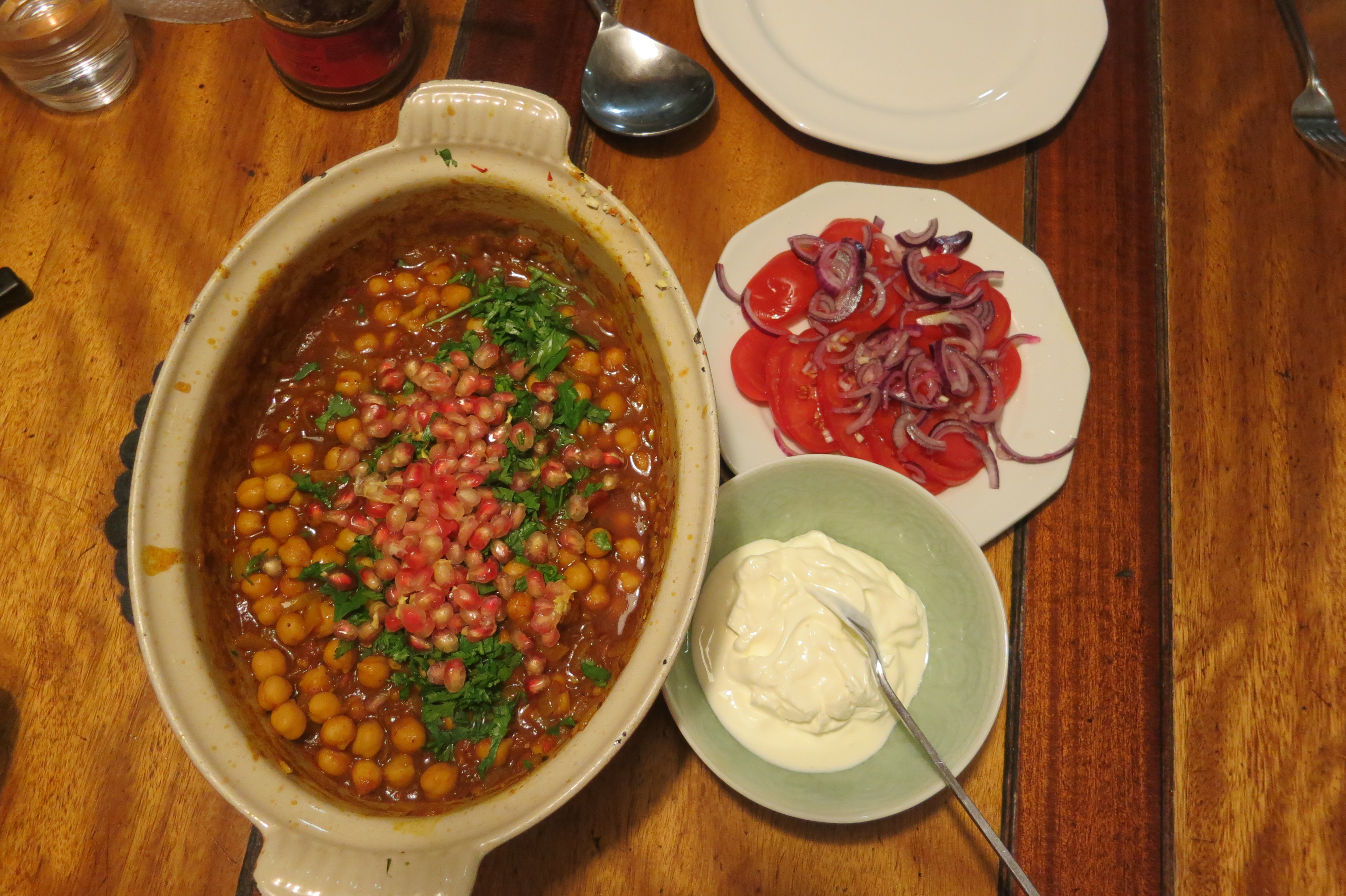
Pindi Channa – Chickpeas and Pomegranate

Image

I first ate this dish sitting on rooftop in Jodphur in Rajastan, India.

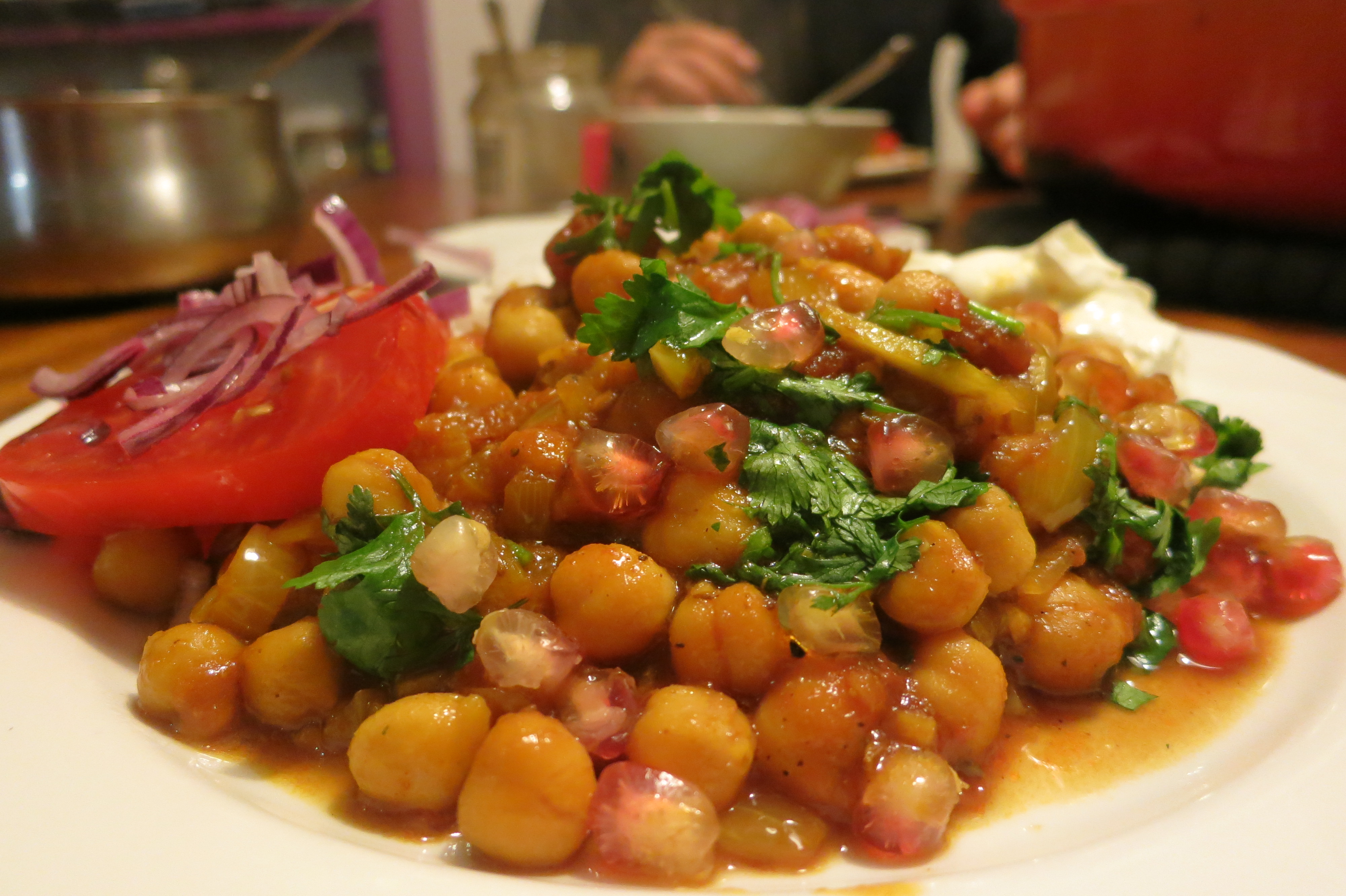
I was blown away by the fresh sweet explosions of the pomegranate seeds served on top of the chickpea dal, it looked amazing too. The bright pink jewel like pomegranate seeds glistening on top of the brown chickpea stew, It certainly elevates what can look like – we’re not talking taste here – a rather pedestrian looking dish to something that’s quite exotic. The chickpeas are cooked with tomatoes and tamarind and the tamarind gives a lovely sour twist, the perfect complement to the pomegranate seedsImage

It’s pomegranate season now and the pomegranate sitting in our fruit basket inspired tonights dinner. It is so easy to make and quite a taste sensation. We ate it with basmati rice, tomato and red onions, sliced, and seasoned with a little salt and lemon juice and some thick creamy yoghurt. Yum!

Pindi Channa

500g cooked chickpeas or 2 cans rinsed and drained

1 tsp tamarind concemtrate

100mls hot water

25mls vegetable oil

250g onions, peeled and chopped

5-6 cloves garlic, peeled and chopped

25g fresh ginger, peeled and chopped

1 tsp turmeric

1-2 chillie, chopped

1 can tomatoes, chopped

1 heaped tsp toasted cummin seeds

1 heaped tsp garam masala

1 pomegranate

a handful of fresh coriander

Put the teaspoon of tamarind concentrate into 100mls of hot water and stir until it has dissolved.

Put a small dry pan on the heat and gently toast the cummin seeds until they lightly brown and become aromatic. Put aside to cool.

Heat a saucepan and add the vegetable oil and the chopped onions, season with a little salt and cook without browning for about ten minutes. Stir in the chopped garlic, chilli and ginger. Cook gently for a few minutes then stir in the turmeric. Add in the can of tomatoes, the toasted cummin seeds and the tamarind juice, mix everything together and cook for fifteen minutes. Just before serving stir in the garam masala and add more salt if needed. Roll the pomegranate around on the table or a chopping board, using a little pressure with the palm of your hand to loosen the seeds then cut it in half and tip the seeds out into a sieve. pick out any bits of menmbrane and drain off excess juice – you can drink the juice. Serve the dal with the pomegranate seeds and chopped coriander on top.

Image


A Large Lunch

We often have a large lunch on a Sunday. We eat it very late. It’s a bit of a throw back to when we had the restaurant and we used to sit down and eat the ‘scraps’ when all the customers had left.

Sunday lunch for us never begins before five and can be as late as six or seven by the time guest arrive and we sit down. Technically it could be called dinner but we still call it lunch as we operate a two meal only policy on Sundays. A large breakfast and a large lunch.

Yesterdays lunch was big on root vegetables and pumpkins.

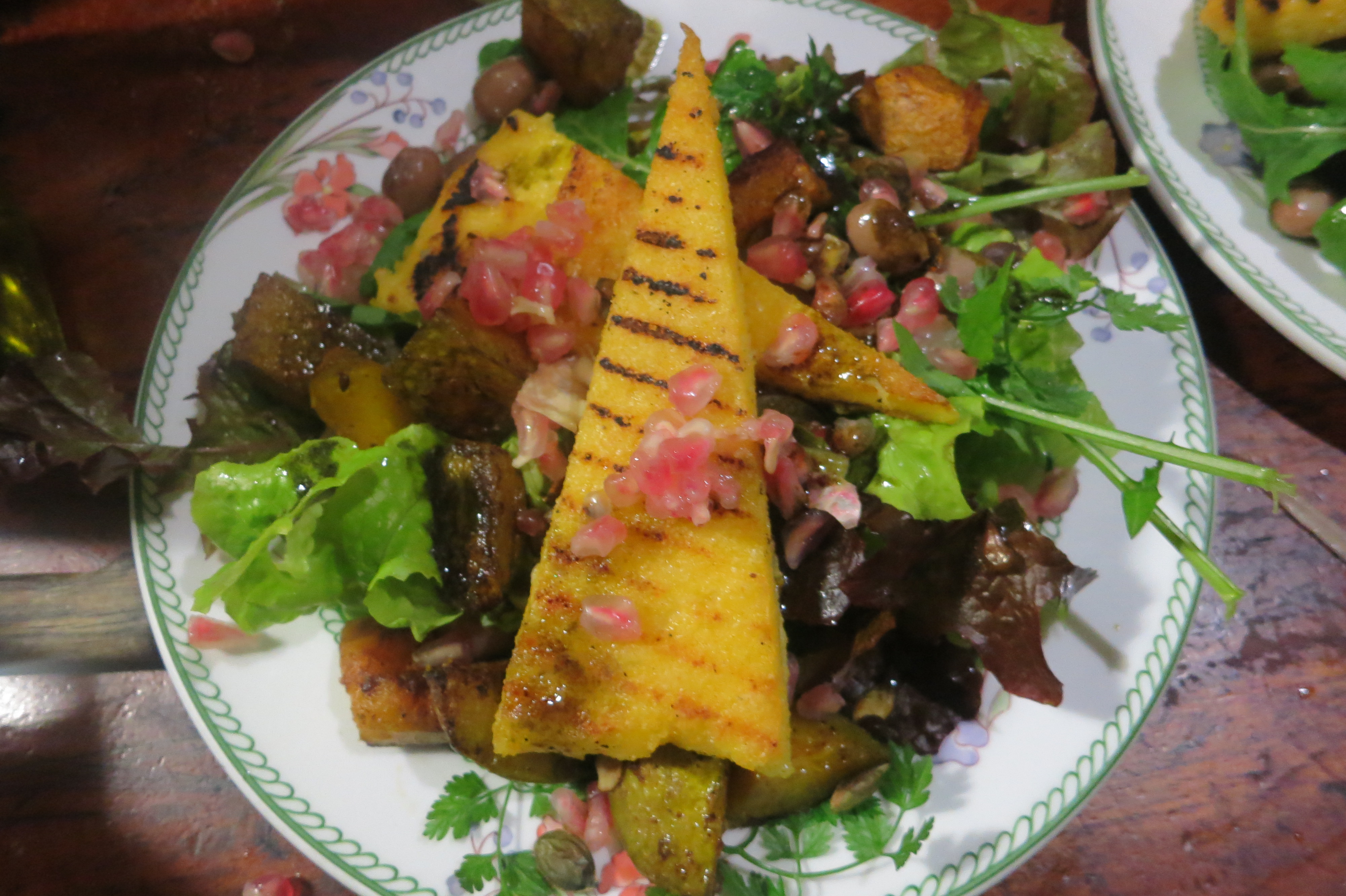
We started off with roasted pumpkin on grilled polenta and salad leaves with borlotti beans and toasted pumpkin seeds with a pumpkin seed oil and a pomegranate  dressing. The dressing was divine. We were given a bottle of the most amazing toasted pumpkin oil from Austria by one of our woofas last summer (thank-you Lucas) and I whisked that together with white balsamic vinegar and the juice from the pomegranate.

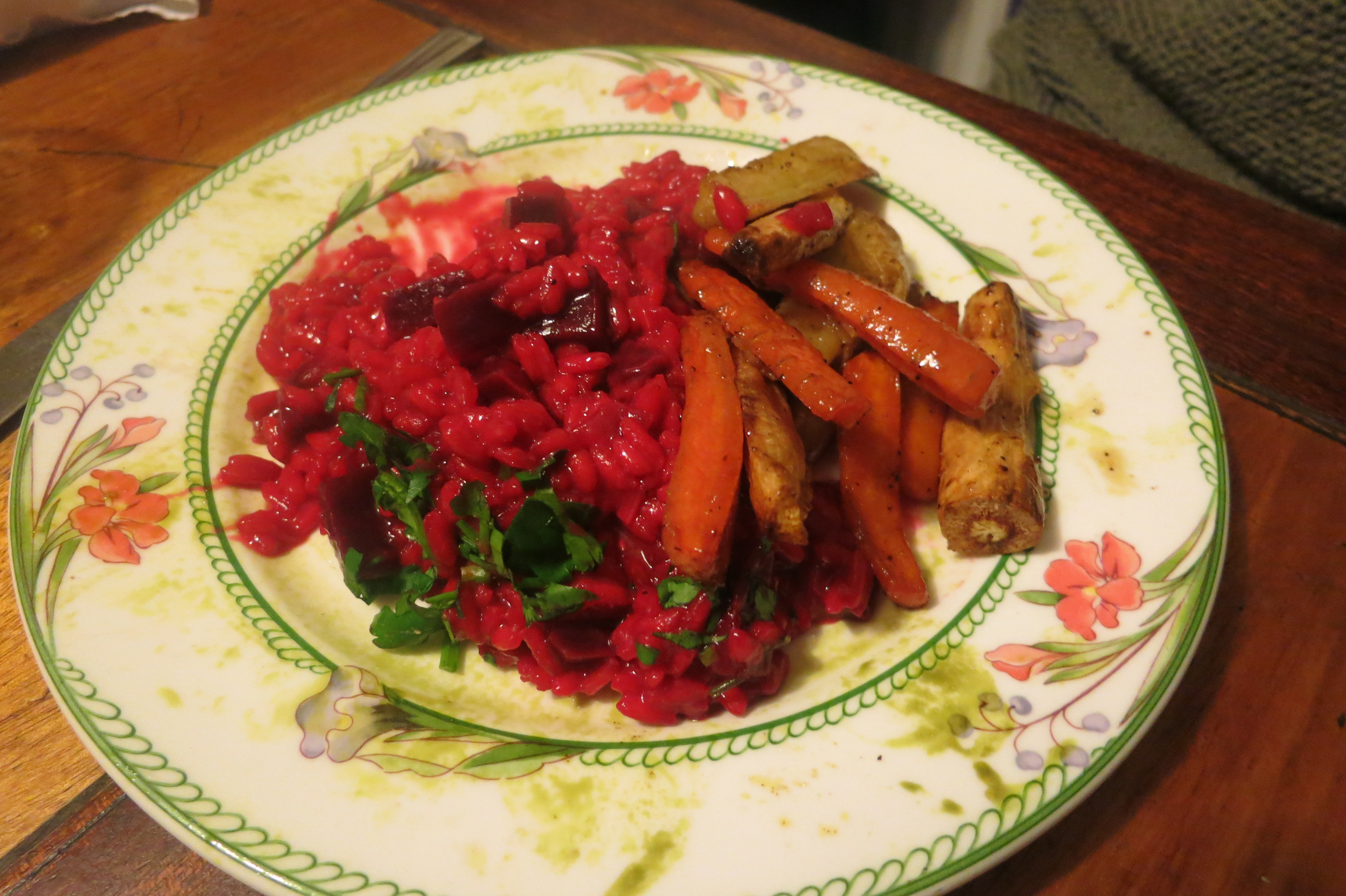
The second course was a beetroot risotto. I love beetroot risotto, the wacky colour alone brings a smile to everyones faces.We ate it with roasted parsnips and carrots.We have discovered that we have enormous parsnips in our garden so I roasted some of those along with some carrots and dressed them with a little maple syrup when they came out of the oven. The earthy sweetness of the beetroot went alongside the maple parsnips very well. The photo is rather messy as I had the bright idea of economising with the washing up and eatening the main course off the starter plates. Not such a pretty vision I think I’ll make more effort next time!

Dessert was a seductive truffley chocolate cake. It was bought by one of the guests and was delicious.We managed to polish most of of it off. I don’t know where we put it all!

Here’s the recipe for the beetroot risotto

Beetroot Risotto

2 medium onions

4-5 medium beetroots

25g butter

25ml olive oil

400g Arborio rice

1 glass white wine

About 1.25 litres hot vegetable stock

100g parmesan cheese

handful flat leaf parsly.

Peel and chop the onions. Melt the butter together in a pan and add the onions. As soon as the onions begin to sizzle season with a little salt and  turn the heat down. Cook gently for about 7 minutes. The onions should soften, not brown.

Peel the beetroots and cut into a fairly small dice then stir into the onions. Season with a little salt and cook for a further ten minutes, giving occasional stirs.

Add the Arborio rice to the vegetables and give a good stir, then add the glass of white wine. Allow the wine to bubble up and reduce then add a small amount of the hot vegetable stock. Cook for a couple of minutes then start adding the stock ladle by ladle. Stirring between additions. Keep the rice cooking, so that you can visibly see action but not like a volcano. The rice will be cooked after 15=20 minutes, Check and maybe add more stock, or water if you’re out of stock. If the rice has the slightest bite to it, take it off the heat and beat in the Parmesan cheese. Season with salt and pepper and serve with a sprinkle of chopped flat leaf parsley


Gin and Tonic Tasting

Gin bars are popping up in Barcelona. Gin and tonics aren’t new but there are now bars with an enormous variety of gins and lots of tonics to try.

The oldest gin bar in Barcelona the XIXBAR has more than thirty gins on offer,and is close by to where I am staying. There is an extensive menu using gins from all over the world and about half a dozen tonics. Not all the drinks on offer use tonic, there are plenty of other options including a blue gin made  with a dash of curacao which looks pretty wacky.

Being a gin and tonic officinado myself, tasting the tonics seemed like a do-able plan, with the most chance of survival. Half a dozen tonics versus thirty odd gins seemed the safer option

So  we decided to focus on the tonics. and see how much impact they had on our enjoyment. This all became a little hazy – not the enjoyment but the subleties of the tonic if we drank more than one at once. This is of course is partly due to the generous measures dispensed in the bars which has also lead to a new discovery that you’re meant to tell the bar tender when to stop pouring. This is obviously why we have been drinking such whopping great gin and tonics over the years..

The tasting panel consisted of myself, A Catalan and A Pregnant Lady which really gave the tonic an open rating as it wasn’t occluded by gin.

Some of the tasting was done at home and some in the bars

Here are our findings.Score are from 1-5, 5 being the top rating and price taken into consideration

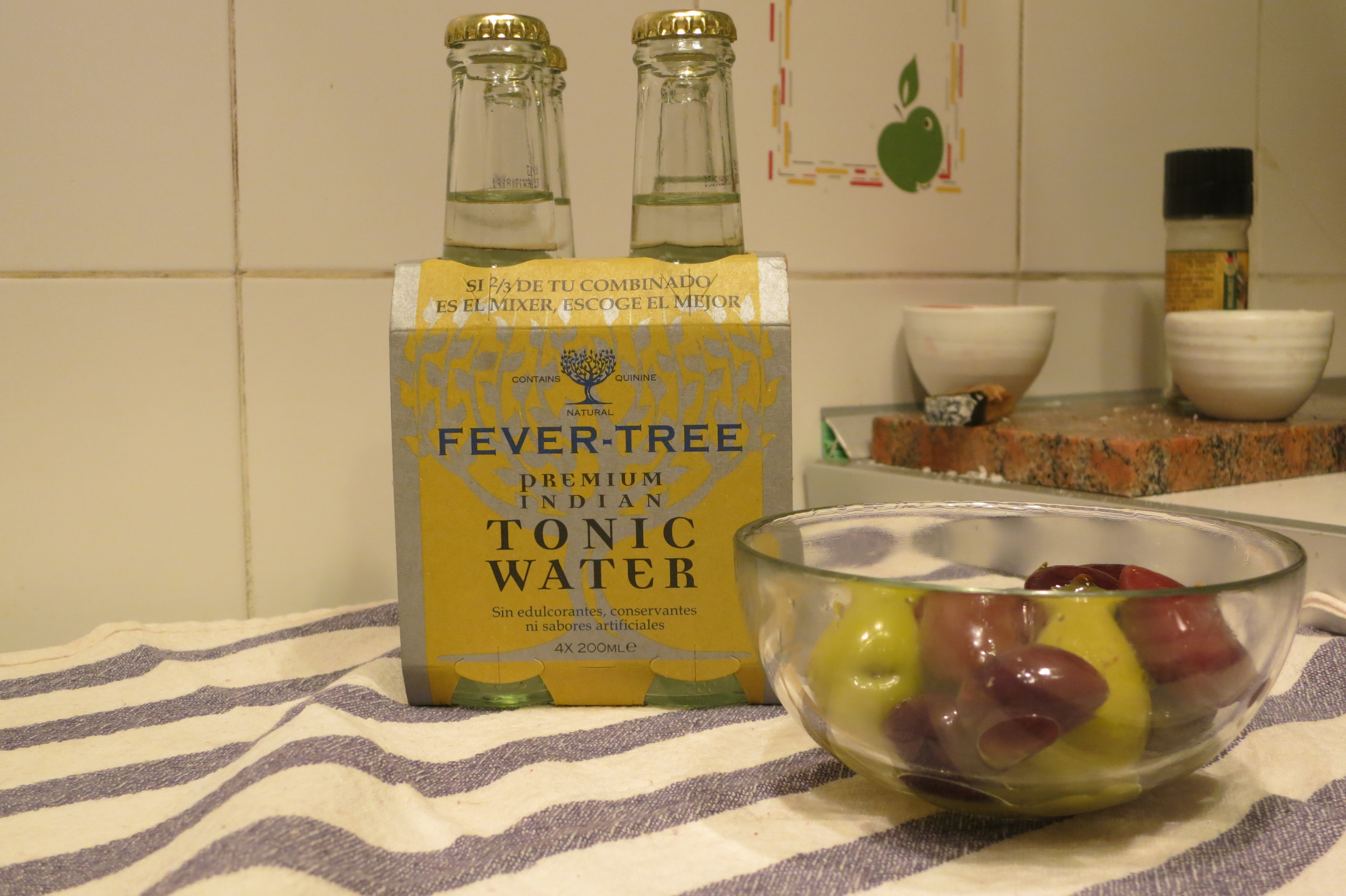
Feverfew Indian Tonic -price €5.40 for 4 bottles of 200mls

We thought this was a bit lemonady and gave a score of 2 . We weren’t influenced by the fact that Adria Ferran apparently drinks this!!

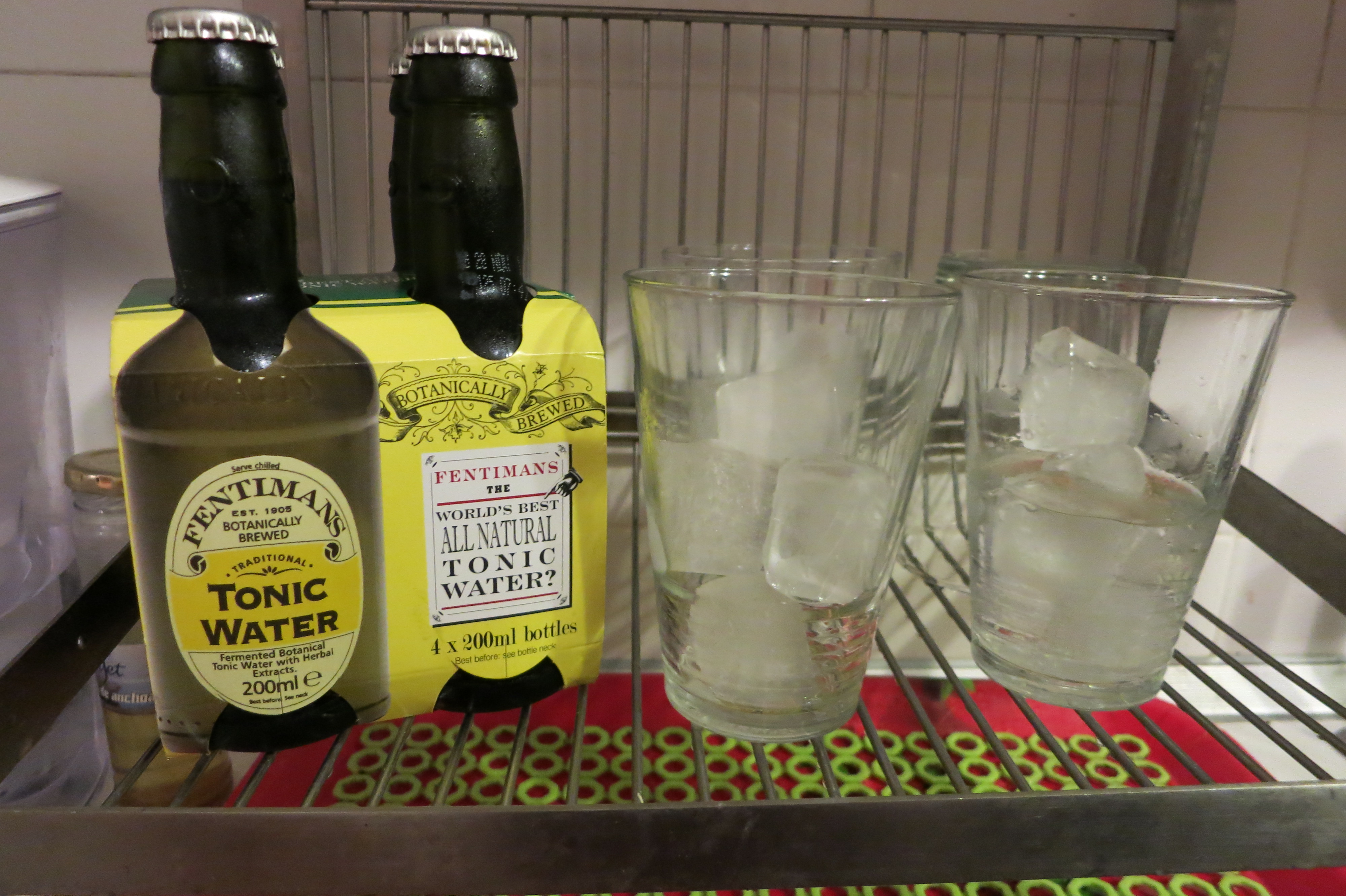
Fentimans Tonic -price €5.70 for 4 bottles of 200mls

A herby, bitter and tasty tonic. very nice for a change, scored 4 but was downgraded to 3 with the price consideration

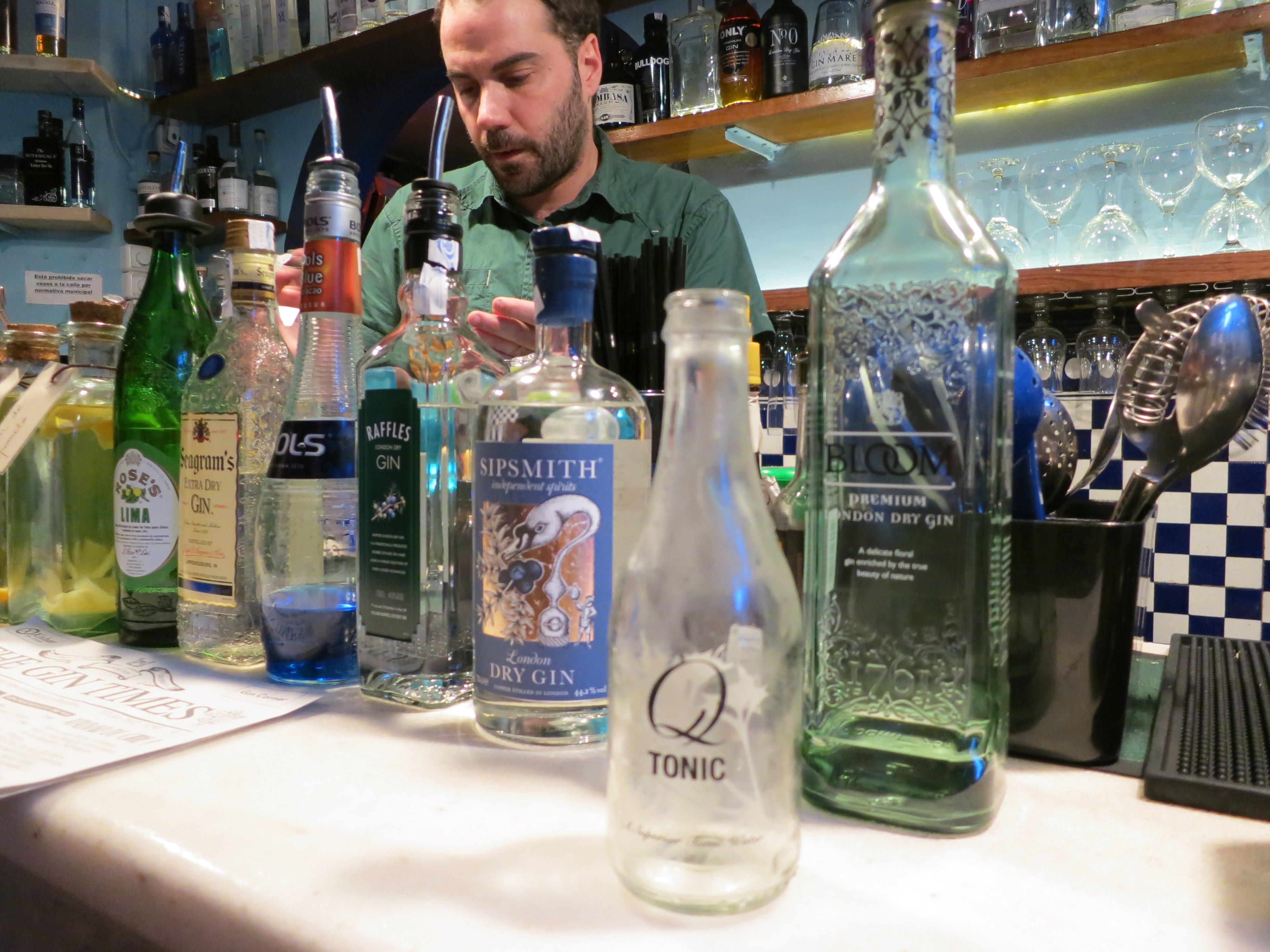
Q Tonic -not sure of the price per bottle as we tasted this in the XIXBAR but probably similar to Fentimans

On our tonic research we had discovered that Q Tonic still uses quinine – most tonics use an artificial substitute as it’s cheaper- and had expected to excite our tastebuds but it tasted disappointingly ordinary and it got a score of 2

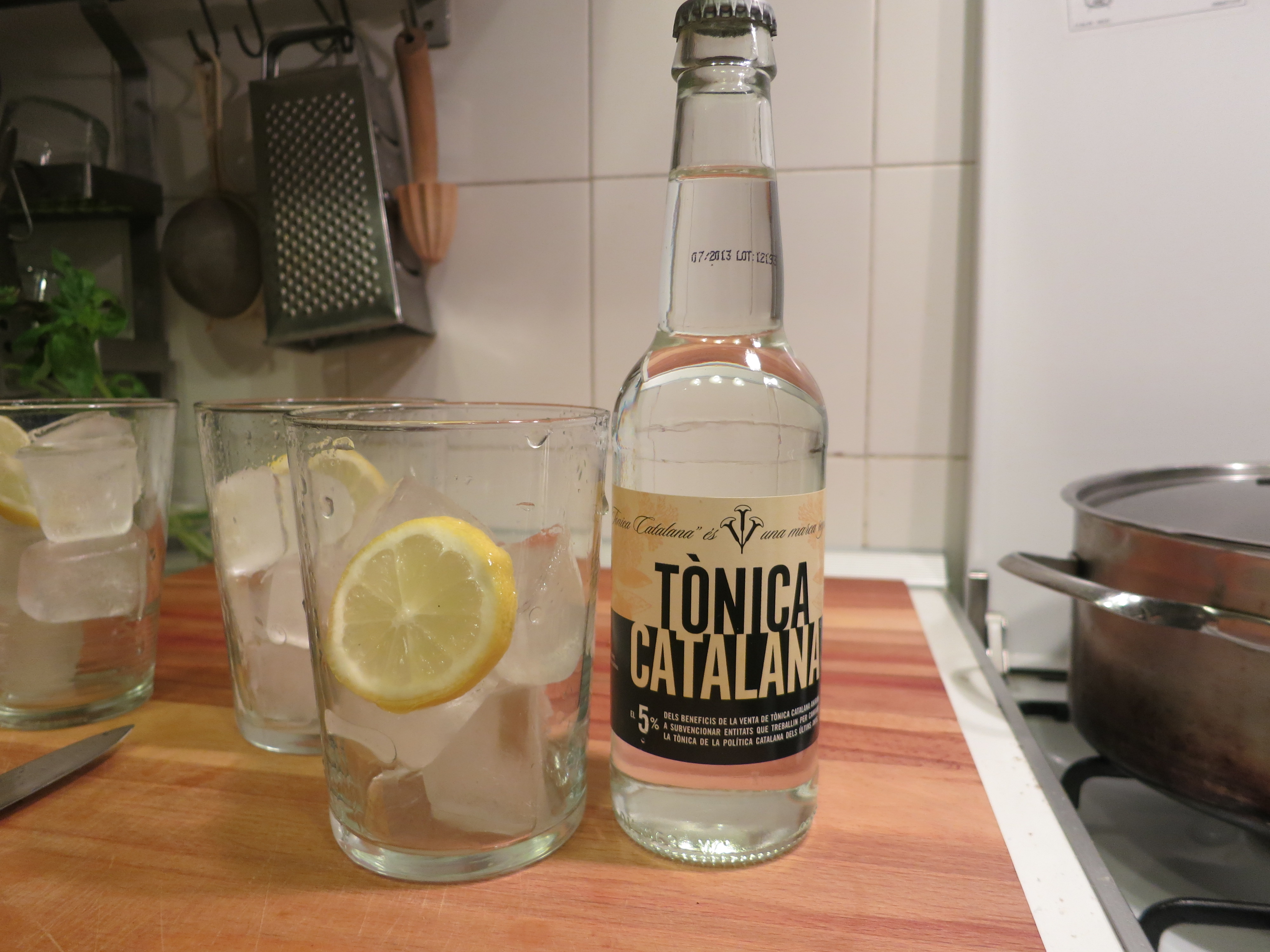
Tonica Catalana price €1.40 for 250mls

There was definitely enough tonic to make a whopping g and t in this bottle. It was fresh, a little bitter and not too sweet. We gave it a score of 4 – the Catalan was especially enthusiastic with a 5 but could be somewhat biased!

Blue Tonic

This was one of the XIXBAR creations. It looked spectacular and was lovingly prepared. First a lime skin was scraped over the ice, the rim of the glass was rubbed with lime juice and then then plenty of ice cubes were added. The gin was poured in – this was the moment in our education that the stop pouring instruction was discovered – and then the tonic. It looked spectacular and tasted very good. It got a score of 5 but cost a fortune so was downgraded to 4

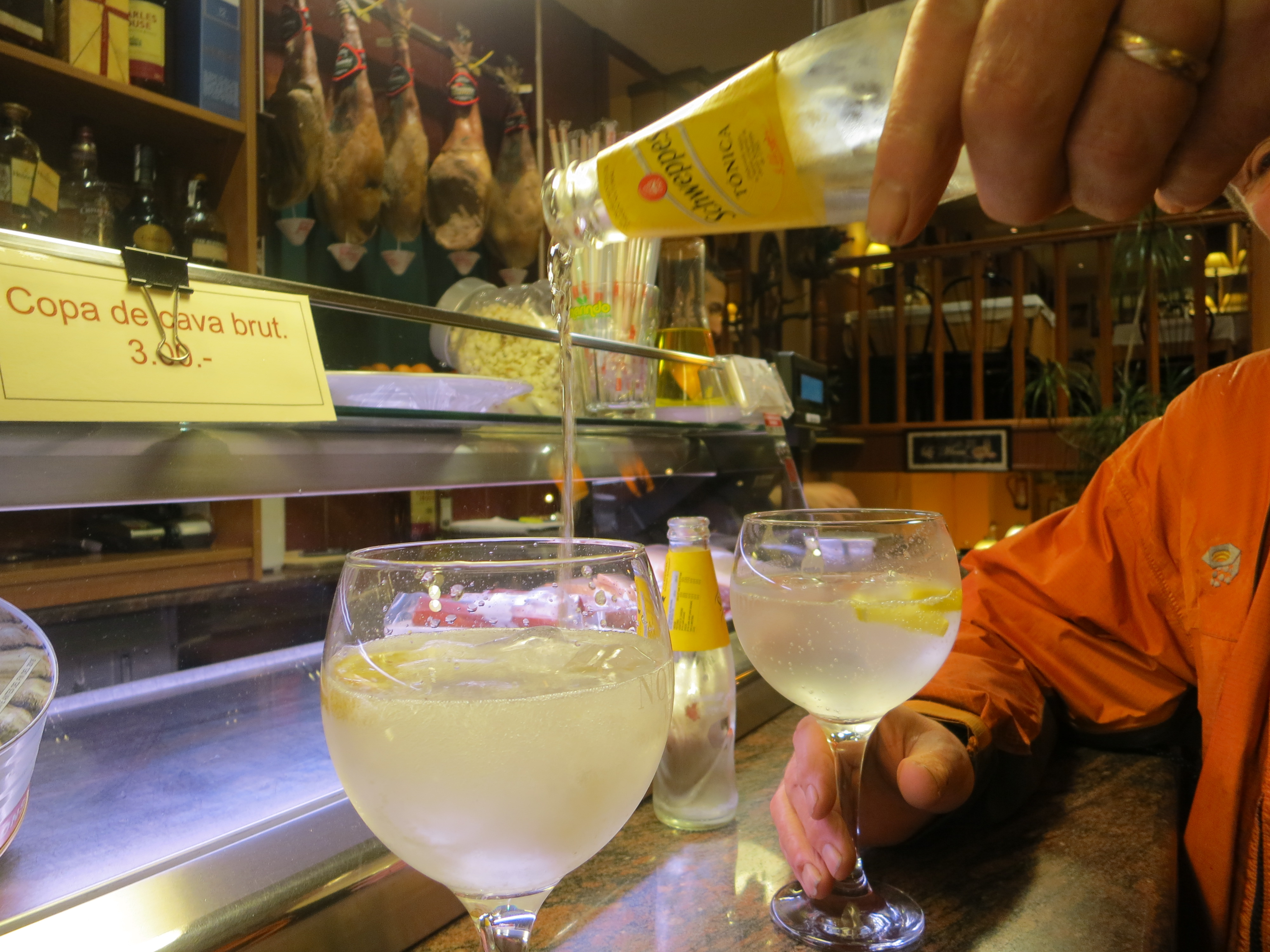
Schweppes Tonic price €1.50 for 1 litre

The consensus was that this makes a jolly good g and t, not too sweet with a zing to it. This scored 3.5 but was upgraded to 4 with the price consideration!

At the end of the day, Schweppes tonic certainly does the trick and the other tonics are definitely fun to try but we think that there is an essential procedure for making gin and tonics and this has as much bearing as the gin or the tonic.

The glass needs to be large, preferably long and there must be plenty of ice and lemon. In fact enormous ice cubes really upgrade the drink. It’s a bit like blanching in reverse. Instead of having a huge pot of boiling water so that the temperature doesn’t plummet, huge ice cubes chill the drink without melting and making it watery. And of course  good company and sunshine will always upgrade the experience!


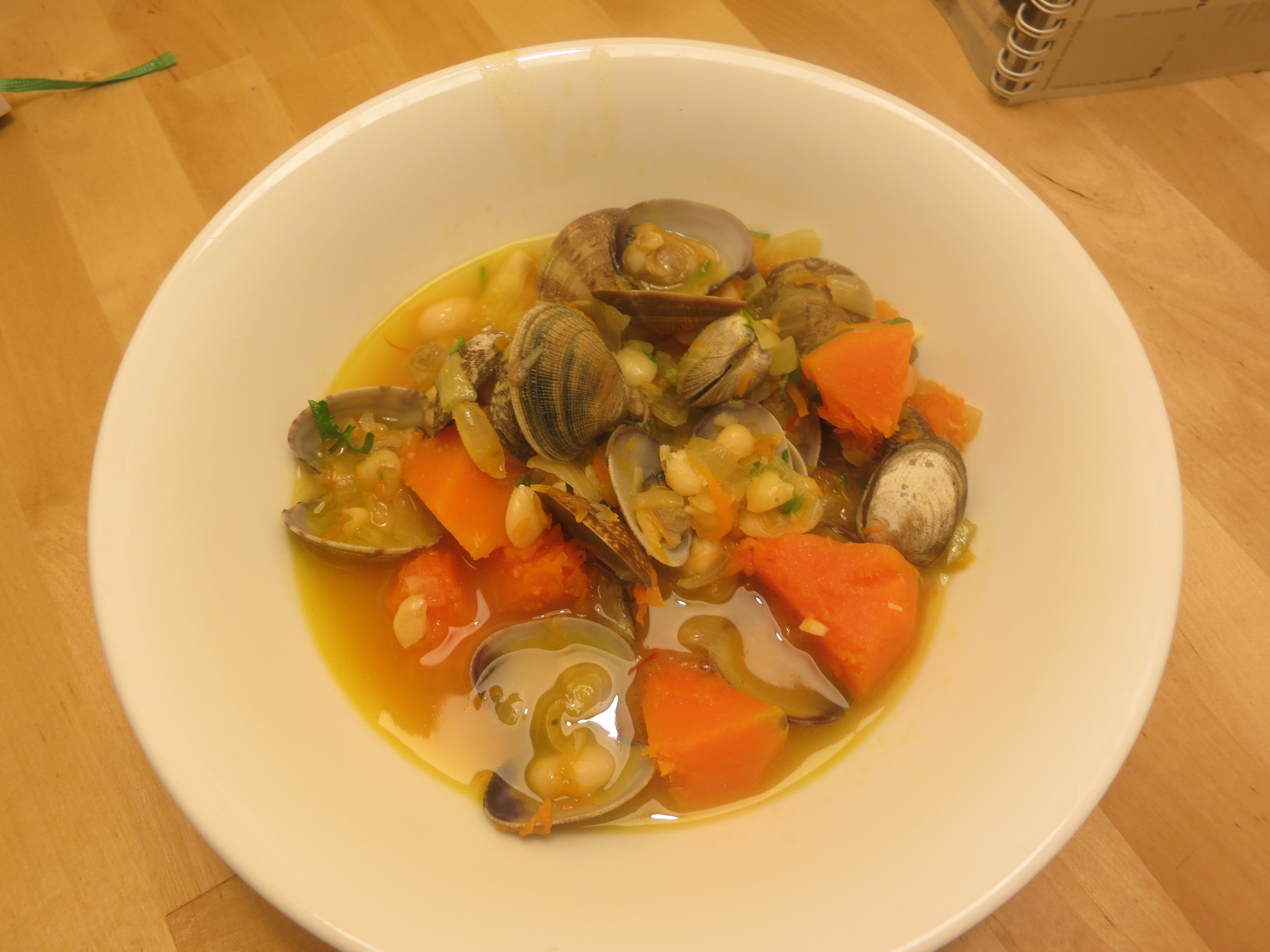
Beans with Pumpkin and Clams


Spain is full of beans, this much I have discovered walking through garden allotments just out side of Barcelona.There are rows of bean structures dotted here and there, in-between all the other veggies. with all the foliage dying back and  the beans dangling there, waiting to be picked. I had a moment of bean envy as we can’t grow beans that way in Ireland, it’s far too cold and wet to grow beans for drying.

The  beans that are grown in Spain are not only eaten green earlier in the summer, they are also dried in the pods on the plants in the autumn and then harvested. I think they are probably enjoyed more as harvested beans than the fresh green kind. The Spanish kitchen is very good in the bean department and  beans are in soups, stews with chorizo etc.,and also with seafood . Any of these these combinations are a delicious way to make little go along way.

The seafood combo is something that I enjoy and last night we cooked beans with pumpkin and clams.

If you can’t get your hands on any clams, mussels make a good substitute

Here’s the recipe

250g white beans -cannelini or butterbean – soaked in cold water overnight

500g pumpkin or butternut squash

1 onion- peeled and chopped

1 clove garlic – peeled and chopped

1 glass white wine

75mls olive oil

a good pinch of saffron

500mls – 700mls vegetable stock – use the liquid from cooking the beans and top up with water

500g clams

a handful fresh parsley – chopped

Soak the beans overnight in cold water. the next day drain the beans and put them in a saucepan. Cover them with plenty of water and bring to the boil. Turn to a low simmer and cover with a lid.

Cook for about  forty minutes or until they are tender.

Put the saffron in a small bowl and cover with boiling water, leave aside to infuse.

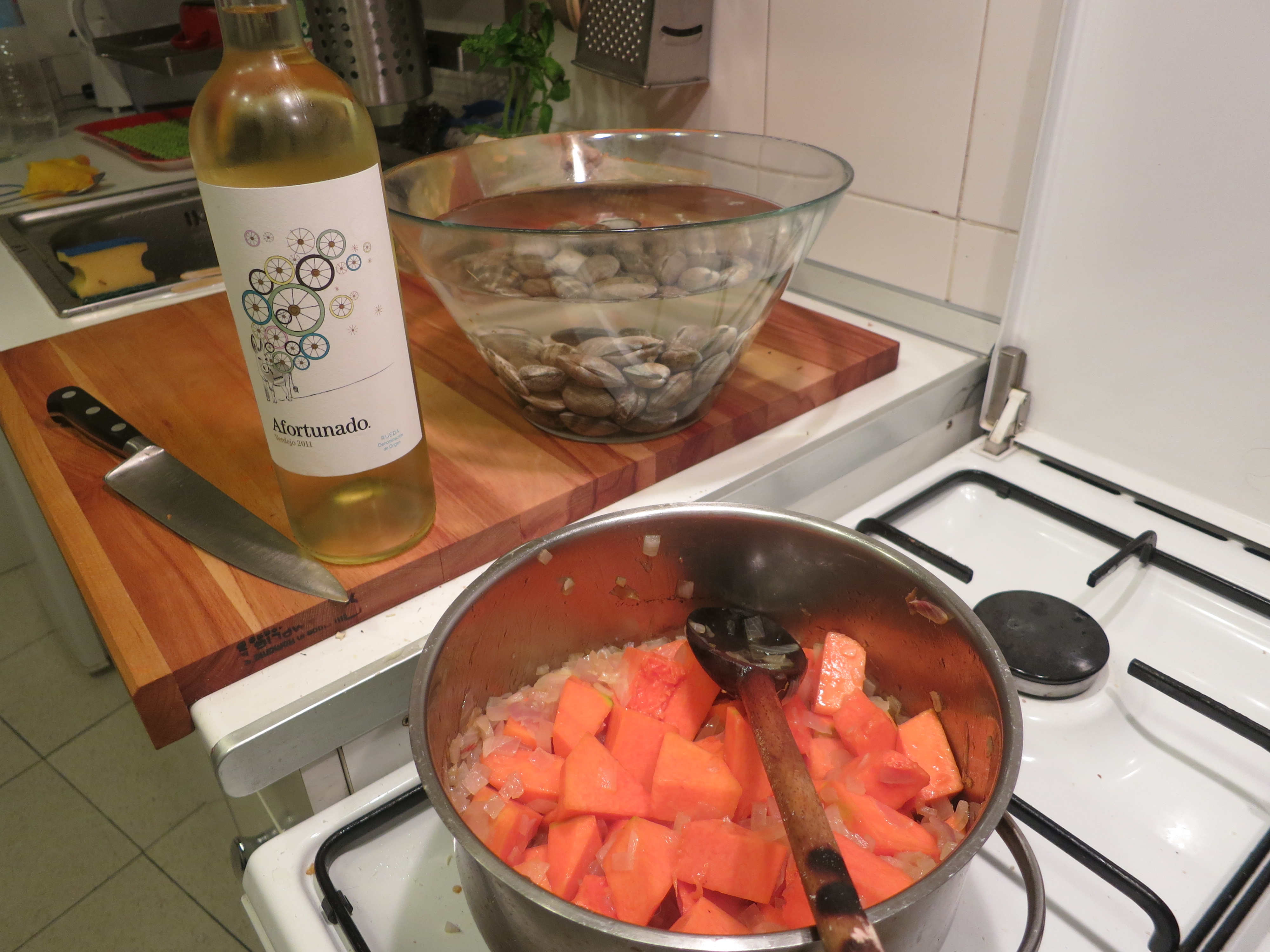
Heat a fairly large saucepan then put enough olive oil into a pan to cover the bottom and add the chopped onions.Let these sizzle away whilst you peel and chop the pumpkin but don’t let them brown.

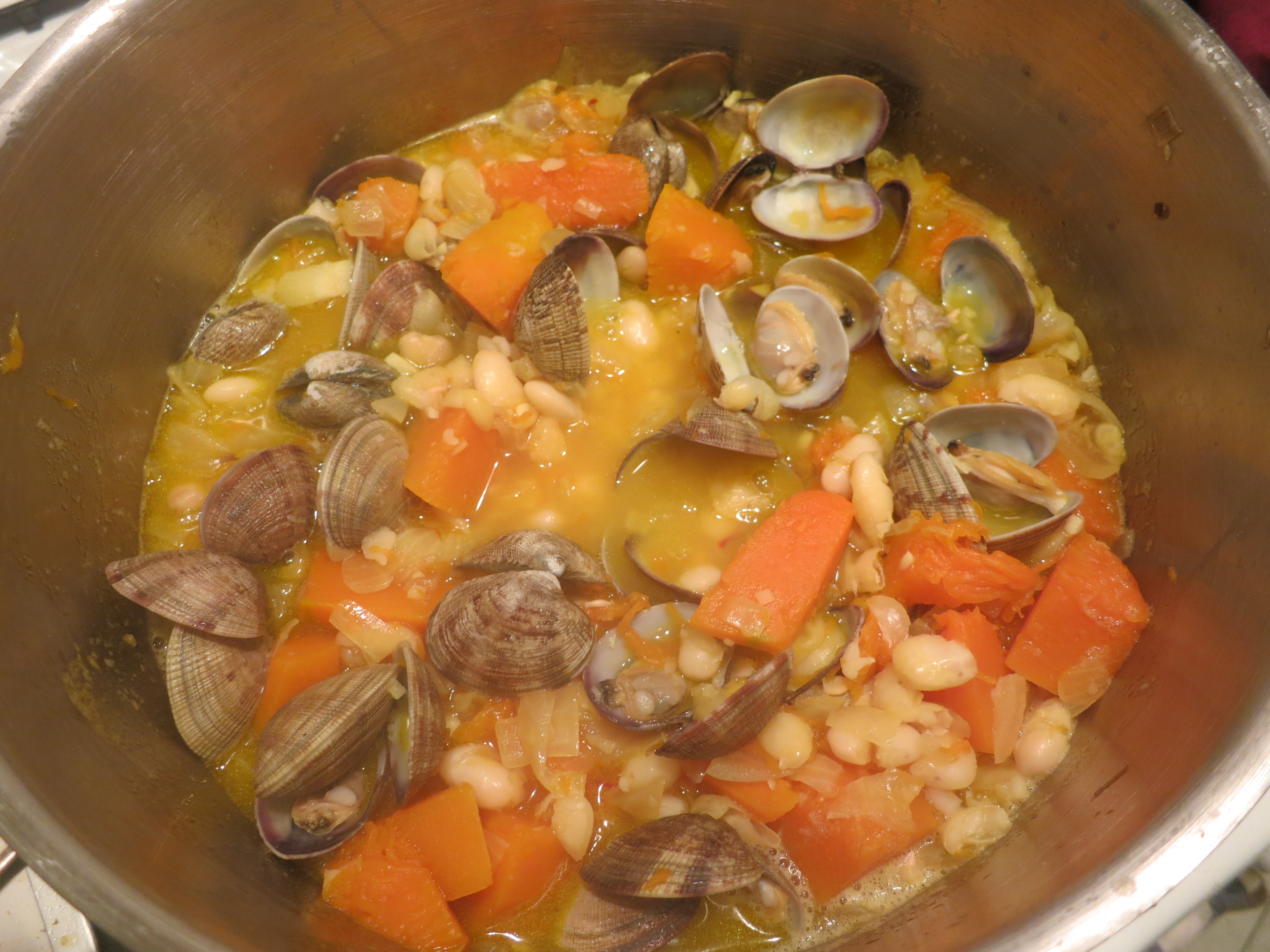
Peel the pumpkin and chop into equal sized chunks – about 2cms. Add the chopped garlic to the pan with the onions, give them a stir then add the pumpkin chunks and a little salt and pepper. Cook the pumpkin gently for about fifteen minutes then add a glass of white wine and about 500mls of stock and the saffron infusion..Bring to the boil then reduce the heat and simmer for about fifteen minutes or until the pumpkin is tender. Stir in the beans and let them heat through.Don’t finish the seasoniing until the clams have been stirred in as they will be a little salty

Put the clams into a large pot with a splotch of white wine. Turn the heat to high, cover with a lid and give a good few shakes. The clams are ready as soon as they open, this only takes a few minutes.

Stir the clams and the cooking juices into the pumpkin and beans, taste to check the seasoning and add more salt if you fancy.

Serve with a little chopped parsley


Aubergine and Tomato Pilaf

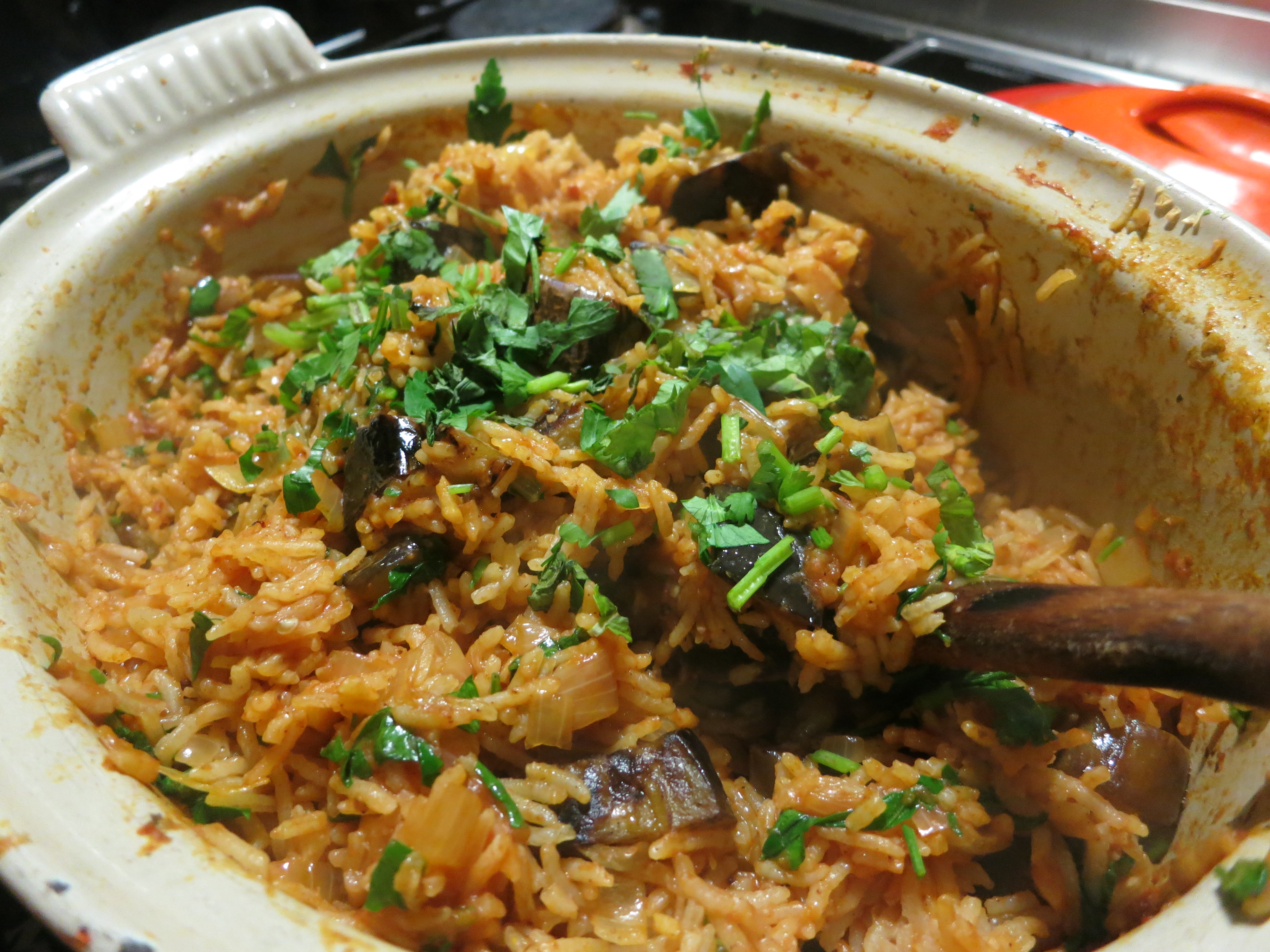
We’re back on the aubergines again but this time they’re Irish aubergines which are a more precious commodity. Tonight’s dinner was made with one big purple aubergine from Galway and one long Chinese aubergine from our tunnel in Timoleague. Our aubergine harvest was a bit of a disaster . They obviously didn’t enjoy our summer. I grew several varieties which I planted in the tunnel and funnily enough the Chinese aubergines did the best.

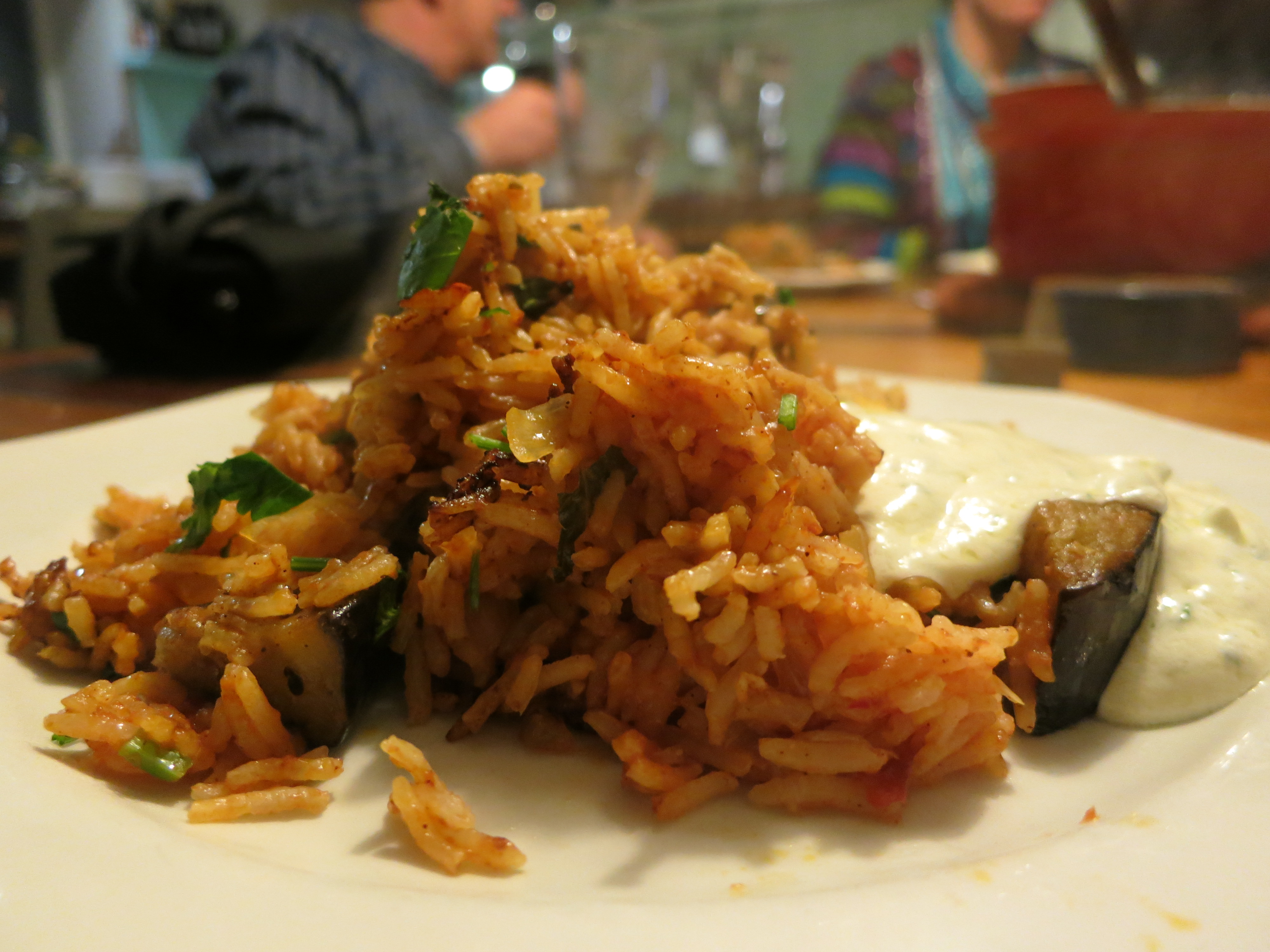
Anyways, I made a pilaf with the aubergines and a jar of ‘flood affected ‘ passata. We still have several bottles of passata which lost their labels when they sat in our flooded shop this summer. The only thing that’s wrong with them is the lack of label so we are slowly munching our way through them. They worked perfectly in the pilaf. I cooked some onions and cinnamon in a little butter then added ground allspice and some passata before adding the rice and fried aubergines.

We ate it with some yoghurt and mint sauce on the side

Here’s the recipe

2 aubergines

2 onions – peeled and chopped

25g butter

3 cloves garlic – peeled and chopped

1 cinnamon stick

1 tsp chilli flakes

1 tsp ground allspice

350mls tomato passata

300g basmati rice

400 ml vegetable stock

olive oil to fry the aubergines

a handful of chopped coriander or parsley

DIce the aubergines into 2cm cubes and sprinkle with some salt. Leave them aside to sweat.

Measure the rice and put into a bowl and cover with warm water,

Melt the butter in a big sauce pan and add the chopped onions and cinnamon stick. Cook on a high heat until they are sizzling then turn the heat to medium and cook gently until the onions melt down.This will take about ten minutes

Add the chopped garlic and chilli flakes, cook for another couple of minutes then stir in the passata and ground allspice. Bring everything to the boil then turn the heat to low and simmer for  fifteen minutes.

Drain the rice and rinse under a cold tap. Shake off any excess water and add to the pot together with the vegetable stock. Season with a little salt, bring everything to the boil then cover with a lid and turn to the lowest simmer. Cook for twelve minutes then take off the heat and leave aside to relax. (leave the lid on – no peeping)

Put a frying pan on the heat and squeeze the aubergines, handful by handful, to get rid of the excess moisture. add a little olive oil to the frying pan and fry the aubergines until they are golden. This will probably have to be done in batches, don’t overcrowd the pan. When all the aubergines are cooked tip them into the pilaf , add a handful of chopped coriander or parsley and gently mix through.

To make the yoghurt/mint accompaniment finely chop a clove of garlic, add it to about 200mls Greek yoghurt and whisk in a couple of tablespoons of olive oil. Stir in a handful of chopped mint and serve the sauce  on the side of the pilaf.


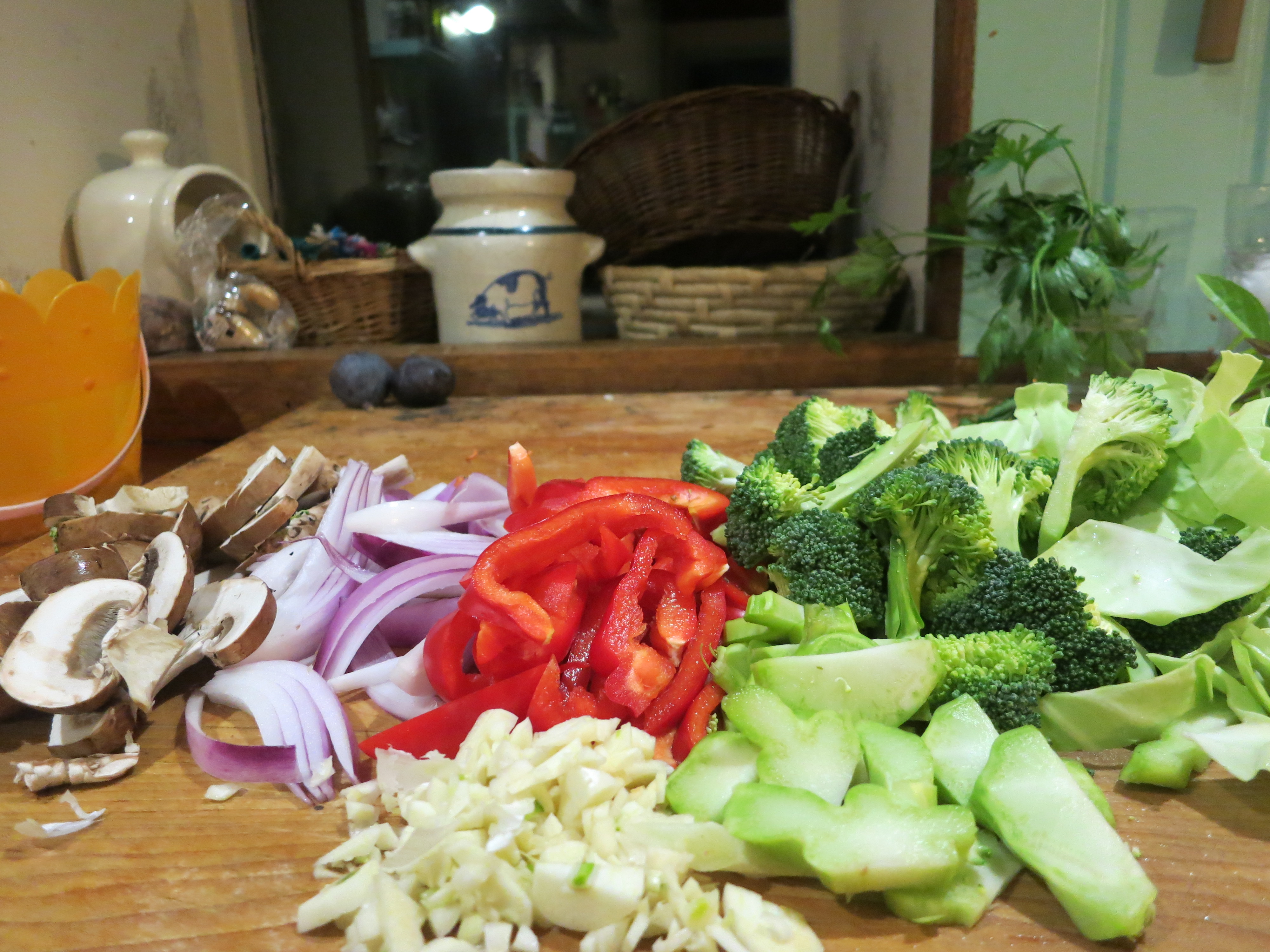
Stir Fried Veg – It’s all in the prep

This is a recipe that we ate when we visited Thailand and like a lot of good recipes it was forgotten along the way. I have to organise my Thai cooking class for this coming weekend and trawling through my recipes I came upon this little gem.

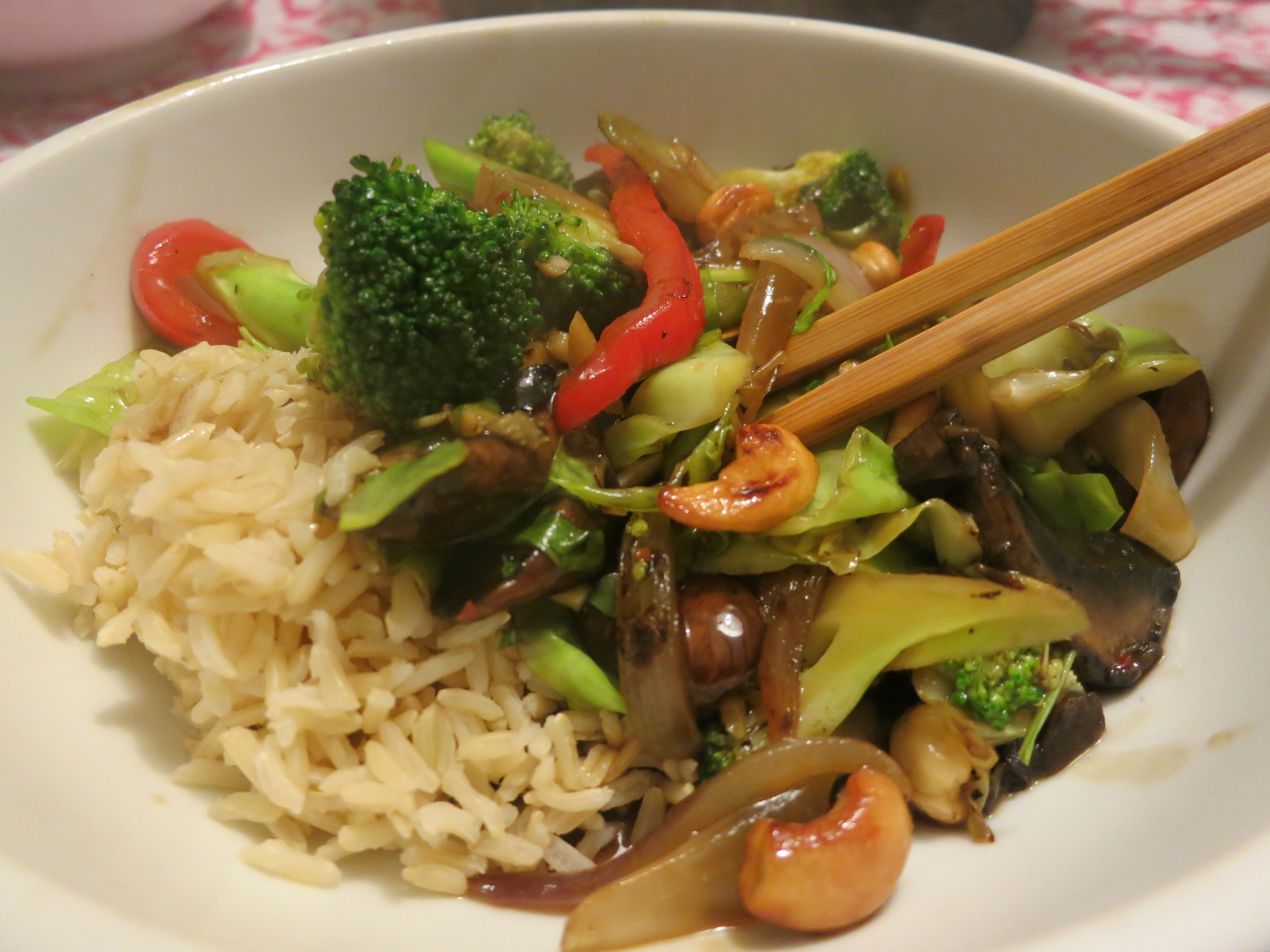
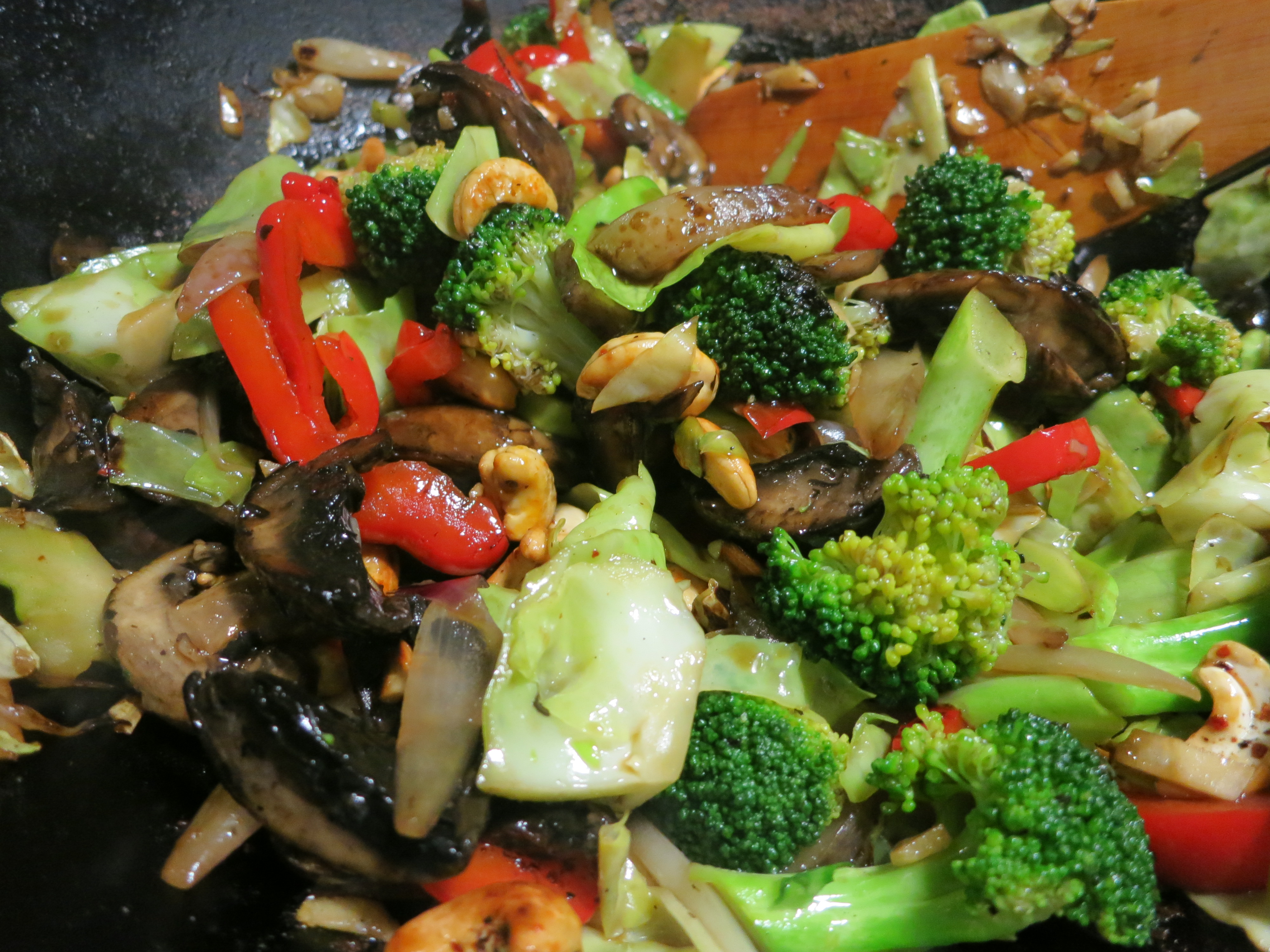
This is a very easy wacked on the heat dish of veggies, oyster sauce, soya sauce and cashews. The cashews are fried in a little oil, then tossed in chilli flakes which gives a nice little kick, and then stirred into the dish at the end. The list of vegetables in the recipe is of course variable

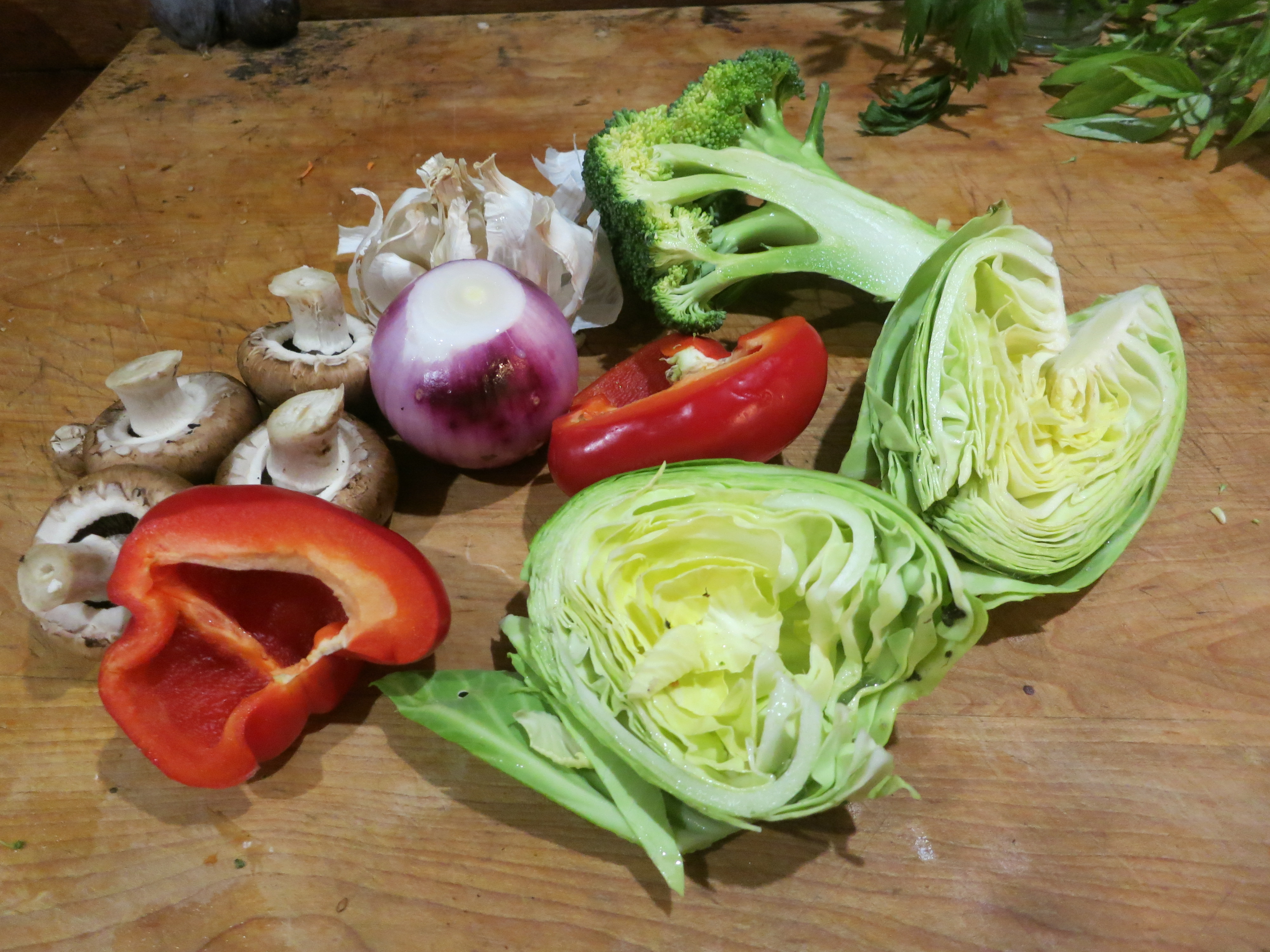
Tonights ensemble was a red pepper, a red onion (there weren’t any spring onions) some broccoli, mushrooms and the the last little green cabbage from the garden.

It’s totally delicious, nutritious and once everything is chopped and ready to go, pretty much an instant dinner. Here’s the original recipe

Stir Fried Vegetables with Cashew Nuts

75g cashew nuts

3-4tbs peanut/vegetable/sunflower oil

Half tsp dried chilli flakes(optional)

75mls vegetable or chicken stock

1 tsp cornflour

150g mushroom, thinly sliced

4-5 spring onions, white part thinly slice and green chopped

3 cloves garlic, peeled and chopped

1 small head broccoli, stem sliced thinly and rest broken into small florets

1 red pepper, deseeded and sliced thinly

Large handful  chinese cabbage or green cabbage, sliced into 1cm ribbons

Handful mange tout peas

2tbs oyster sauce

2 tbs soya sauce

Heat  2tbs oil in a wok or frying pan, over a moderate heat. Add the cashews and stir until they begin to brown. Remove, toss in the chilli flakes if you’re using them and put aside.

Mix the cornflour with enough vegetable/chicken stock to make smooth paste and put aside

Add 1tbs oil to the `wok/frying pan and add the mushrooms. Cook, stirring over a high heat, until they begin to brown then season with a little salt and put aside.

Heat the remaining  oil and add the broccoli, peppers,mange tout, the whites of the spring onions, the garlic and then the cabbage in that order. Keep the heat high, you should be able to hear everything sizzling away. Add the vegetable/chicken stock and cook for a minute or two then stir in the oyster sauce, soya sauce and cornflour paste

and cook until the sauce coats the vegetables.

Finally stir in the mushrooms and onion greens and toss everything together with the roasted cashews.


Purple Spuds

I bought some purple spuds last Friday at the Farmers Market in Clonakilty. Even though we still have spuds from our own garden at home I couldn’t walk past them. Curiosity got the better of me.

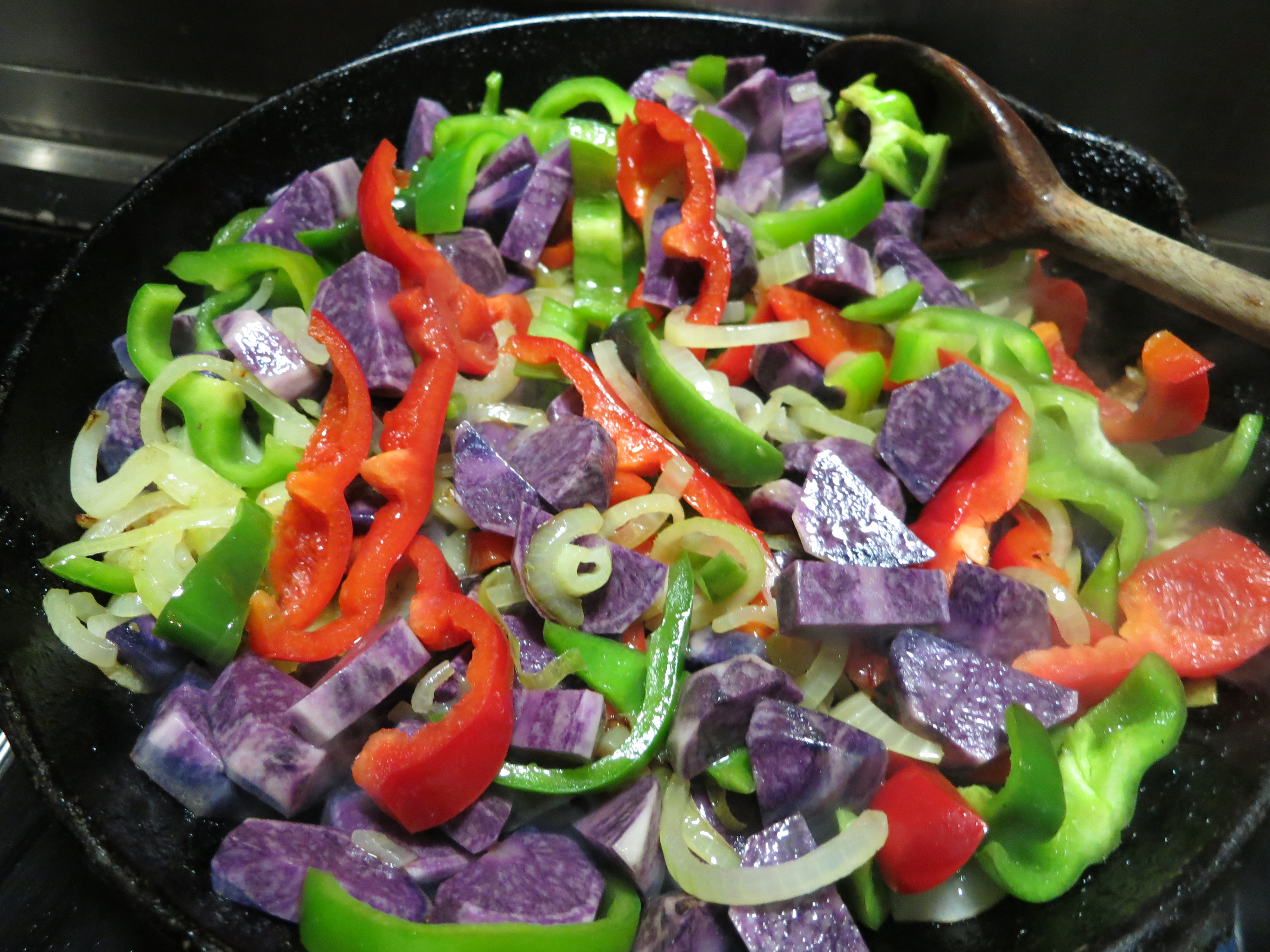
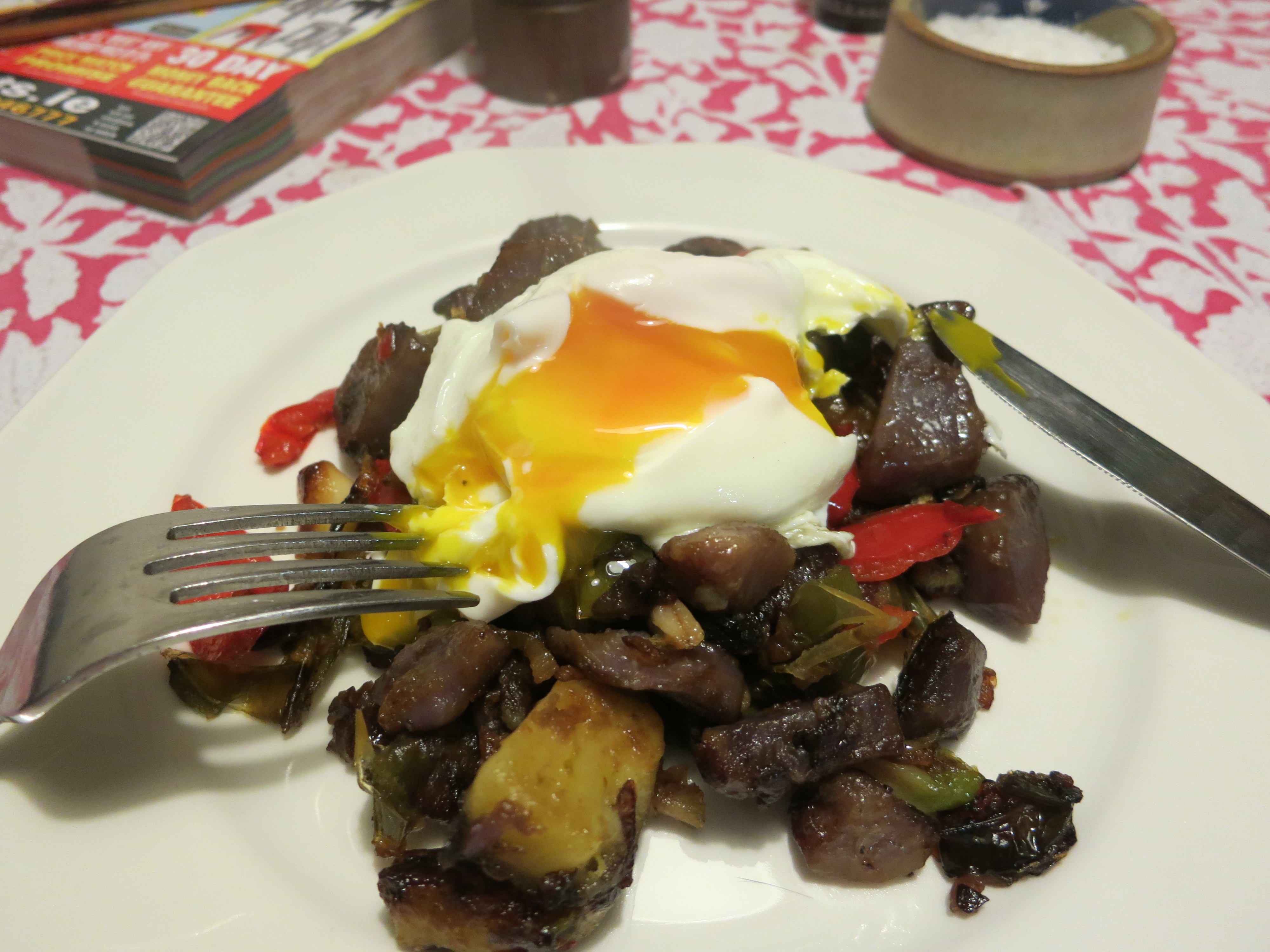
They had been relaxing in our vegetable basket until I arrived home from work this evening, hungry and reluctant to cook, I peeled them and chucked them into a frying pan with some onions, peppers and garlic.

Potatoes, peppers, onions and garlic fried in olive oil with a bay leaf is one of those blissful combinations. They’re known as ‘Patates al Pobre ‘in Spain which translates to’Poor mans Potatoes’ It’s great dish to cook as once the veg are chopped and in the pan they require very little effort.I hung around the kitchen chatting on skype to our daughter,  giving the pan an occasional stir

The potatoes were an intense bright purple when I peeled them and stunning when they hit the pan but they cooked up a rather sludgy browny purple. This is not as bad as it sounds, just a little disappointing on the colour front. They are quite dense, kind of waxy and floury at the same time and have a good flavour.

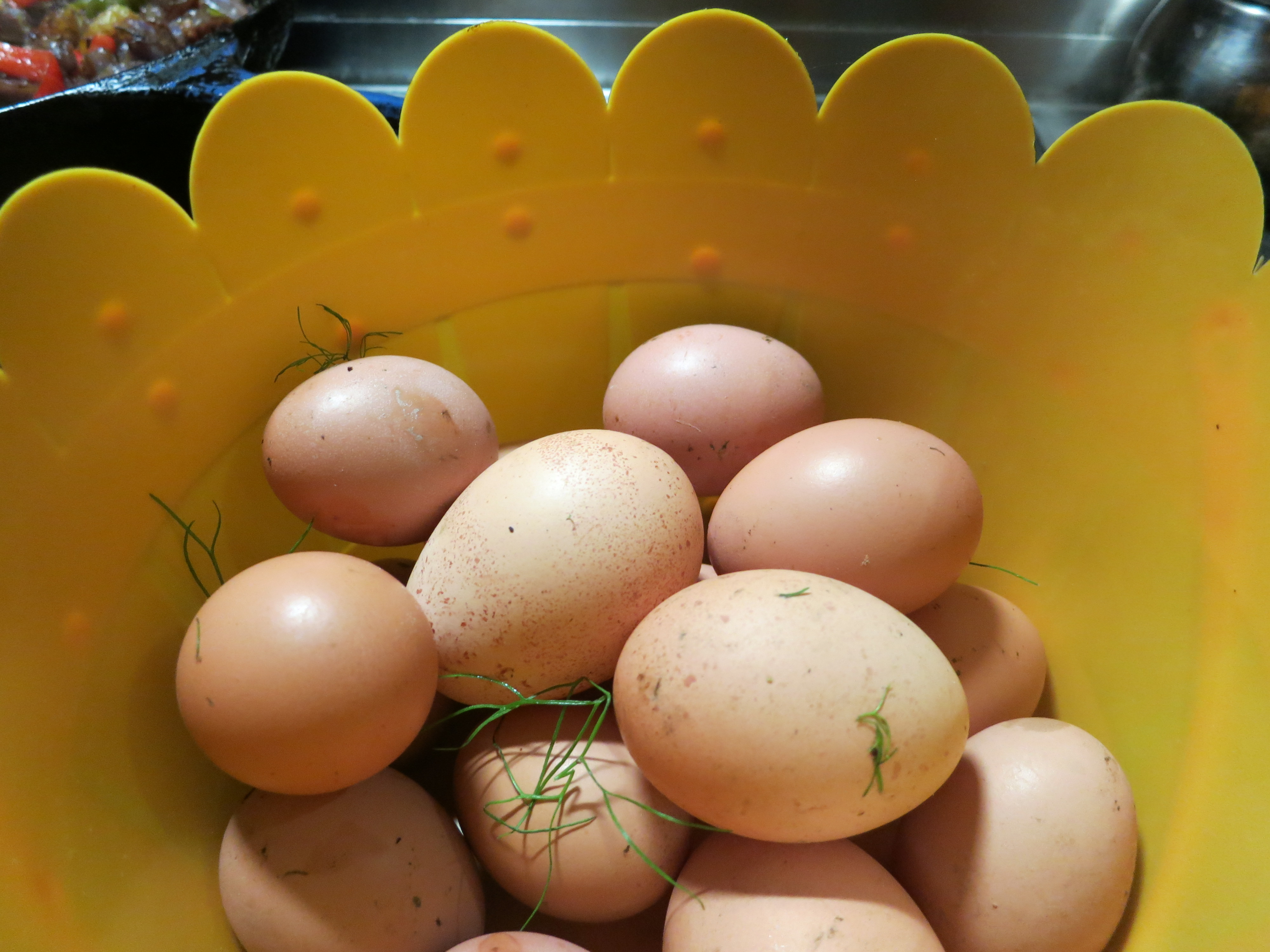
The new hens have just begun to lay these very cute little eggs

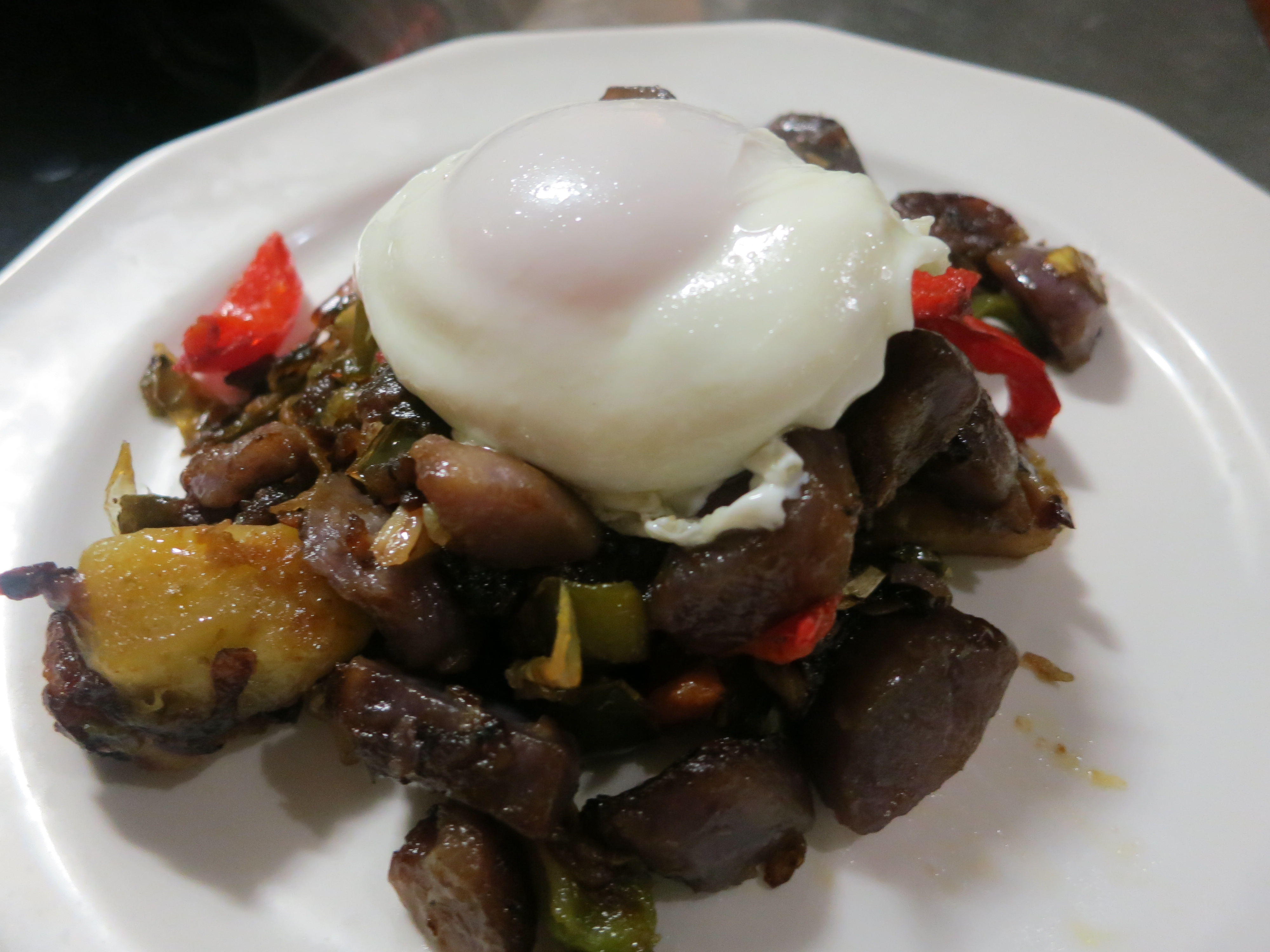
so I fried up a couple of eggs and ate them on top.  I cracked the soft yolks and let them run down over the spuds.

Yum!

Here’s the recipe, and if you see any purple spuds around I recommend you give them a whirl!

Patates a lo Pobre – enough for 4 people

3 onions

2-3 peppers

2 bay leaves

3—4 cloves garlic

1kg waxy potatoes

About 150mls olive oil

Salt and pepper

A splash of good quality red wine or balsamic vinegar

Peel the onions, cut into half and slice thinly. Heat the frying pan or skillet, add half of the olive oil and the sliced onions, Season with a little salt and when the onions are sizzling away turn the heat to medium and cook gently without browning. Wash the peppers, remove the seeds and cut into 1 cm strips then stir into the onions together with the bay leave. Peel the potatoes then chop them into small chunks or slices, adding to the pan as you go. Add the remaining olive oil Peel the garlic and cut into quarters and stir in. Season everything with salt and pepper.

Cook for about thirty minutes, or until the potatoes are tender, giving regular stirs so that they don’t stick to the pan.

Serve with a splash of good red wine vinegar or balsamic vinegar.