Category Archives: General foodie news

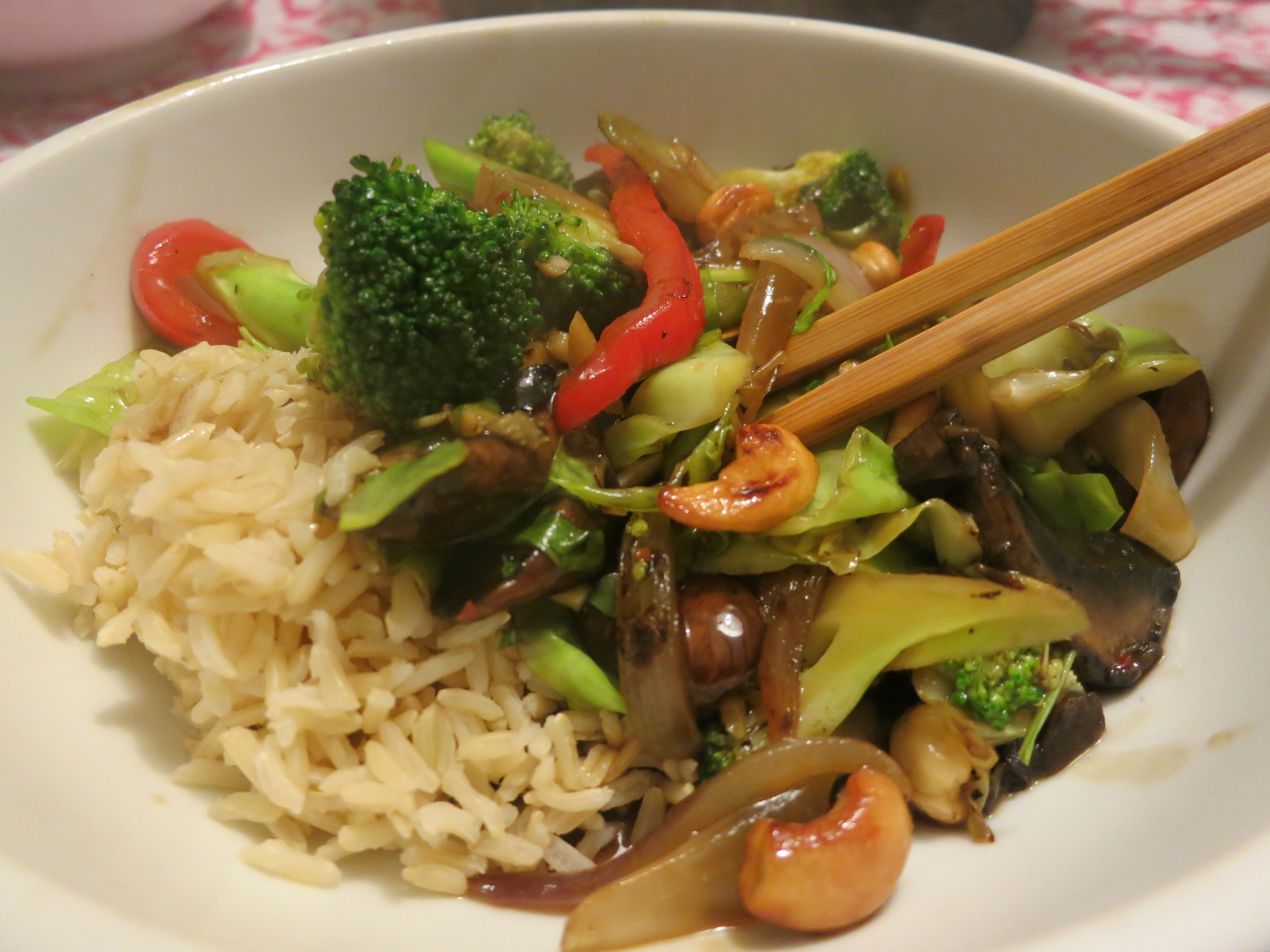
Stir Fried Veg – It’s all in the prep

This is a recipe that we ate when we visited Thailand and like a lot of good recipes it was forgotten along the way. I have to organise my Thai cooking class for this coming weekend and trawling through my recipes I came upon this little gem.

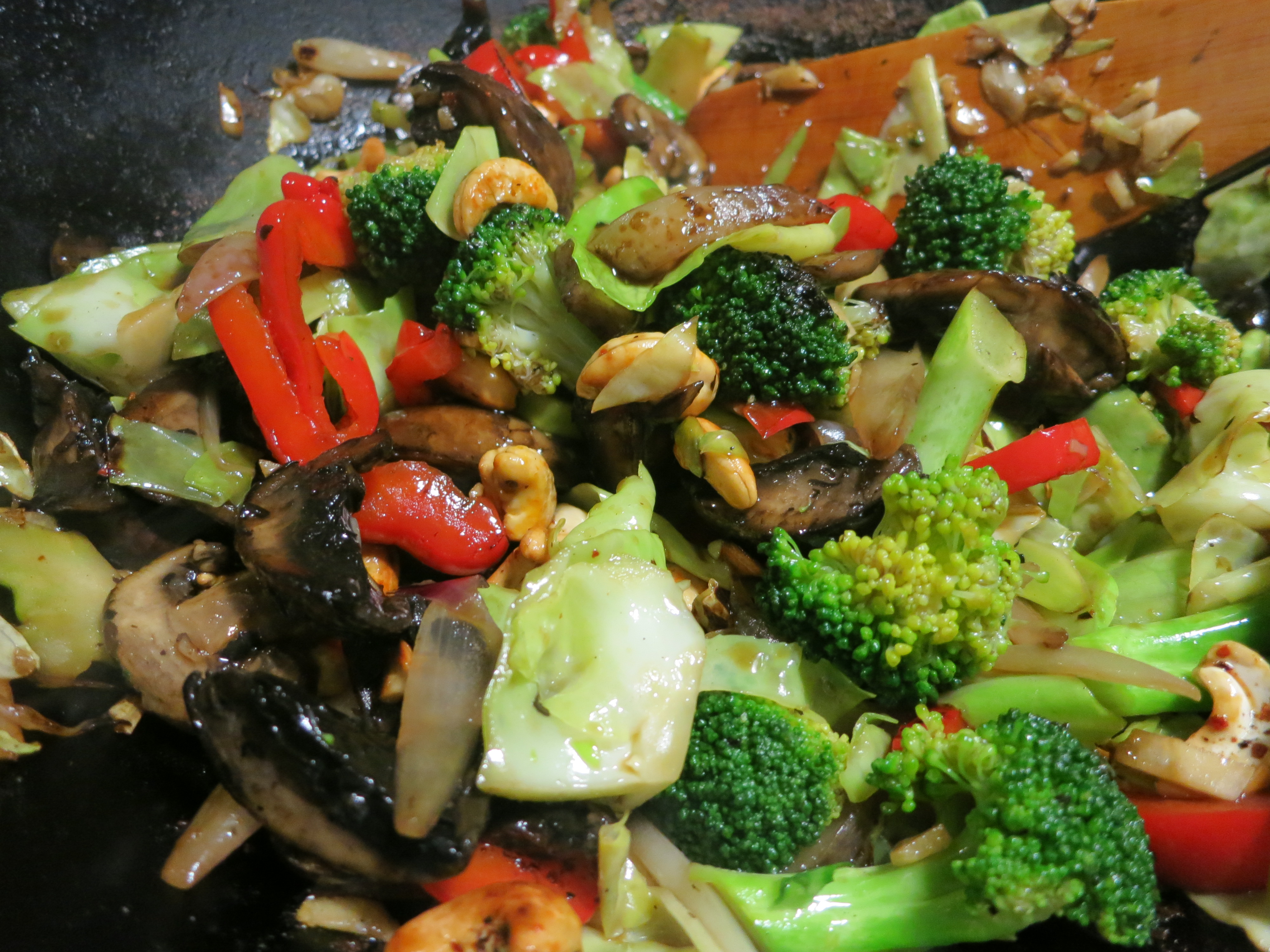
This is a very easy wacked on the heat dish of veggies, oyster sauce, soya sauce and cashews. The cashews are fried in a little oil, then tossed in chilli flakes which gives a nice little kick, and then stirred into the dish at the end. The list of vegetables in the recipe is of course variable
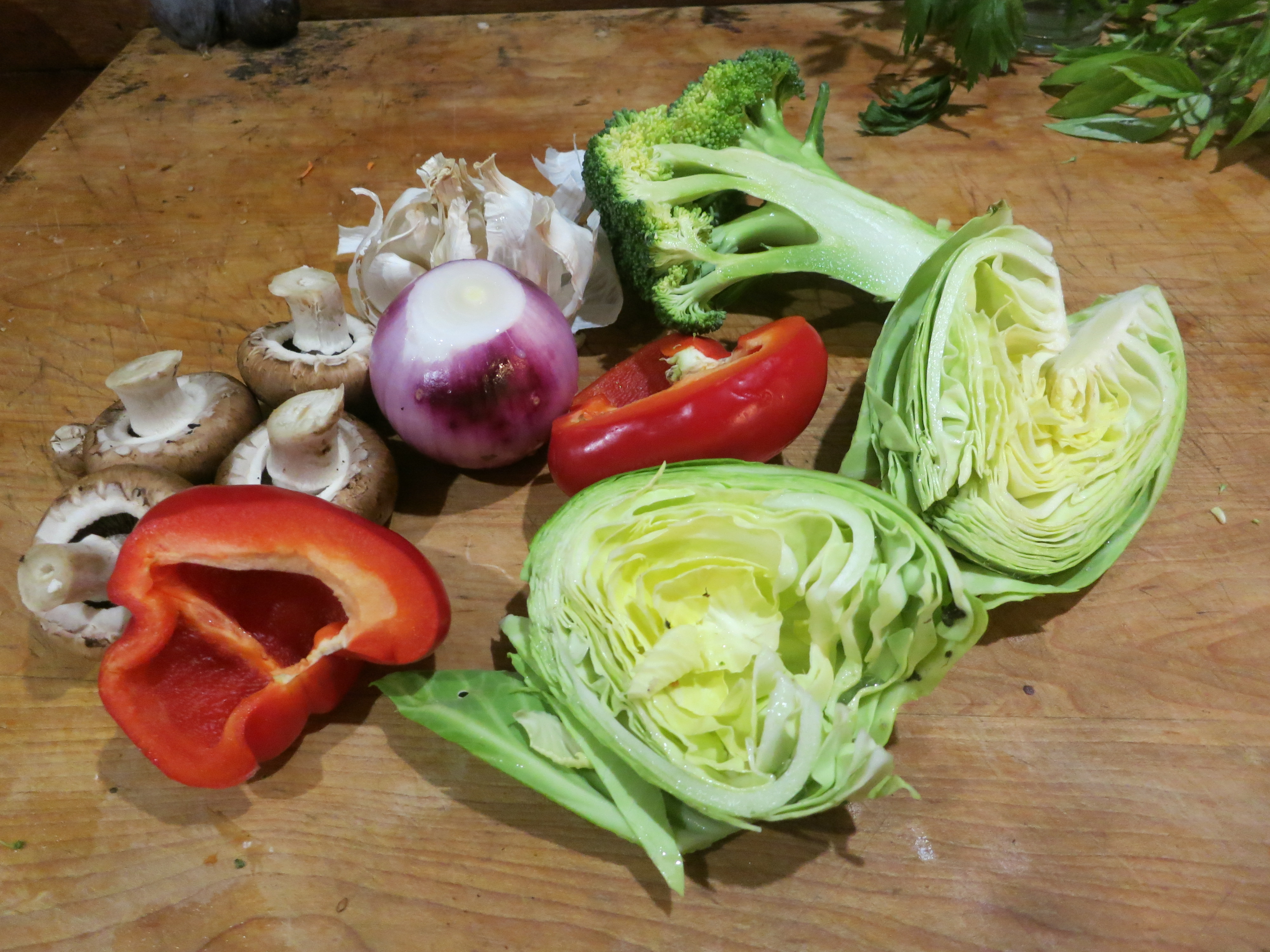
Tonights ensemble was a red pepper, a red onion (there weren’t any spring onions) some broccoli, mushrooms and the the last little green cabbage from the garden.
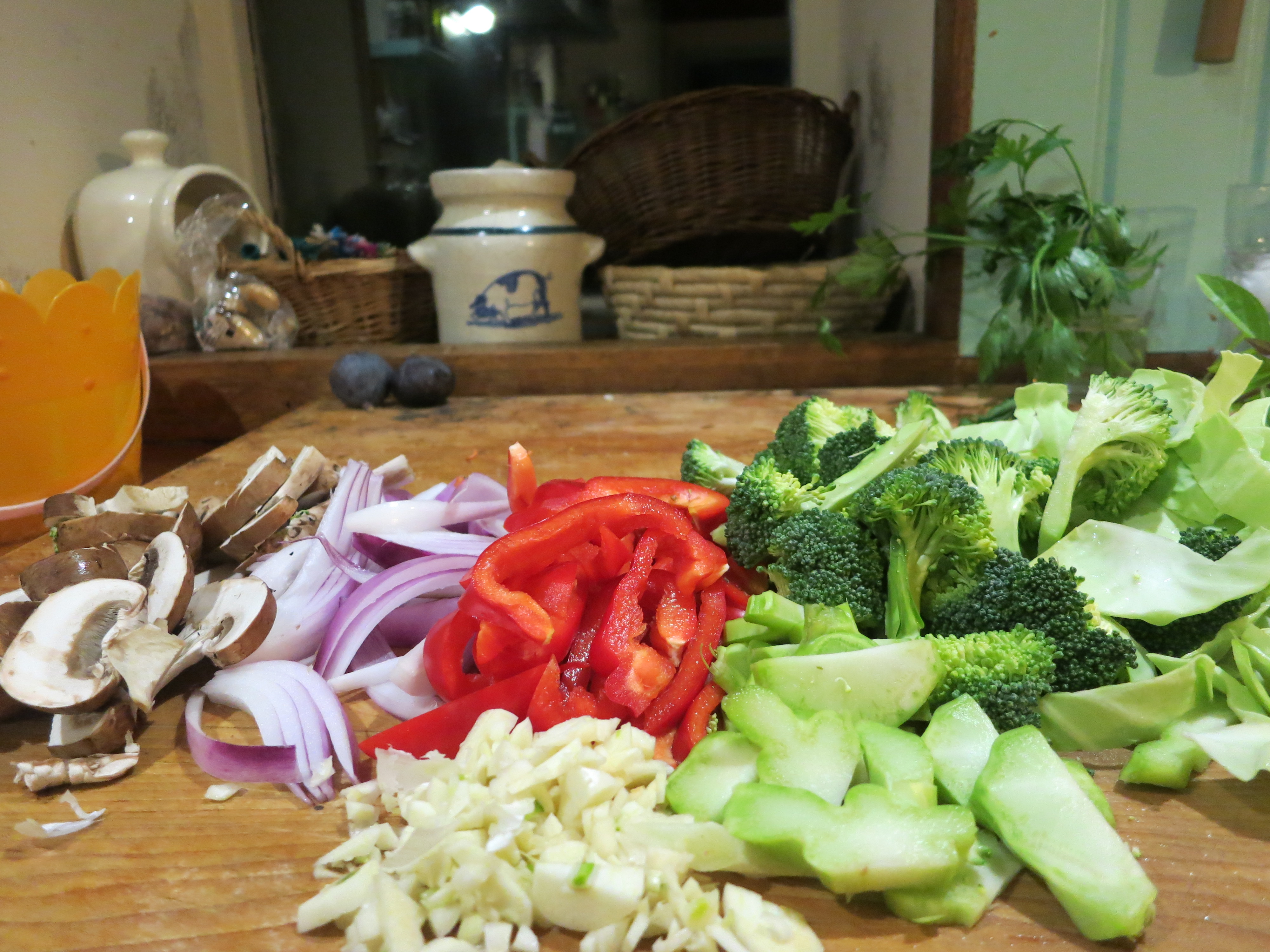
It’s totally delicious, nutritious and once everything is chopped and ready to go, pretty much an instant dinner. Here’s the original recipe

Stir Fried Vegetables with Cashew Nuts

75g cashew nuts

3-4tbs peanut/vegetable/sunflower oil

Half tsp dried chilli flakes(optional)

75mls vegetable or chicken stock

1 tsp cornflour

150g mushroom, thinly sliced

4-5 spring onions, white part thinly slice and green chopped

3 cloves garlic, peeled and chopped

1 small head broccoli, stem sliced thinly and rest broken into small florets

1 red pepper, deseeded and sliced thinly

Large handful  chinese cabbage or green cabbage, sliced into 1cm ribbons

Handful mange tout peas

2tbs oyster sauce

2 tbs soya sauce

Heat  2tbs oil in a wok or frying pan, over a moderate heat. Add the cashews and stir until they begin to brown. Remove, toss in the chilli flakes if you’re using them and put aside.

Mix the cornflour with enough vegetable/chicken stock to make smooth paste and put aside

Add 1tbs oil to the `wok/frying pan and add the mushrooms. Cook, stirring over a high heat, until they begin to brown then season with a little salt and put aside.

Heat the remaining  oil and add the broccoli, peppers,mange tout, the whites of the spring onions, the garlic and then the cabbage in that order. Keep the heat high, you should be able to hear everything sizzling away. Add the vegetable/chicken stock and cook for a minute or two then stir in the oyster sauce, soya sauce and cornflour paste

and cook until the sauce coats the vegetables.

Finally stir in the mushrooms and onion greens and toss everything together with the roasted cashews.
Purple Spuds

I bought some purple spuds last Friday at the Farmers Market in Clonakilty. Even though we still have spuds from our own garden at home I couldn’t walk past them. Curiosity got the better of me.

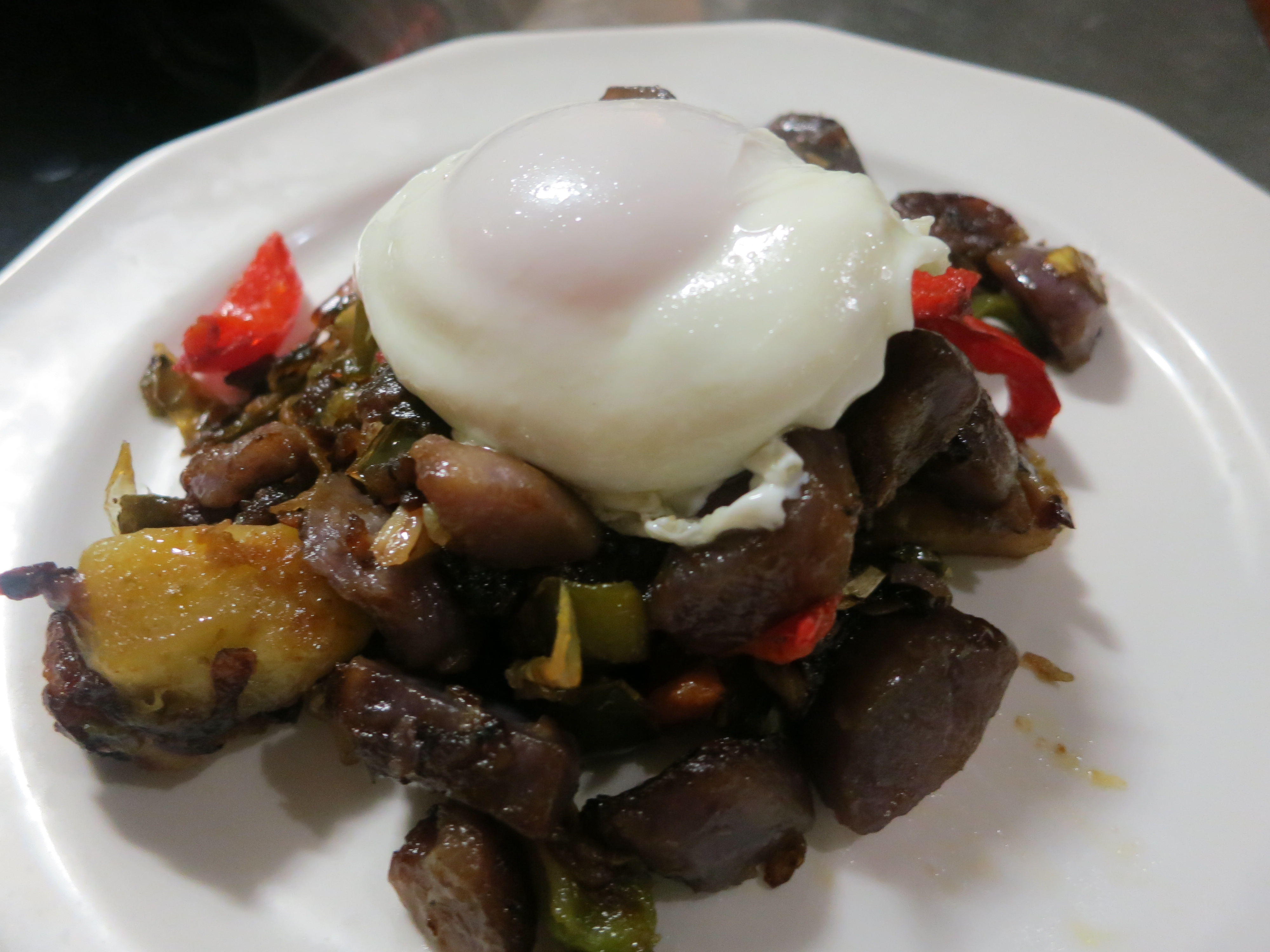
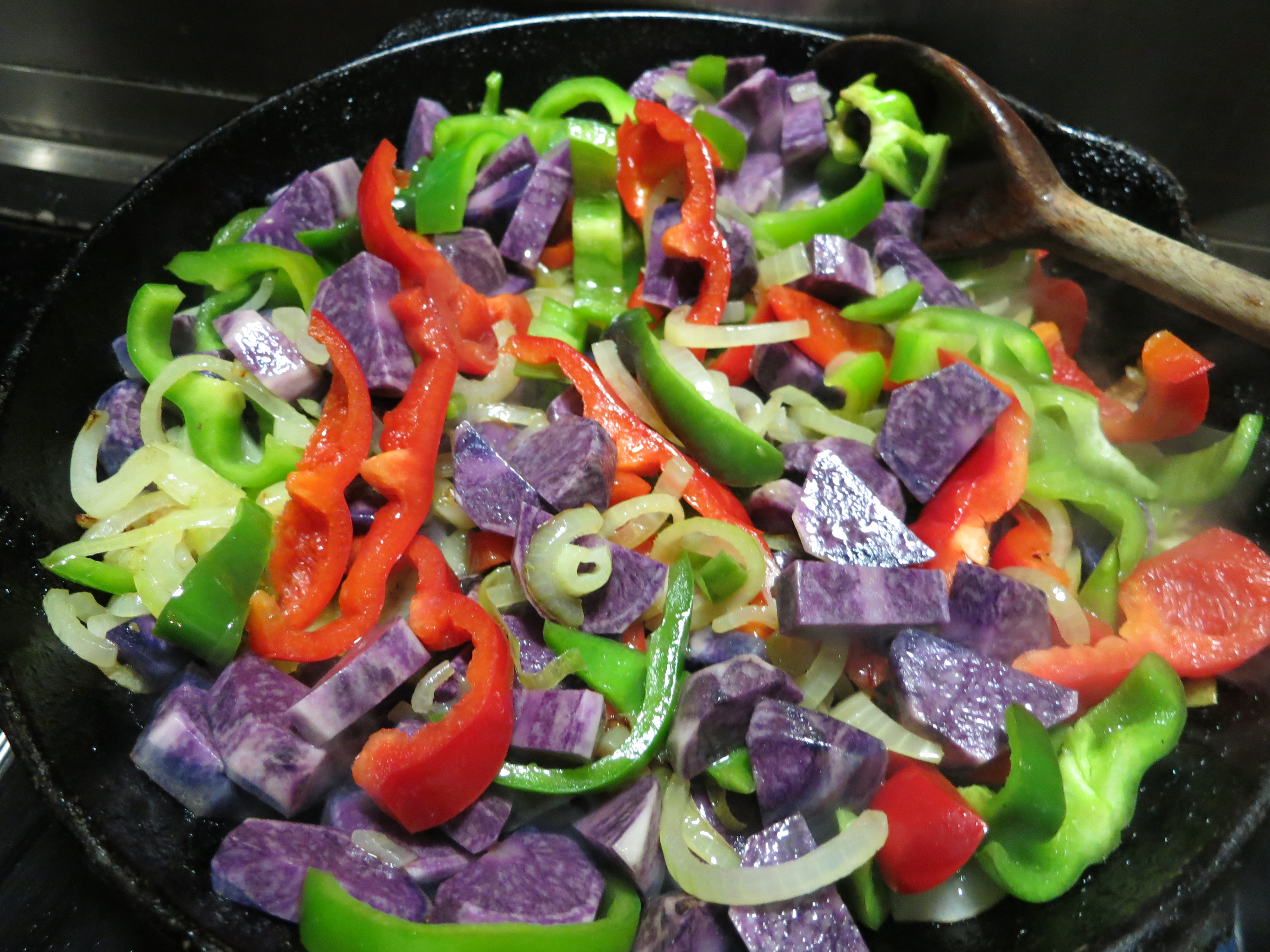
They had been relaxing in our vegetable basket until I arrived home from work this evening, hungry and reluctant to cook, I peeled them and chucked them into a frying pan with some onions, peppers and garlic.

Potatoes, peppers, onions and garlic fried in olive oil with a bay leaf is one of those blissful combinations. They’re known as ‘Patates al Pobre ‘in Spain which translates to’Poor mans Potatoes’ It’s great dish to cook as once the veg are chopped and in the pan they require very little effort.I hung around the kitchen chatting on skype to our daughter,  giving the pan an occasional stir

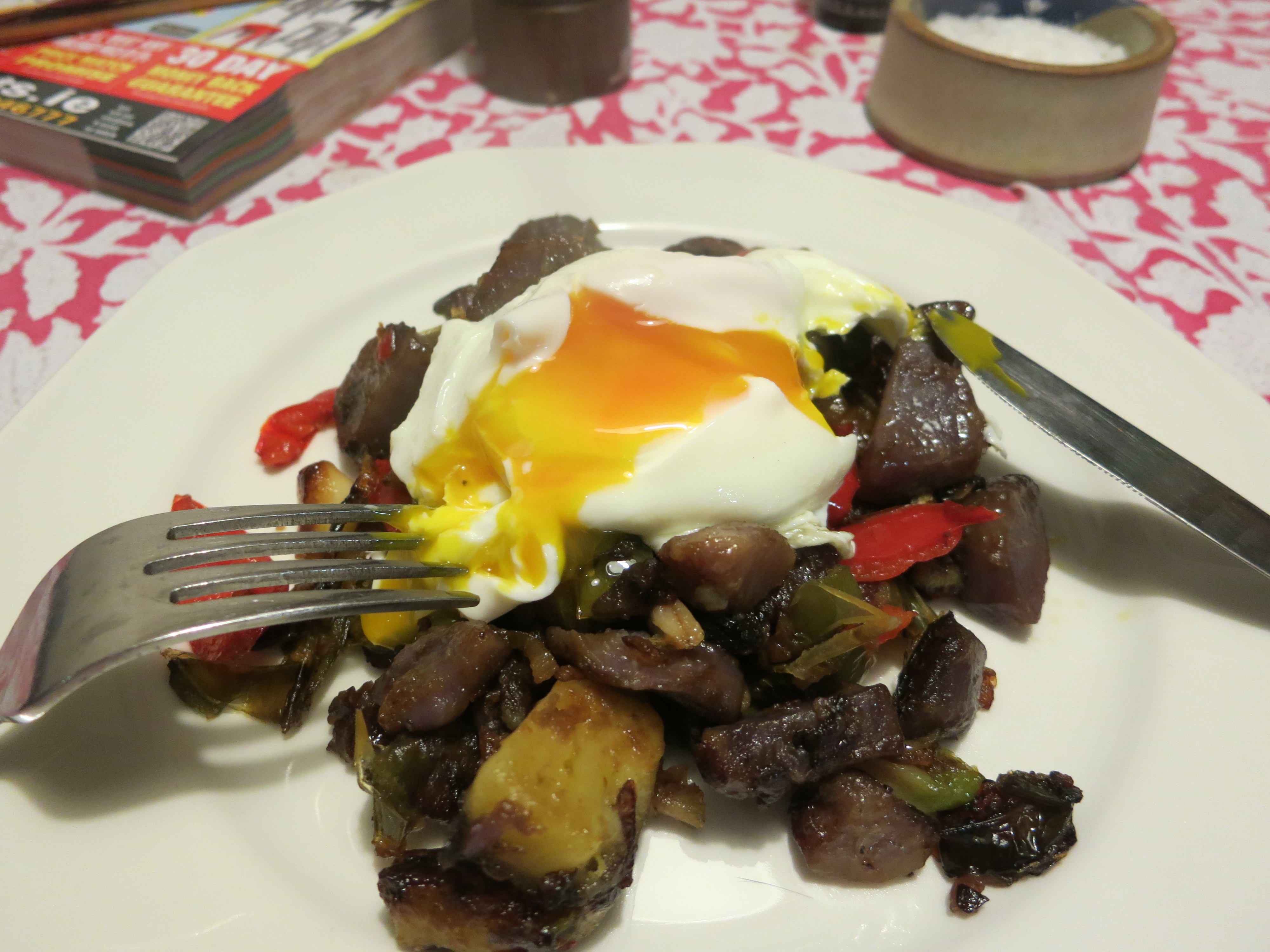
The potatoes were an intense bright purple when I peeled them and stunning when they hit the pan but they cooked up a rather sludgy browny purple. This is not as bad as it sounds, just a little disappointing on the colour front. They are quite dense, kind of waxy and floury at the same time and have a good flavour.

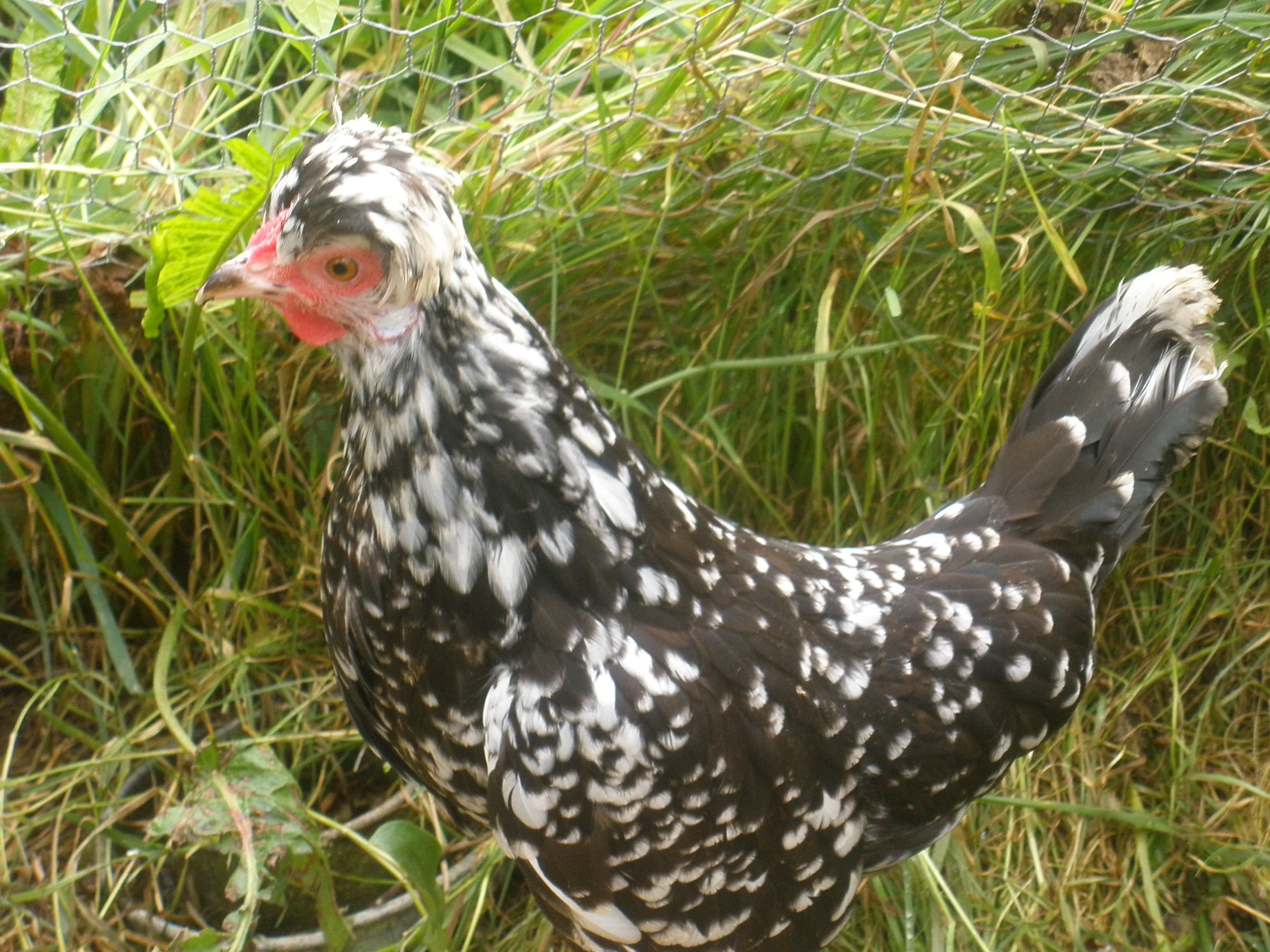
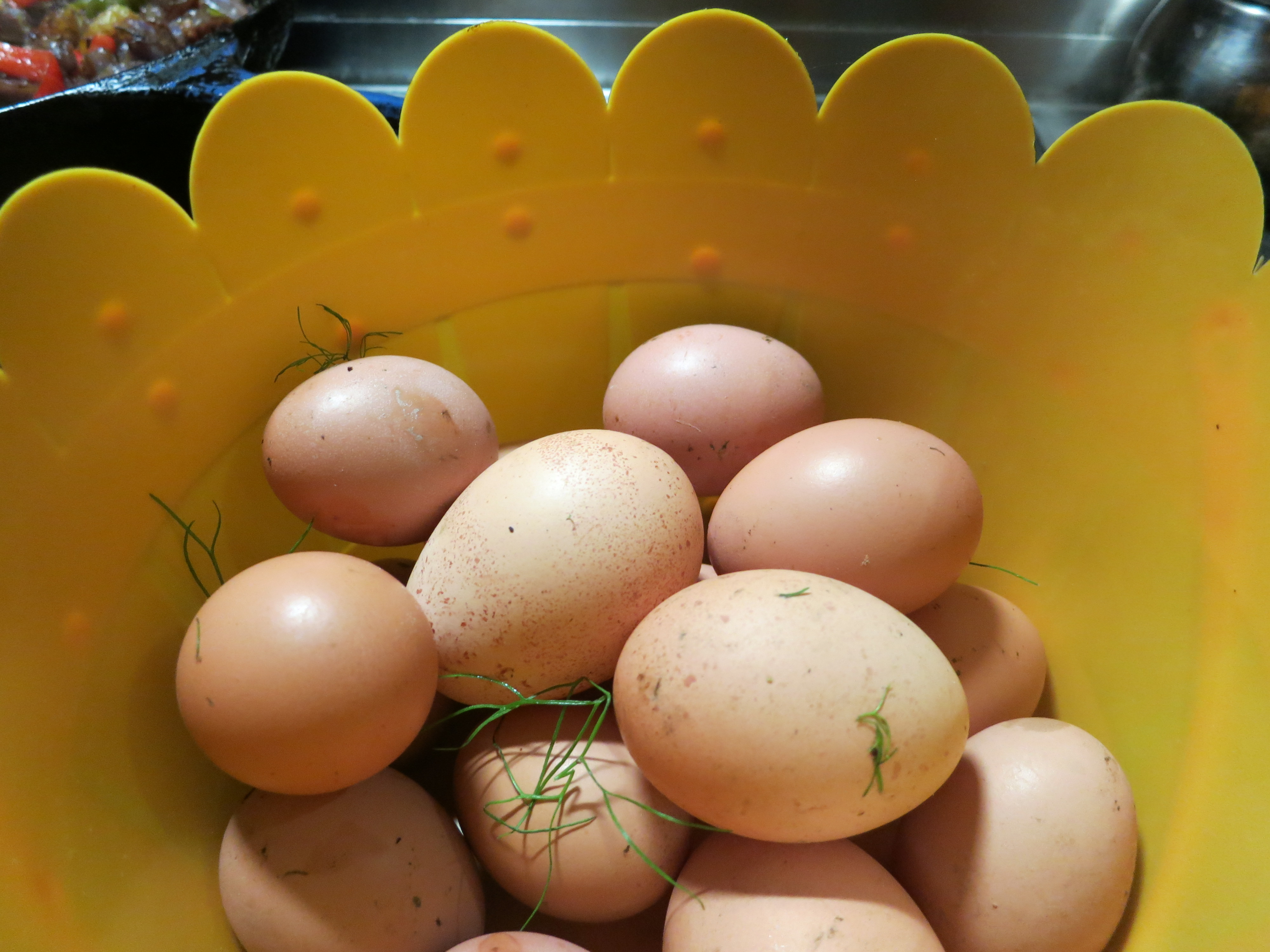
The new hens have just begun to lay these very cute little eggs

so I fried up a couple of eggs and ate them on top.  I cracked the soft yolks and let them run down over the spuds.

Yum!

Here’s the recipe, and if you see any purple spuds around I recommend you give them a whirl!

Patates a lo Pobre – enough for 4 people

3 onions

2-3 peppers

2 bay leaves

3—4 cloves garlic

1kg waxy potatoes

About 150mls olive oil

Salt and pepper

A splash of good quality red wine or balsamic vinegar

Peel the onions, cut into half and slice thinly. Heat the frying pan or skillet, add half of the olive oil and the sliced onions, Season with a little salt and when the onions are sizzling away turn the heat to medium and cook gently without browning. Wash the peppers, remove the seeds and cut into 1 cm strips then stir into the onions together with the bay leave. Peel the potatoes then chop them into small chunks or slices, adding to the pan as you go. Add the remaining olive oil Peel the garlic and cut into quarters and stir in. Season everything with salt and pepper.

Cook for about thirty minutes, or until the potatoes are tender, giving regular stirs so that they don’t stick to the pan.

Serve with a splash of good red wine vinegar or balsamic vinegar.


Beetroot Tart tatin

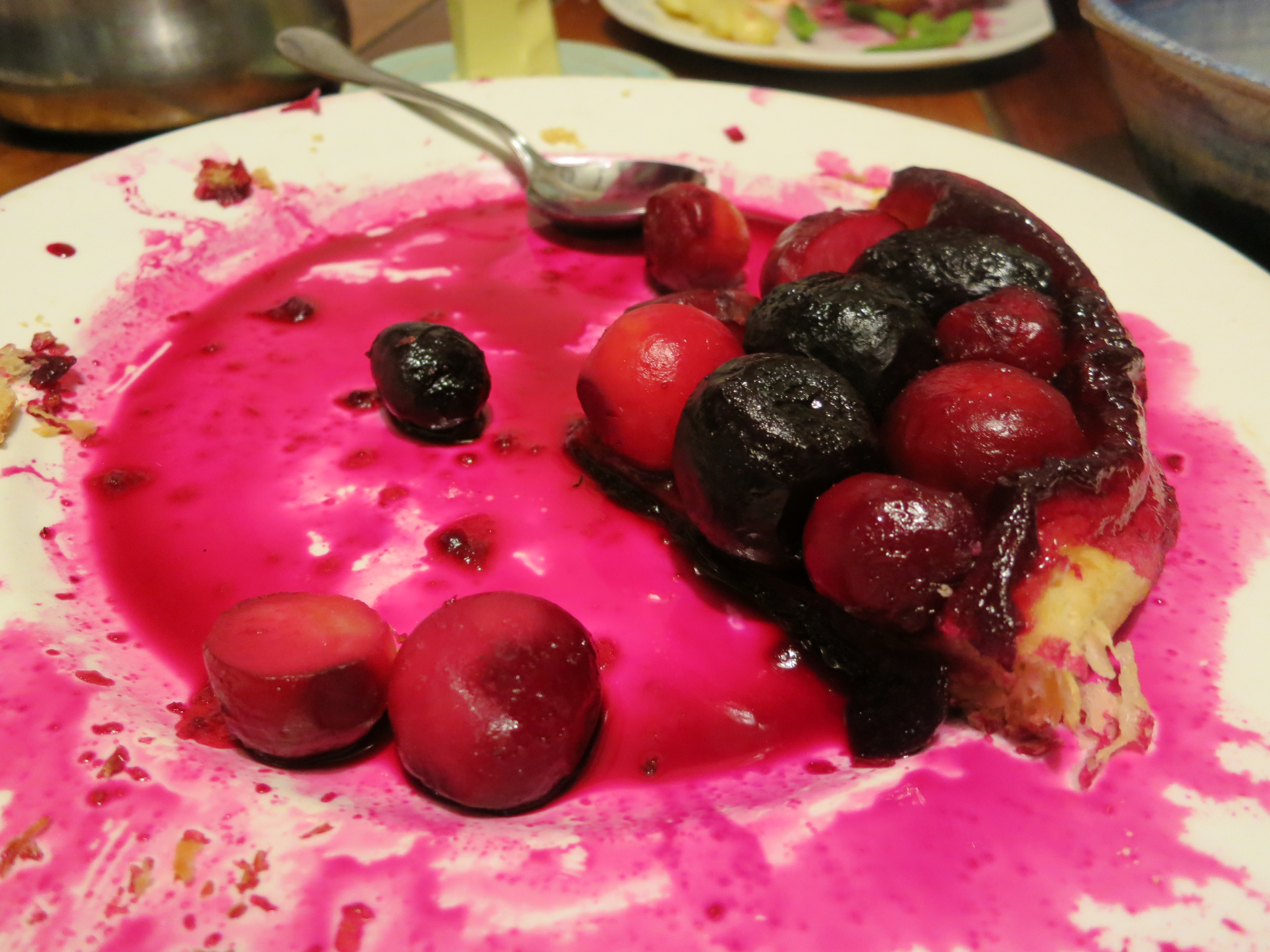
We are tidying up the garden for the winter right now, clearing and digging the beds so that we can manure them in preparation for next year. The beetroot bed was cleared the other day and we have been eating our way through a bucket of assorted beetroots. There were a lot of small beets, red, golden and pink and these I put in a tart tatin. Slow cooking beetroots brings out their sweetness which overlaid with their underlying earthy taste makes delicious eating. It takes a little time to cook the beets but it’s not complicated. I used homemade puff pastry but shop bought would do the trick. If you can find butter puff pastry all the better.

Beetroot Tart Tatin

About 20 small beetroots

2tbs white balsamic vinegar

2tbs white sugar

1 tsp muscovado sugar

50g butter, diced.

250g puff pastry

Pre heat the oven 180c

Wash the beetroots and put into a baking tray.

Cover with foil and bake for about one and a half hours or until tender

Allow to cool, then peel away the skins.

Heat an oven proof pan, about 20-24cms across,.

It needs to be something that you can put in the oven

Add the vinegar and sugars to the pan and cook until lightly caramelised.

Add the diced butter and swirl the pan to emulsify the butter and caramel.

Season the beetroots with a little salt.

Cut the beetroots in half across the middle and put flat side down into the pan. Put as many beetroots as you can, packed tightly in one layer.

Cool completely.

Roll out the pastry into a circle  and tuck over the beetroots.

Chill for thirty minutes then bake for approx 30minutes, until the pastry is golden and the beets are bubbling around the edge.

Leave the tart to relax and cool slightly before turning out otherwise the caramalised juices will just run out.


Unexpected Gifts – Borlotti Beans and Risotto

Image

Just when we thought we had enjoyed the last of this years borlotti beans our dinner guests bought us a gift of beans from their tunnel.

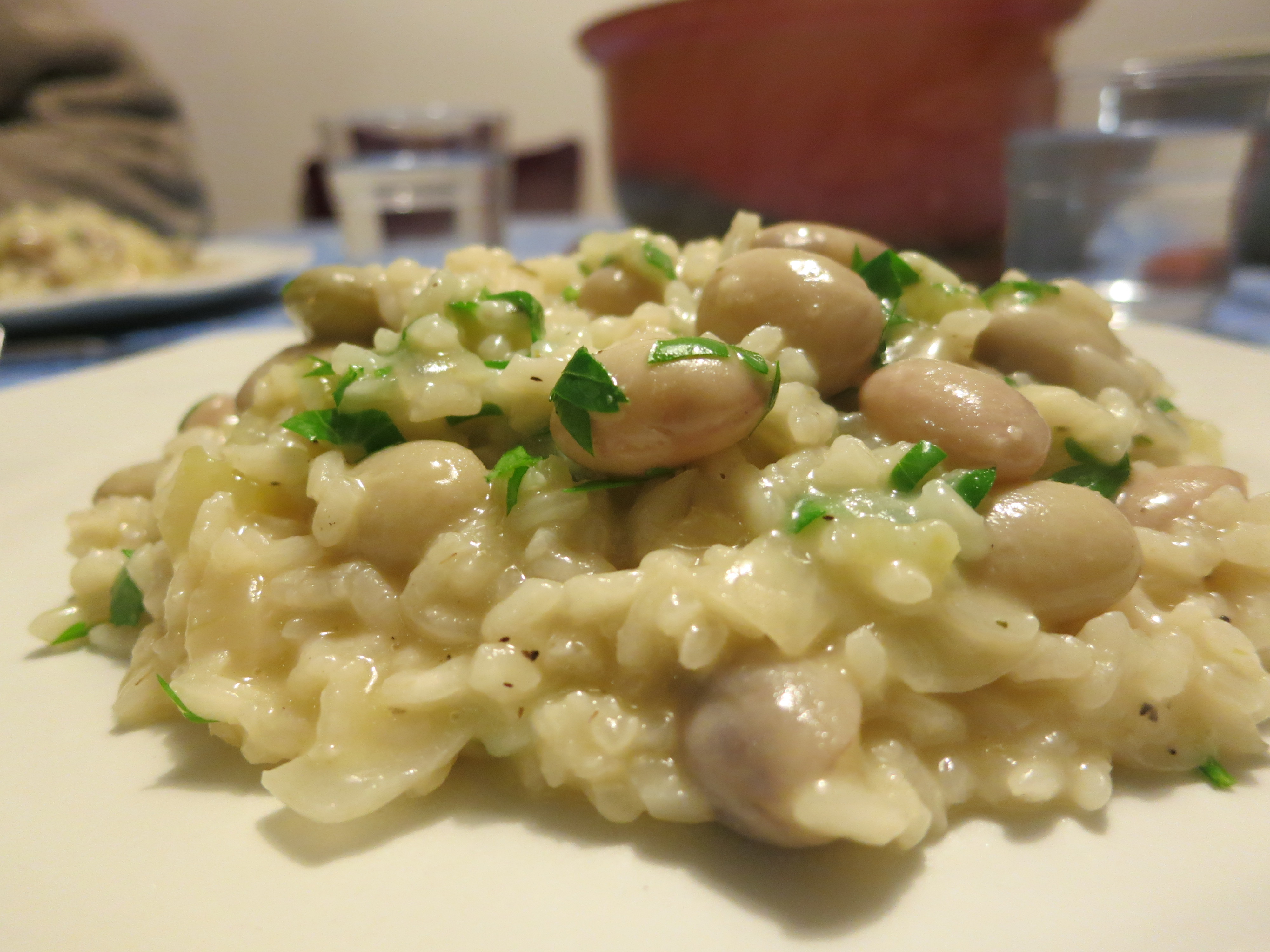
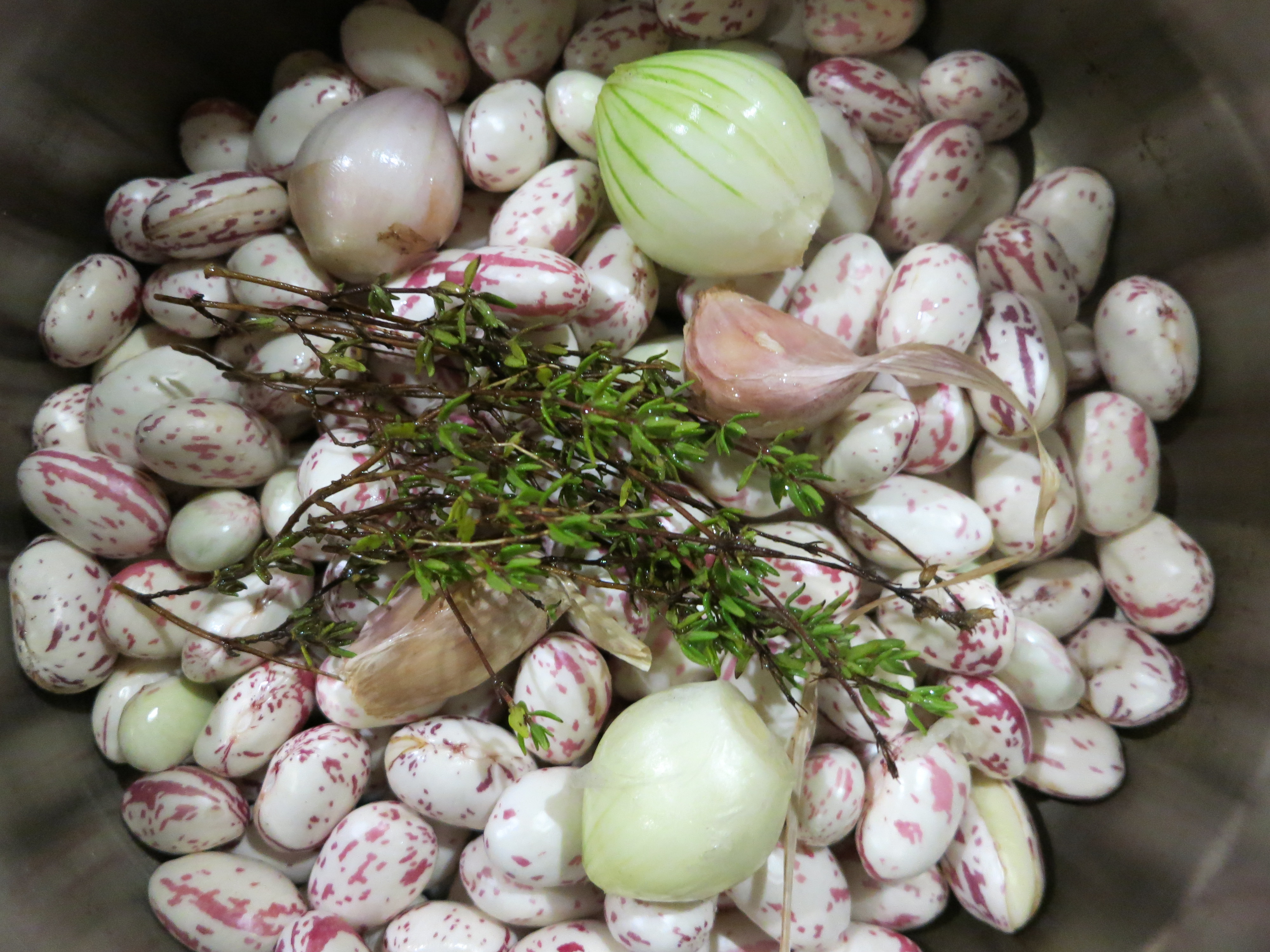
They were super fresh and in prime condition in their pink pods. We ate them last night in a risotto .

This is a very tasty and simple dish to make and although it may sound odd, beans and rice make a great combo. The velvety beans stirred into the creamy just cooked rice are delicious.

I cooked the beans first with a little garlic, onion and thyme. The usual herb to cook borlotti beans with seems to be sage but i went out in the dark and pouring rain to pick the herbs and came back with a handful of thyme. I saved the stock from cooking the beans and used that to make the risotto.

Here’s the recipe – it feeds four people

About 300g podded borlotti beans

1 small onion

1-2 cloves garlic

1 stick celery

1 tbs olive oil

a small bunch of thyme

Put everything in a small saucepan, cover with water and simmer for about forty five minutes.

Image

For the risotto

2 onions – peeled and chopped

1 stem celery- diced

25g butter

25mls olive oil

300g arborio rice

1 glass white wine

about 900mls hot stock- use the bean stock and top up with vegetable or chicken stock

125g parmesan cheese – grated

salt and pepper

a small bunch of parsley – chopped

Melt the butter in a small pan and add the olive oil and chopped onions and celery.

When everything begins to sizzle turn the heat to medium and cook for about ten minutes, until the onions have sweated down, Don’t let them brown.

Add the arborio rice and give it a few good stirs then add the white wine. Allow this to bubble up and reduce then start adding the stock little by little. The rice should absorb each addition of stock before you add the next. It shouldn’t be like rice in a swimming pool nor should it stick to the bottom of the pot. What you need is to maintain a gently bubbling pot. Gradually keep adding the stock. After about fifteen minutes it should be getting there – taste a little to check. The rice should still have a little bite to it. If it’s cooked to your taste take it off the heat and beat in the grated Parmesan cheese and season with salt and black pepper. It’s important that the rice isn’t too dry – it should be creamy – so adjust the consistency with a little extra stock before adding the Parmesan if necessary. Finally stir in the reserved borlotti beans and scatter chopped parsley on top.


Calamari Rellenos aka Stuffed Squid

Spain is home to fantastic food markets and in Barcelona each neighbourhood has it’s own. The most famous is the Boqueria on the Ramblas and in the neighbourhood where I am staying it is called Sant Antoni. Smaller than the market on the Ramblas but impressive all the same. Aisles of stalls piled high with fruit and veg, meats and fresh fish. We were shopping for vegetables yesterday when we walked past a fish stall that had the cutest fresh calamari. They were positively winking at us and the next thing we knew were the proud owners of six!

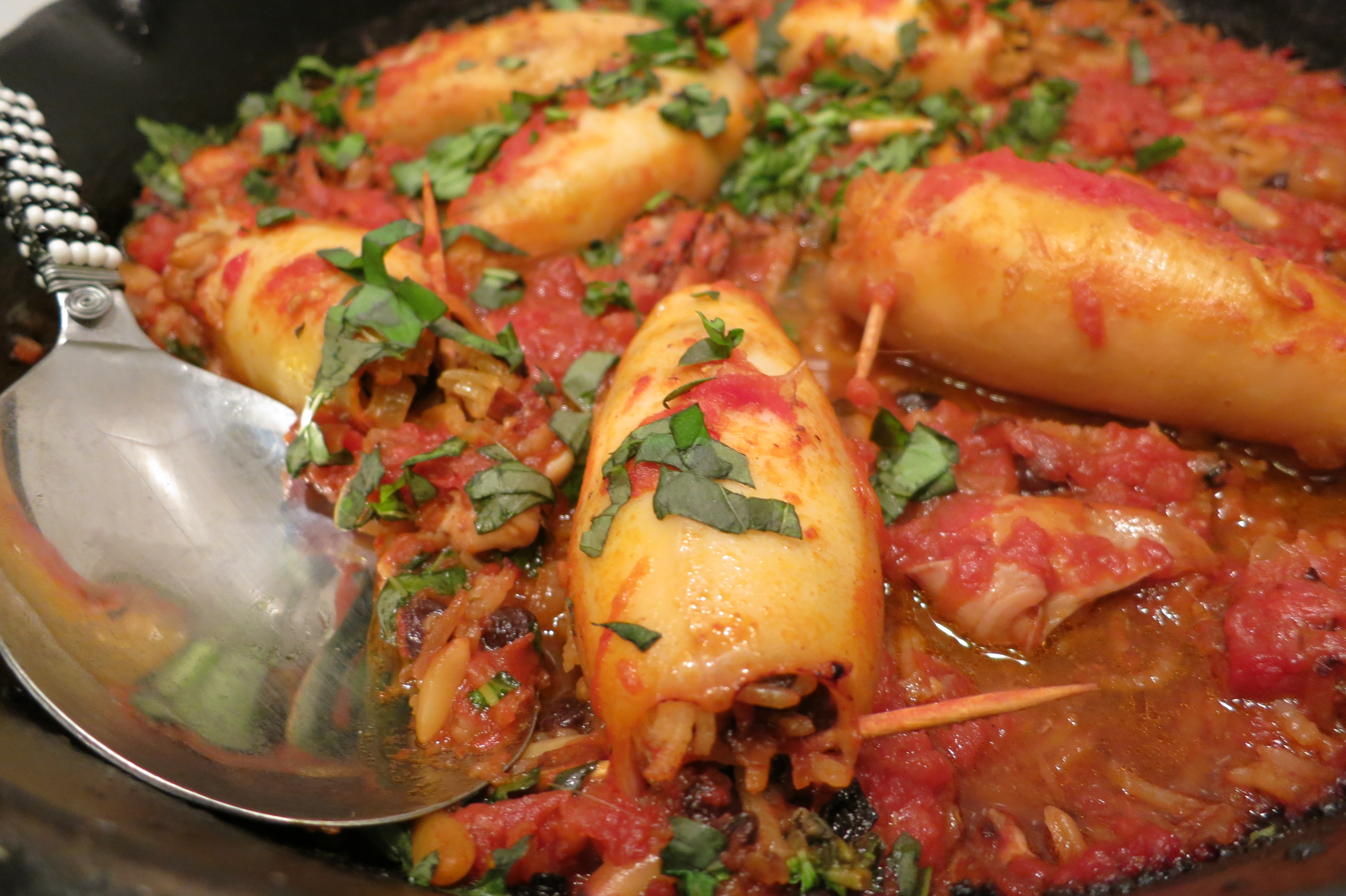
We had them for dinner last night, stuffed with rice, pine nuts and currants, cooked in tomatoes and white wine. An incredibly simple and delicious combination.

If you can get your hands on small calamari(squid) this  is great recipe to try. The recipe comes from an ancient fish cookbook that I have by Anton Mosiman and goes something like this

Clean the calamari or better still ask the fishmonger to do this for you. Take off the wings and the tentacles and rinse them well.

Peel and chop an onion and saute gentle in olive oil, don’t let it brown, and when it begins to relax stir in a handful of currants and a handful of pinenuts. Cook these gently together for  few minutes and then stir in about 100g basmati rice and a little salt. Carefully fill the calamari tubes with this mix, don’t overstuff as the rice will swell when it cooks. Secure the opening with a tooth pick. Heat a pan, add a little olive oil and carefully fry the squid on all sides, add the wings and tentacles and give them a little fry as well. Next add a glass of white wine and about half a kilo of tomatoes. The recipe calls for blanched and chopped tomatoes and  some tomato juice  but I used fresh ripe tomatoes  which I grated. This is a great Spanish trick. All you have to do is grate the tomato on the coarse side of the grater over a bowl and you end up with tomatoes ready to go and the skin in your hand which you then discard. A can of tomatoes will do if you haven’t any decent fresh tomatoes. If your pan is ovenproof use that but otherwise carefully transfer the squid to an ovenproof dish and pour the tomato sauce over the top.

Cover with a piece of aluminum foil and bake for forty five minutes.

To serve just add some chopped fresh basil.


Aubergines to the rescue

The plan was to have marinated sardines for dinner last night. I have had a recipe torn out of a magazine in my bag for months, ‘Tomatoes with Cured Sardines and Basil Mayonnaise’

Barcelona’s markets are full of sardines so I was looking forward to trying out the recipe,.We bought some super fresh sardines plump and still stiff. I managed to fillet them which was quite a fiddly job and they ended up a little raggy but boneless all the same. I marinated them with red wine vinegar, chilli flakes, lemon zest, maldon sea salt and olive oil then put them in the fridge to cure. The recipe said a few hours or overnight. I should have taken more notice to the overnight detail as after a few hours they were still too raw to eat. Panic stations as guests were due any moment!

We already had prepared some arancini from  a little left over risotto  and they were chilling in the fridge and luckily the vegetable basket was full.

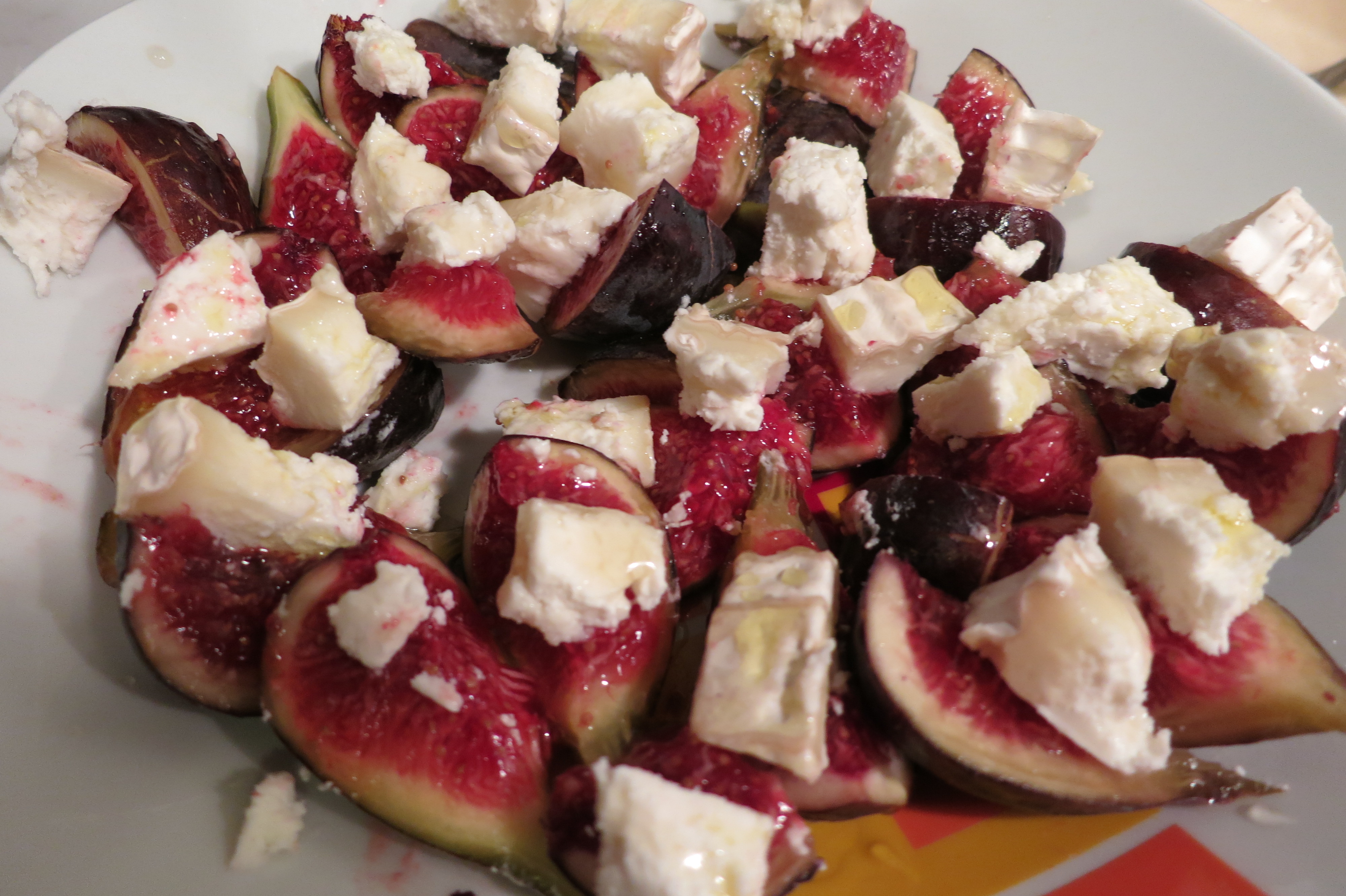
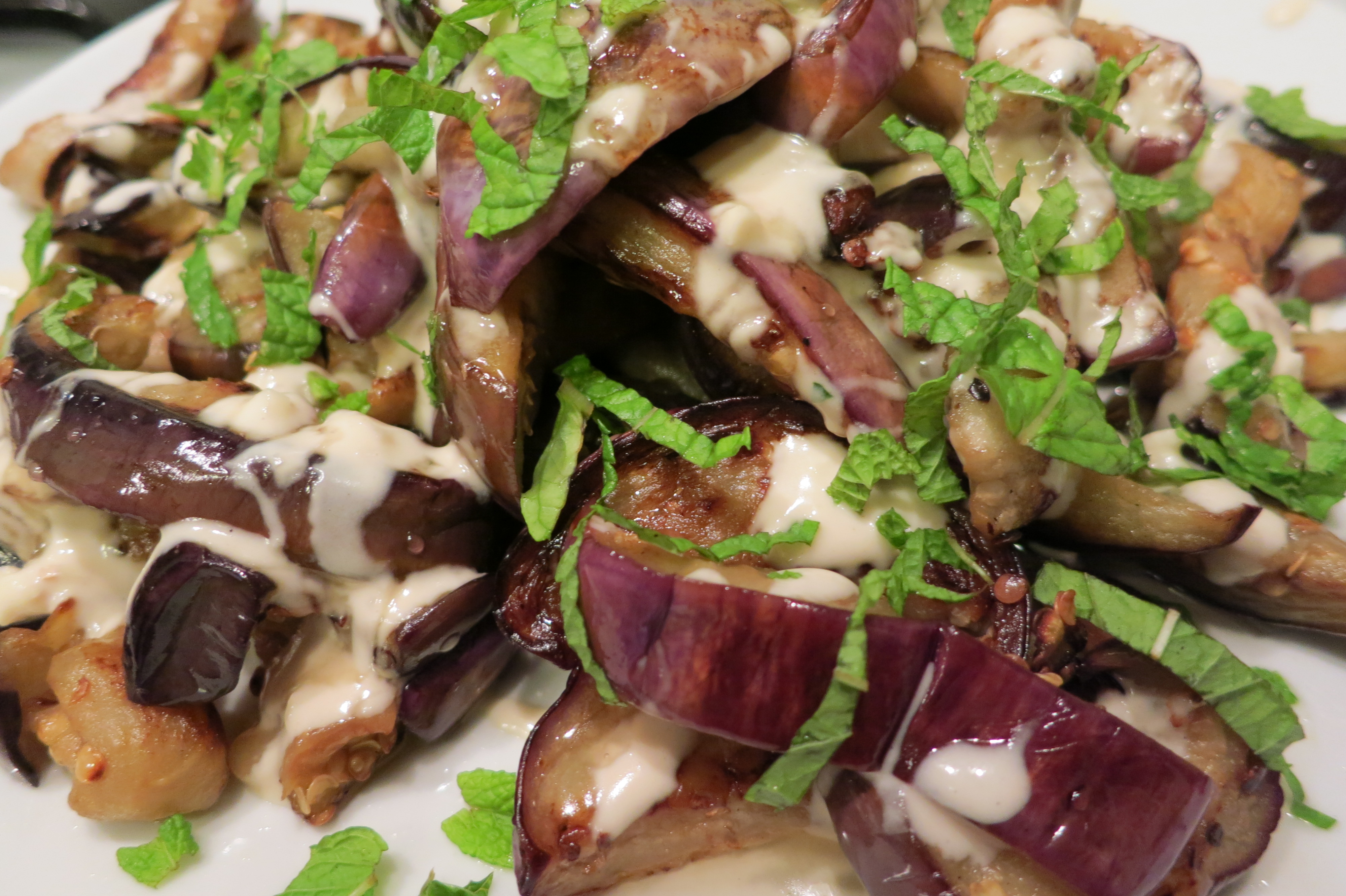
We dressed some tomatoes with garlic, basil and olive oil, cut up some fresh figs and tossed them together with chevre (creamy goats cheese), olive oil and honey and cooked up the remaining aubergines.

After a quick google search we found a recipe for aubergines with honey and tahini lemon dressing sounded good.

Here’s our take on it.

Aubergines with Honey and Tahini lemon dressing

2 aubergines

olive oil

salt

3tbs light tahini

juice of half a lemon

1 clove garlic

a handful of fresh mint

Cut the aubergines into four thick slices lengthwise then cut them into strips across.
You should end up with strips about the size of old fashioned chips.
Sprinkle over a little salt, toss well and put into a colander. Ideally for about thirty minutes but if you’re pressed for time twenty will do. Meanwhile make the dressing.

Peel and chop the garlic and put into a bowl with the tahini. Mix in the lemon juice – this makes the tahini into a very thick paste – then thin out with a little water until you have a thick pouring consistency. Add a pinch of salt and put aside.

When you are ready to cook the aubergines, take a handful and squeeze so the excess juices come out. Put the aubergine pieces onto a clean tea towel and pat dry. Heat a large pan, add a little olive oil and fry in batches until the pieces begin to go golden. Don’t overcrowd the pan. Pile the cooked aubergines onto a plate, drizzle over the tahini sauce and a little honey and serve with chopped mint on to serve

It was absolutely yummy and we’re looking forward to eating the sardines for lunch!


Aubergine Fiesta

I’m on holiday at the moment in Catalunya, visiting family and friends.
The hospitality is mighty and every where that I go there’s a large lunch. This is followed by a siesta, a walk about nibbling tapas then dinner at around ten o’clock. By the time we get to dinner I am quite food fatigued. Luckily it’s not a dinner like we eat in Ireland, it’s quite moderate plate of food but all the same time my body rhythm is confused!
Yesterday’s lunch was in the hills above Castellon.

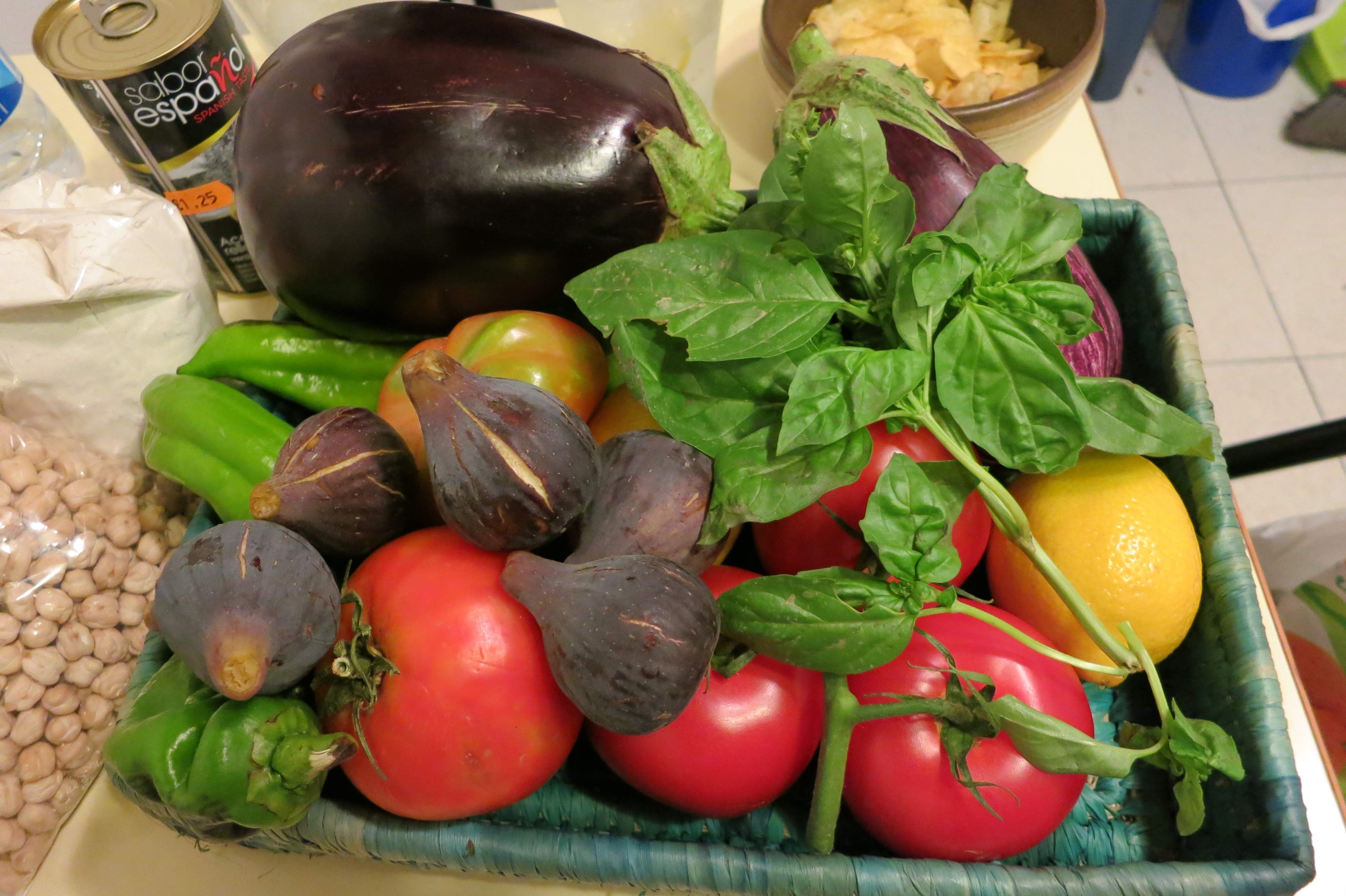
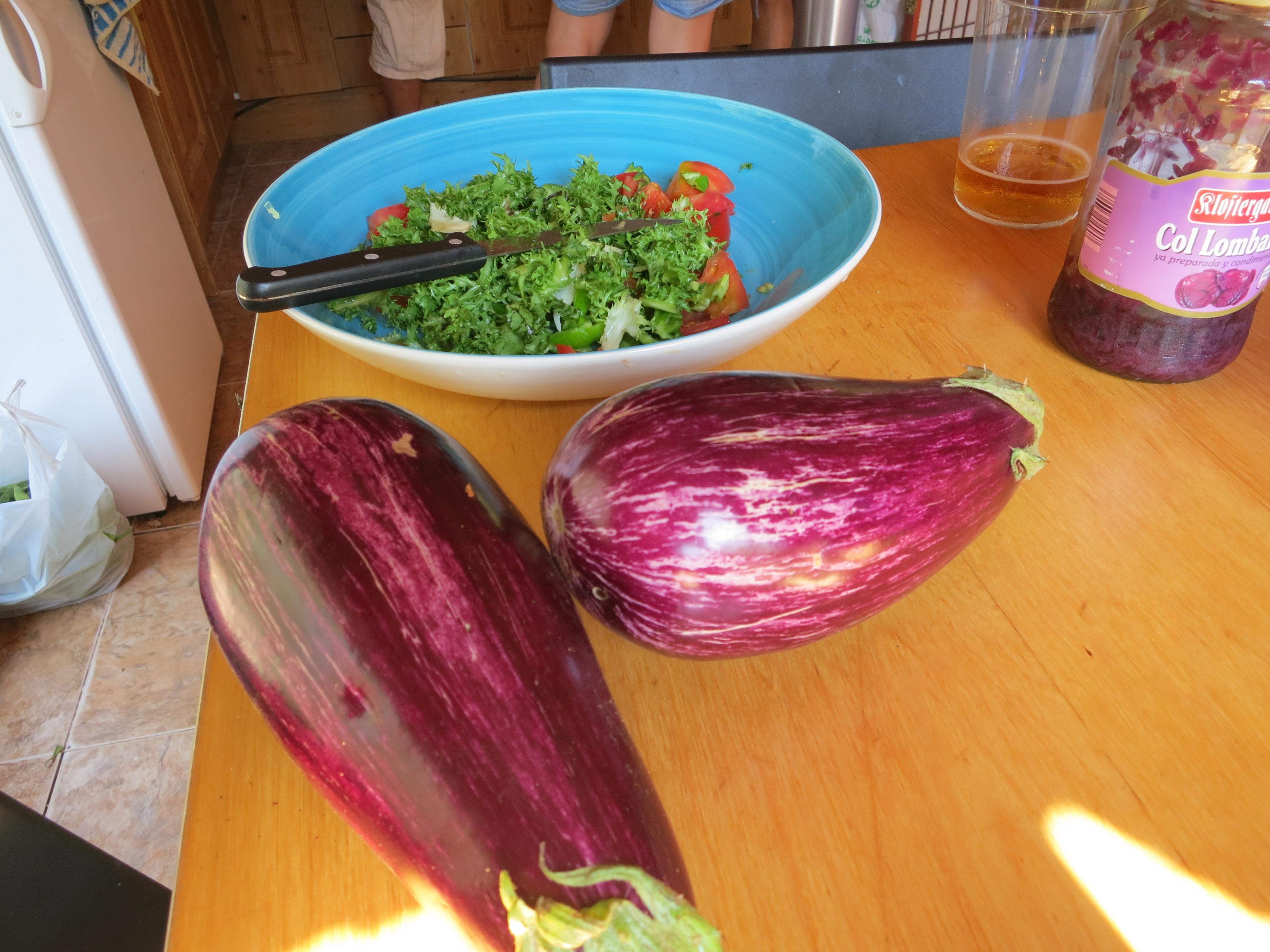
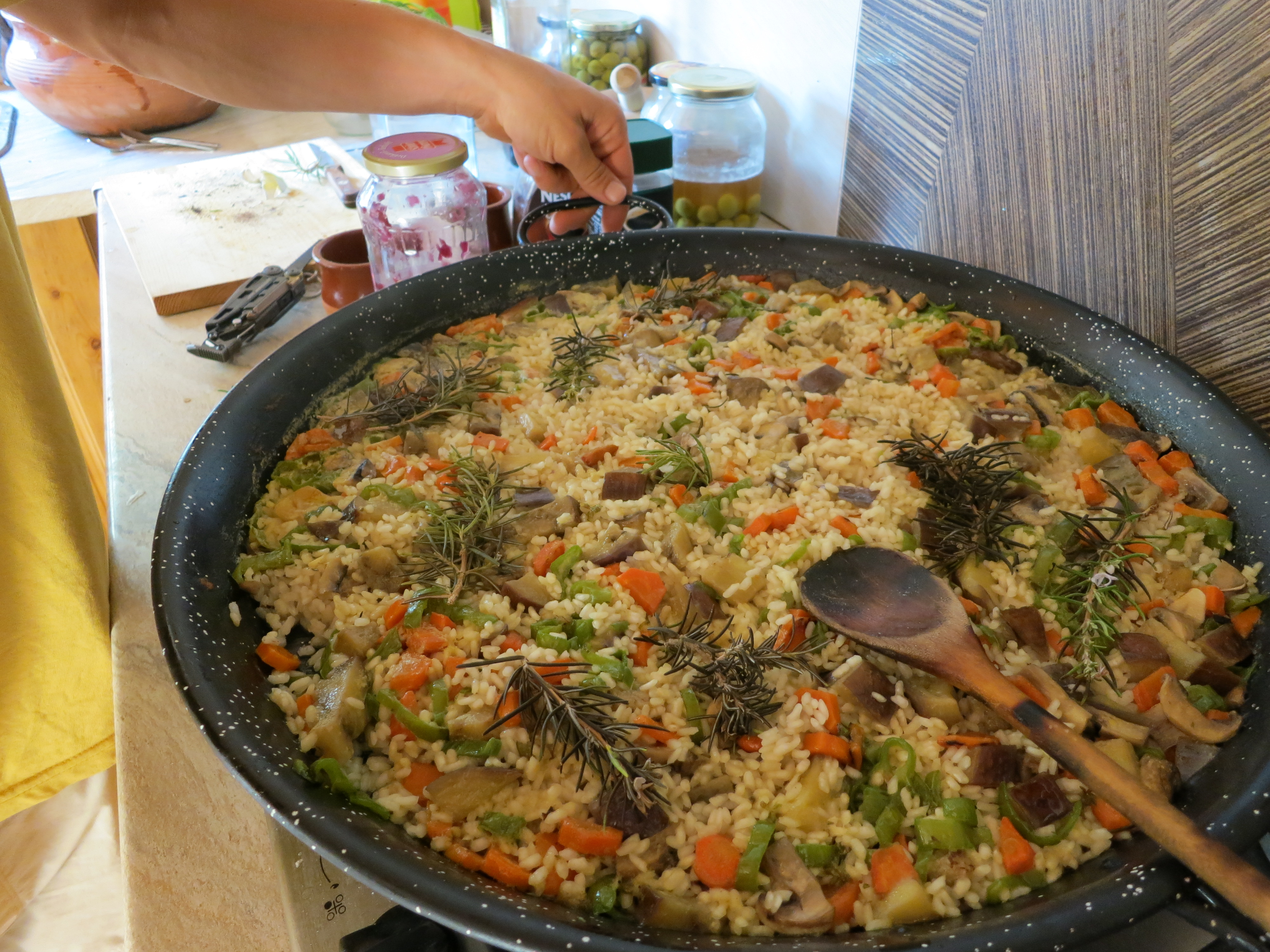
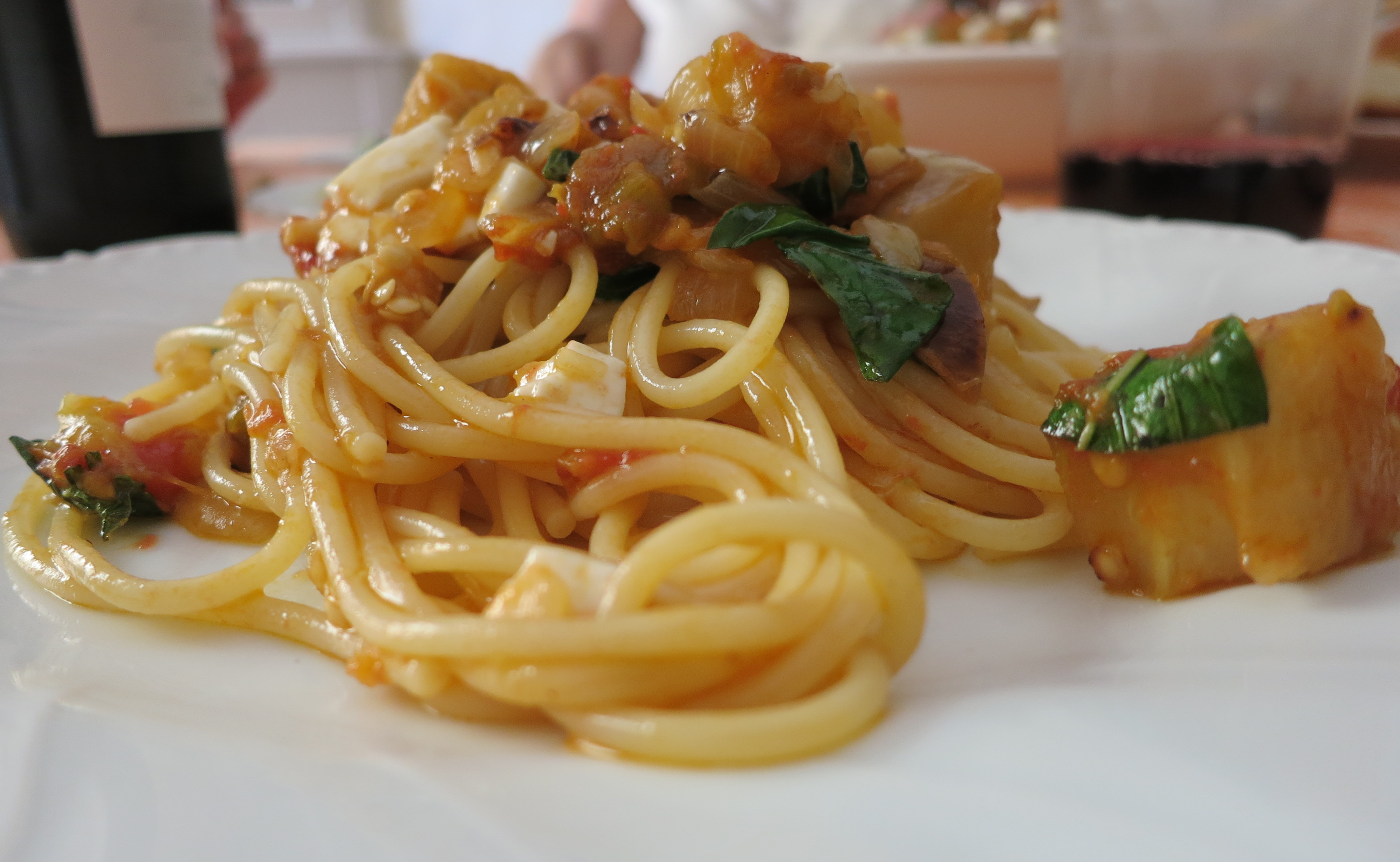
One of the guests was a market gardener and he had bought two huge  bags of peppers and aubergines. These we ate in a delicious vegetable paella under the trees outside the house.and when it was time to leave I was given a large bag of vegetables which I took back to Castellon and I gave them to Carlos and Maita, my hosts. At breakfast today we discussed the possibilities for a quick lunch, settled on pasta with aubergines, and headed off to the beach for a couple of hours.
This is what we made when got home.Spaghetti with aubergines. tomato, basil and fresh goats cheese scattered on top as that was what was in the house but ricotta would do the job just as well and might be easier to get.

Spaghetti with Aubergines. tomato, basil and Ricotta

1 onion
50 mls olive oil
3 cloves garlic
3-4 fatty tomatoes (fresh) or 1 can tomatoes
1 large aubergine
150-200g fresh goats cheese or fresh ricotta
a good handful of basil
salt
100g spaghetti per person

Peel and chop the onions and garlic. Heat a pan, add the olive oil and the onions and cook for five minutes, until the onions begin to melt down. Don’t let them brown, once the onions are sizzling away turn the heat to medium. Add a little salt and the garlic. cook for a minute or two more then add the tomatoes. If you are using fresh tomatoes chop them into a dice and add. If you don’t have fresh fatty tomatoes – they must be ripe – use a can of tomatoes. Season with a little more salt and leave the sauce to bubble away for twenty to thirty minutes.

Meanwhile cut the aubergine into cubes of roughly one centimetre, put them in a bowl and sprinkle some salt over. Toss the aubergines to distribute the salt and leave aside for fifteen minutes – salted aubergines will soak up less oil when cooked. Before you cook the aubergines take a handful and give them a gentle squeeze then pat them dry with kitchen paper. Heat a large frying pan and put in a little olive oil, enough to just cover the bottom of the pan. Add the aubergines and fry at a high heat, tossing or stirring them frequently so that they cook on all sides. When the aubergines are lightly browned tip them into the sauce.

Put a large pot of water on to cook the pasta. Add a big spoon of salt when the water boils and the pasta  and cook according to the instructions. The time reccommended is usually bang on some keep an eye on the clock.

Drain the pasta and put it into a large bowl. Roughly chop the basil and stir it into the sauce then tip the sauce over the pasta. FInally crumble the cheese over the top and serve.


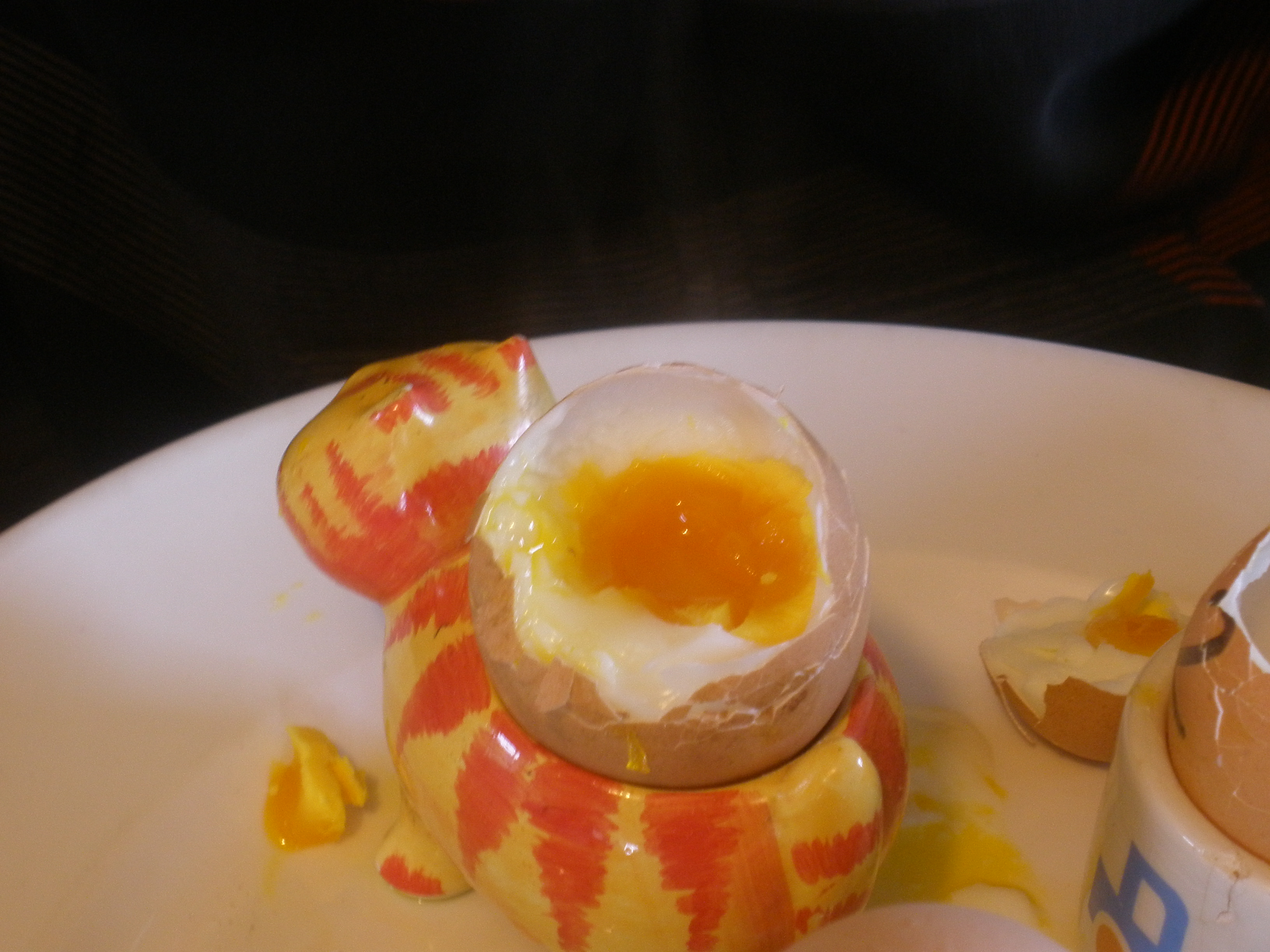
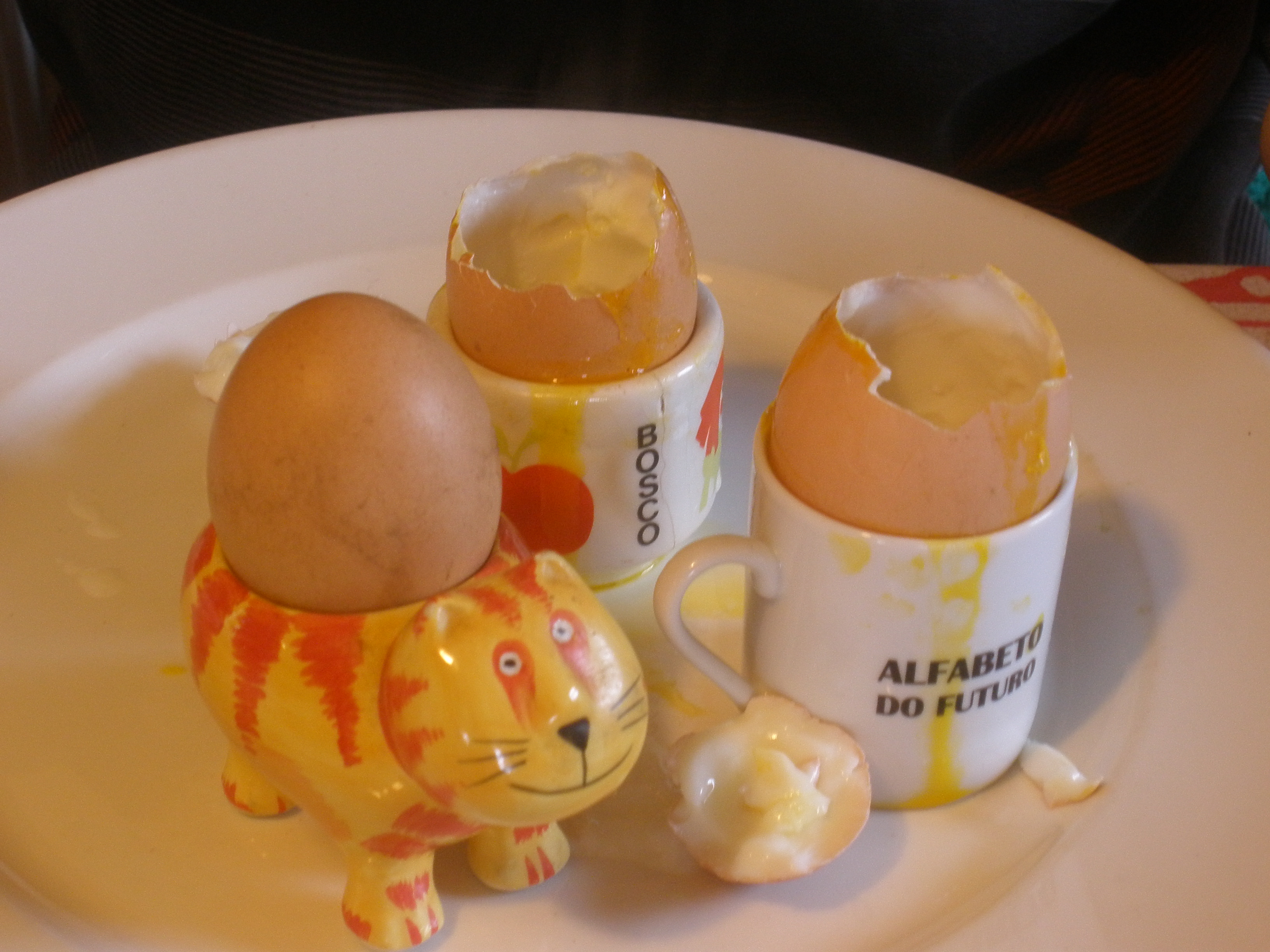
Monday Morning Eggsperiment


There was an article in yesterdays Sunday supplement by Simon Hopkinson on ‘How to boil the perfect egg’.

It went into great detail as to how to achieve the perfect egg – depending on how you like it – and there were five choices. The method used is to begin with the egg in a pan of cold water which is bought to a gentle boil and the egg is cooked for anything between one and five minutes.

This got our curiosity going so  we decided to have an eggsperiment to test out this out. Five eggs is quite feed so we invited Tim, the eggsessor, and his lovely lady to breakfast this morning. Tim came with us on a trip to China some years ago and  after various meals with chickens beaks and feet and all manner of blobby things he decided eggs were the safe option. He ate a monumental number of eggs so we knew he would be up for the job.

I hadn’t actually explained there was going to be an experiment when we extended the invite so I guiltily threw some orange and date muffins together to pretty up the breakfast table. We numbered the eggs from one to five and popped them all into a pot of cold water. As soon as the pot reached a boil we turned the heat down to maintain a gentle roll and started the stopwatch.

The experiment went very well.We fished the eggs out minute by minute and Tim managed to consume the five eggs in about six and a half minutes and here are his comments

Number 1 – runny but edible

number 2 – just how Tim likes his eggs – white just set

number 3 – classic egg

number 4 – yoke just started to go hard on the outside

number 5 – a properly boiled egg , a set yoke but with a little moistness left

After breakfast, feeling inspired, we piled into the car and went to Bandon market where we picked up ten new brown hens and a fancy looking ‘Polish’ which is a speckled grey and white Bantam with a mighty hair style and attitude. We called her Sid.

Happy Monday!


Not to be Sniffed at ….. Apple and Blackberry Crumble

This is a real classic but not often made in these days of shop bought tarts and cakes. It’s difficult to beat this though, with the buttery crunchy crumb over fruit that’s melted down and oozing with juicy blackberryness.

Image

The fruit can off course be swopped about to suit the seasons, rhubarb. gooseberries, all sorts of summer fruits, but blackberries always inspire us to make this.

Known as “Nana’s crumble’ in our house. We all phone and email my Mum to ask her for this recipe. It is very simple to make but we always forget the recipe in between the blackberry seasons = which my Mum finds pretty strange as we’re meant to be able to cook.

As always I couldn’t find the recipe but luckily Darragh had it stashed on his fb accounr so here it is straight from the horses mouth!

‘it’s a very straight forward recipe darragh, hope you like it.175grms of flour, 75grms butter, 75grms of demerera sugar, rub butter and sugar into flour until it is like breadcrumbs,pour this over cooked and cold apples( cook cooking apples with a bit of sugar) now bake in a hot oven temp 180c for about 20 minutes or until golden brown. Good luck, let me know how you get on! Love Nana.

We cooked the apples and scattered  blackberries over the top before adding the crumble

Delicious every time!

We’ll be making this at the harvest class this weekend.

There are two places free so if you would like to join us please get in touch. We’ll be making chutney, soups, salads, easy dinner dishes and something sweet with the seasonal produce


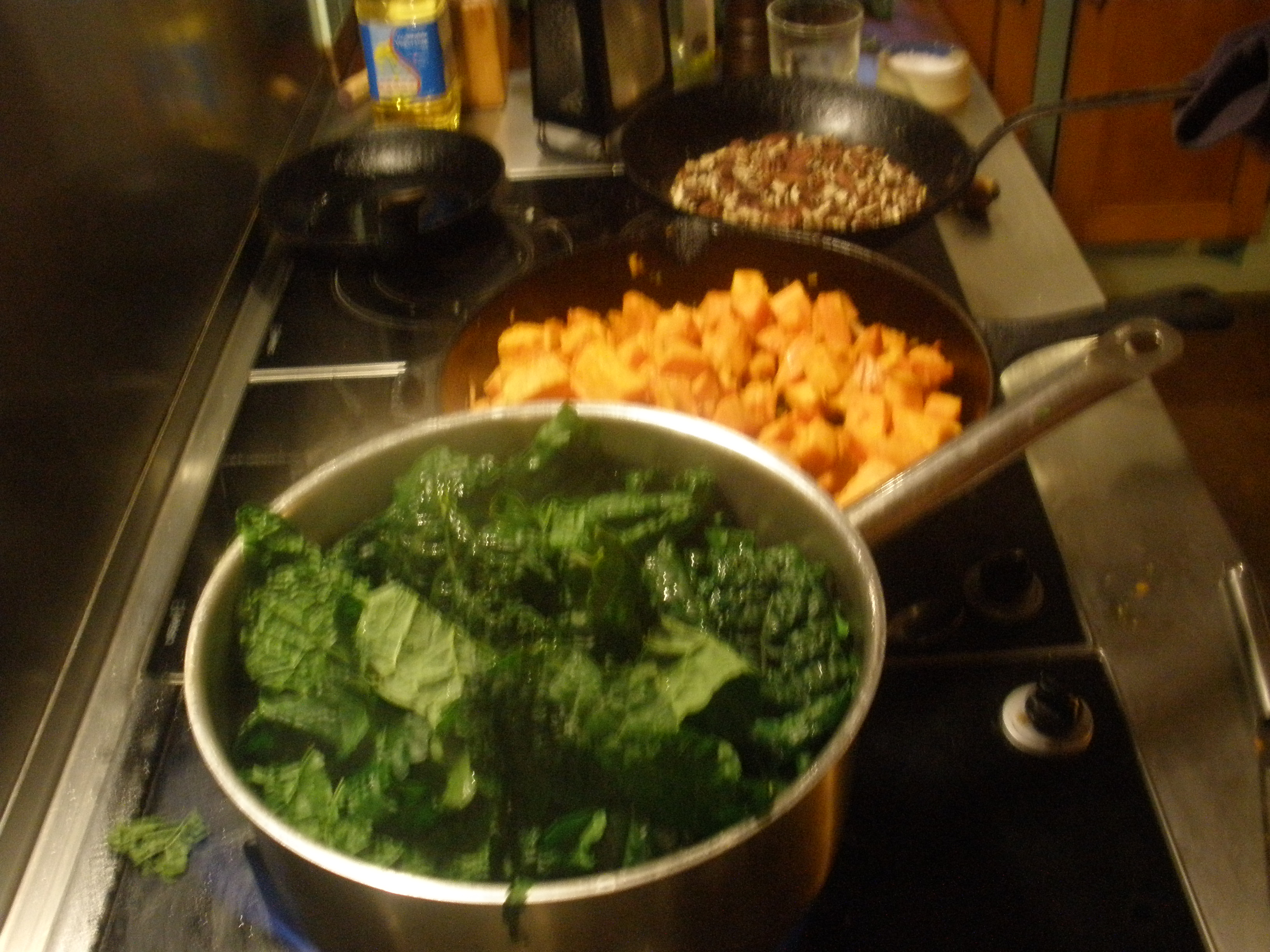
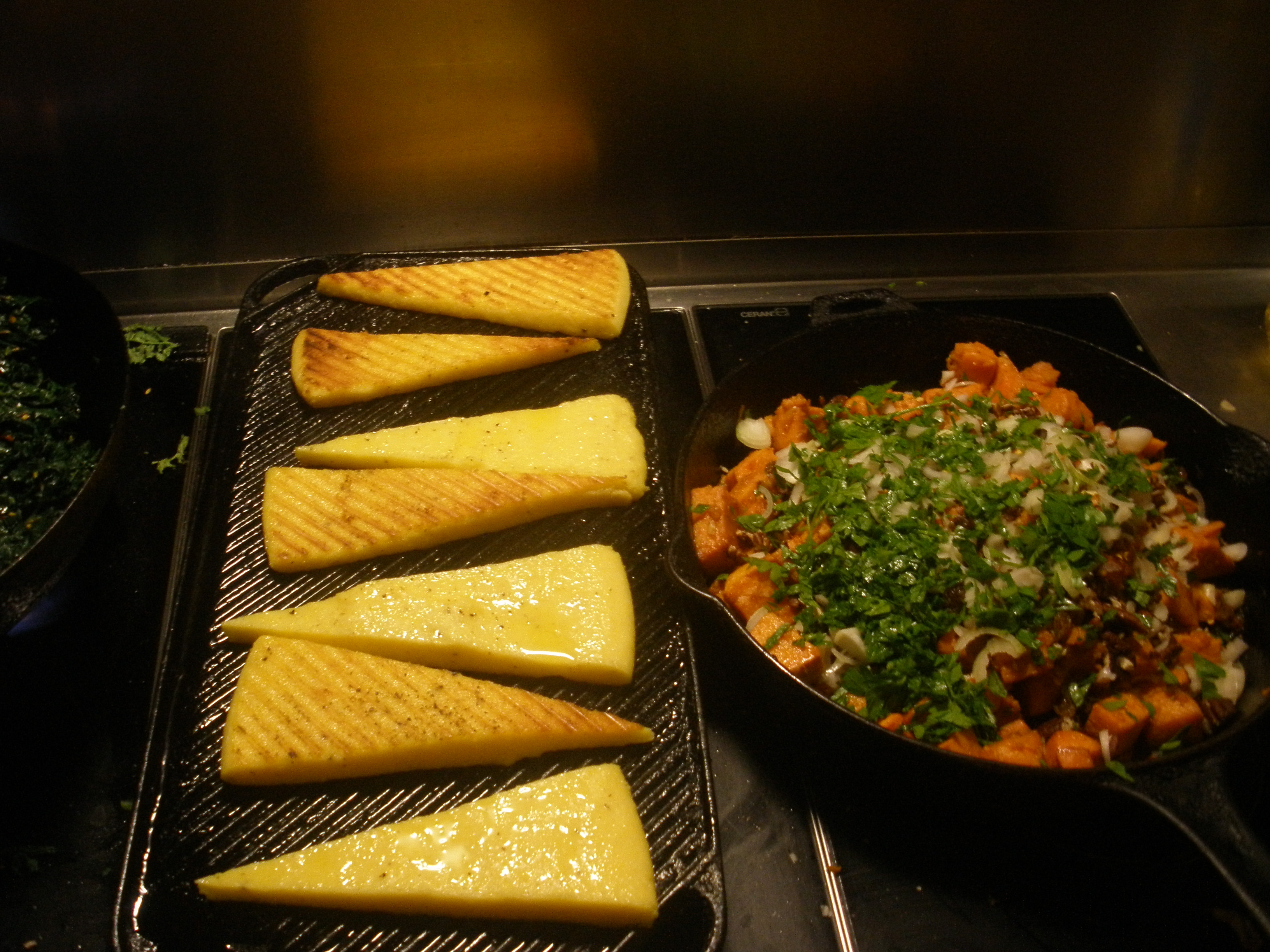
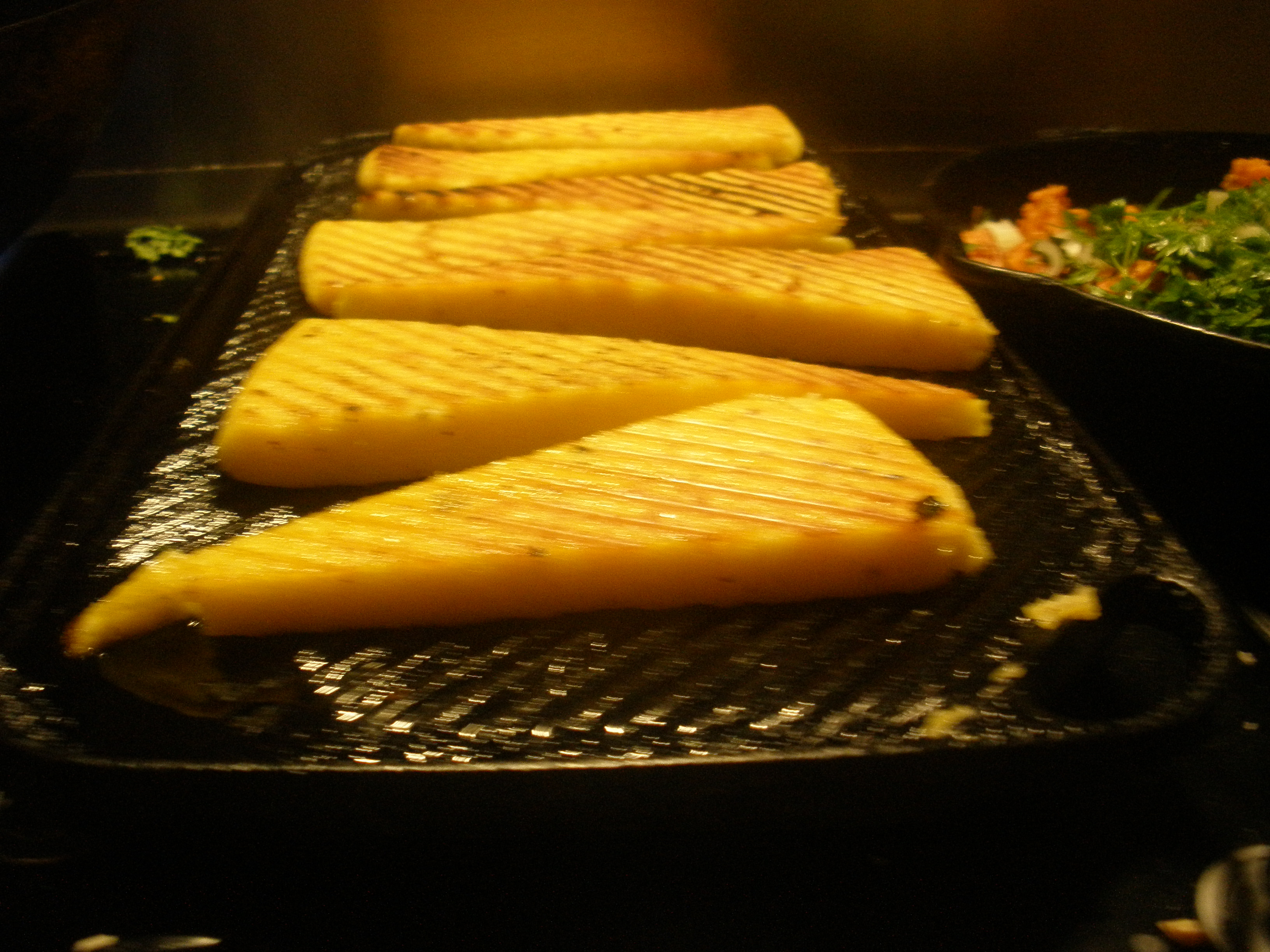
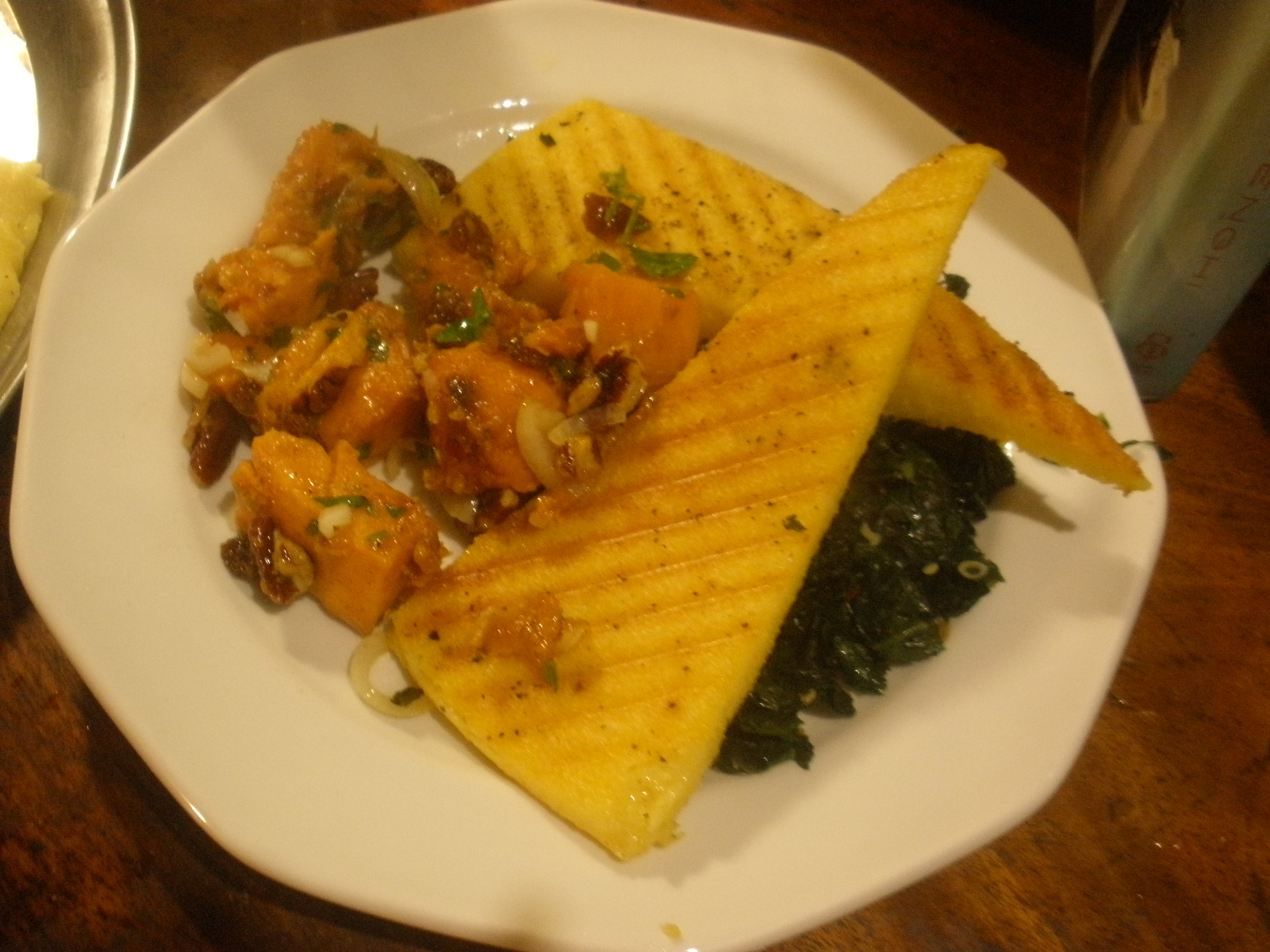
Grilled Polenta on Chilli Kale with Maple Roasted Sweet Potatoes

I didn’t actually cook this dinner. My claim to fame is that I helped to pick the kale.
I then sat at my computer and looked on whilst Hazel, our daughter, and her kitchen team were busy.

We grow lots of kale in our garden. It’s a fantastic pick and come again vegetable and another fan of the Irish weather. Completely unperturbed by rain,wind or reasonable chills. We eat it from September on and tonights dinner is the first of the cavalo de nero, a Tuscan black cabbage, which loves to be picked. It’s blanched, then stir fried with fennel seeds, crushed chillies and garlic.

The sweet potatoes are given a bit of a ‘Ottolenghi” treatment – roasted with maple syrup and pecan nuts, and then piled on top of grilled polenta which is sitting on the stir fried chilli kale.

A delicious and nutritious combo!